 AutomataIn progress
Images grown from simple rules, one row at a time.
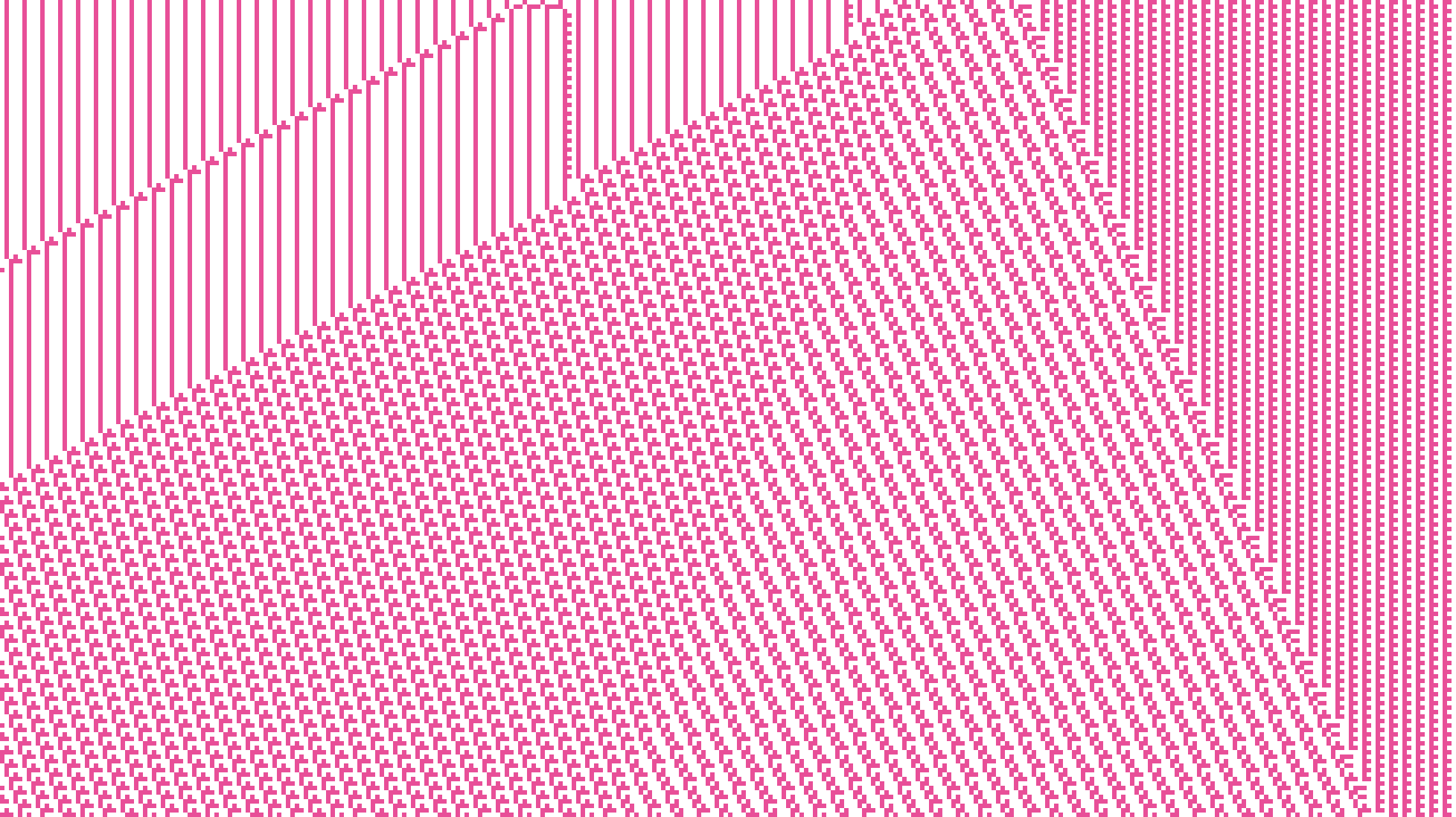
Generative art I've made since 2024, from Stephen Wolfram's cellular automata.1 Each image grows down the page a row at a time: a simple rule sets every pixel from the three above it.

Get to know Automata.


The problem
A creative itch.
I'd been away from creative, expressive work for a long time. In the winter of 2024 I needed a project that was super creative. I'd wanted to make art with these rules for years and never had. So I dug out C4, the creative coding framework I'd made long before, and started.
-

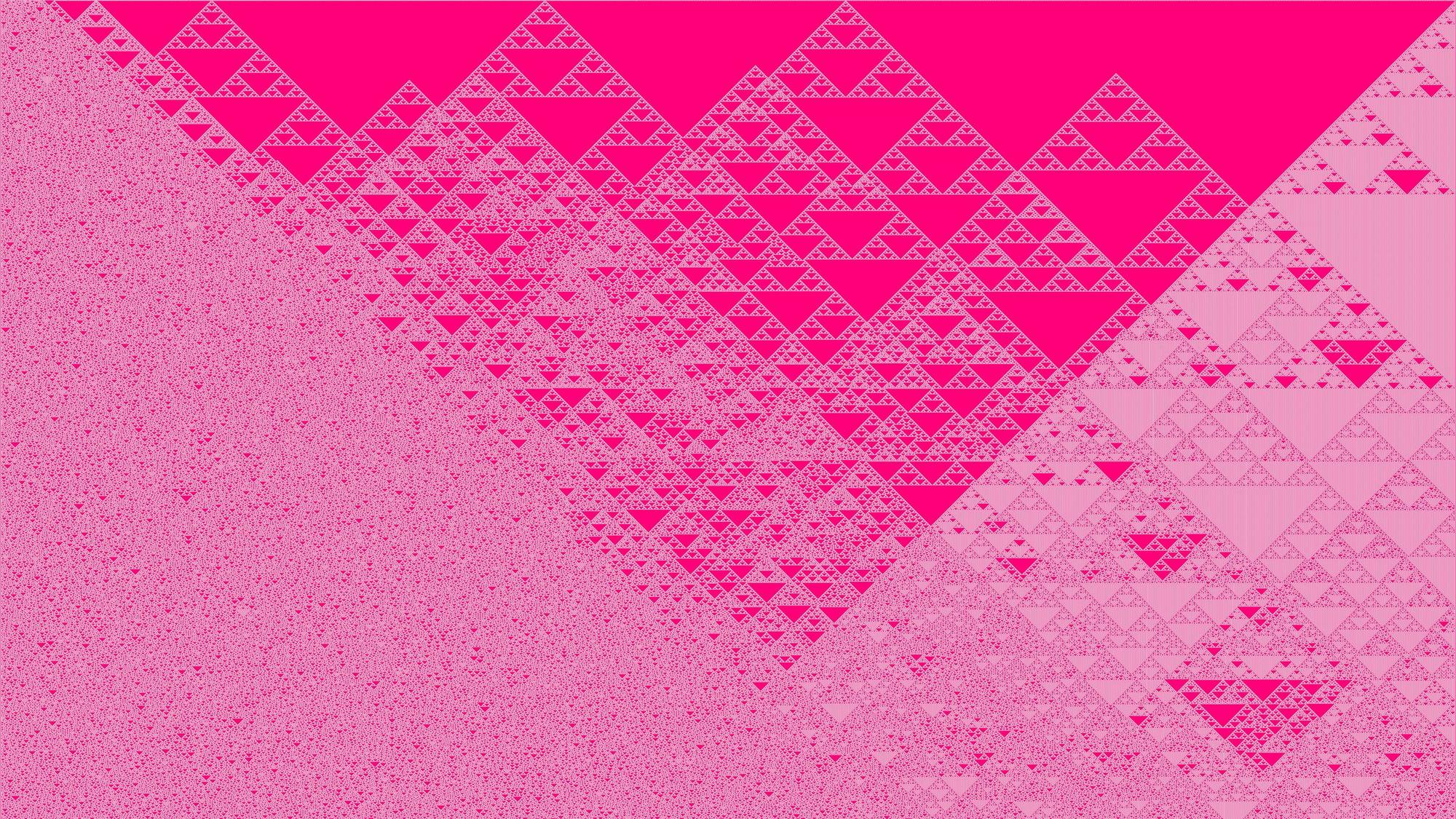
Corner to corner.
Three bands, one rule.
-

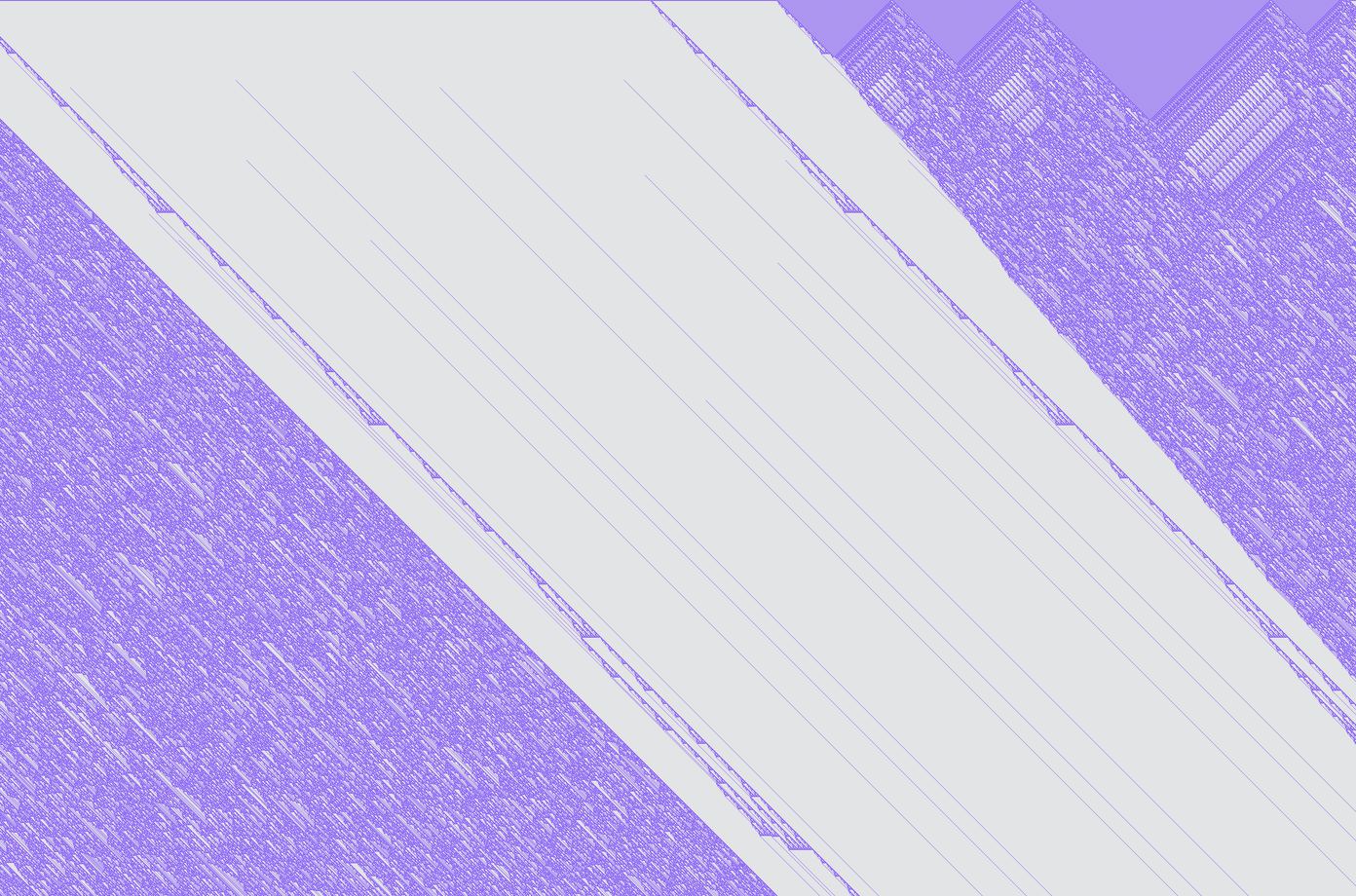
Long diagonals.
Some rules settle into a slant.
-
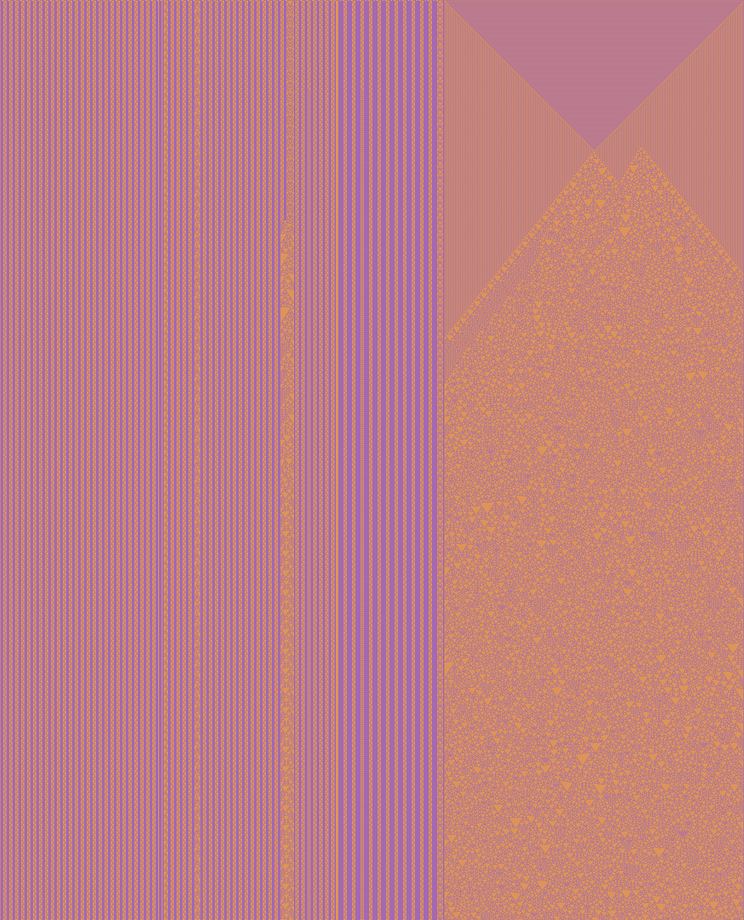
Straight down.
Some rules fall into stripes.
-
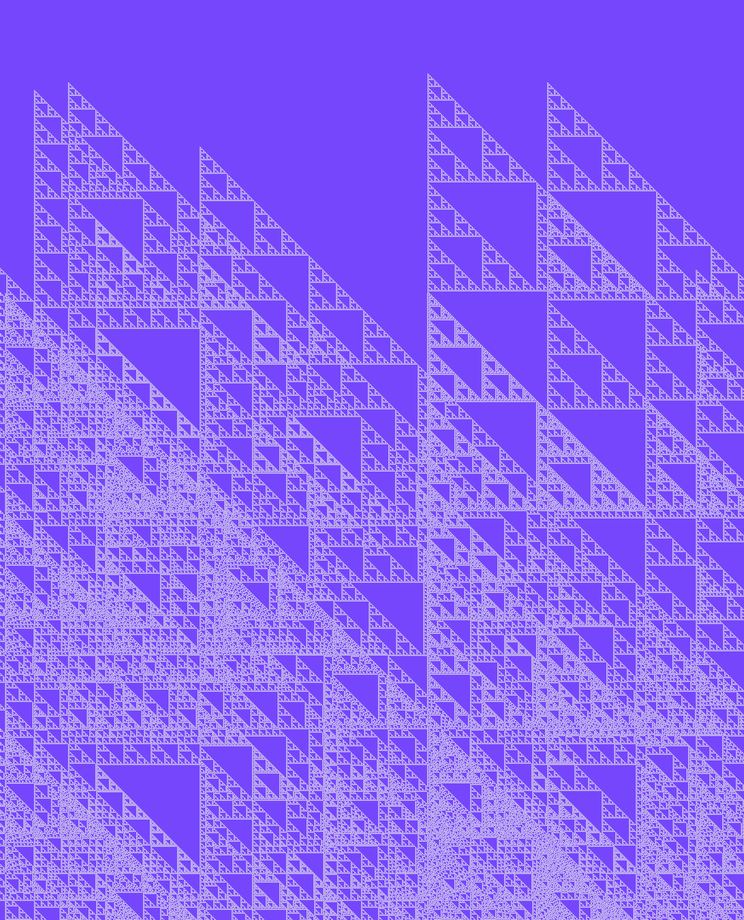
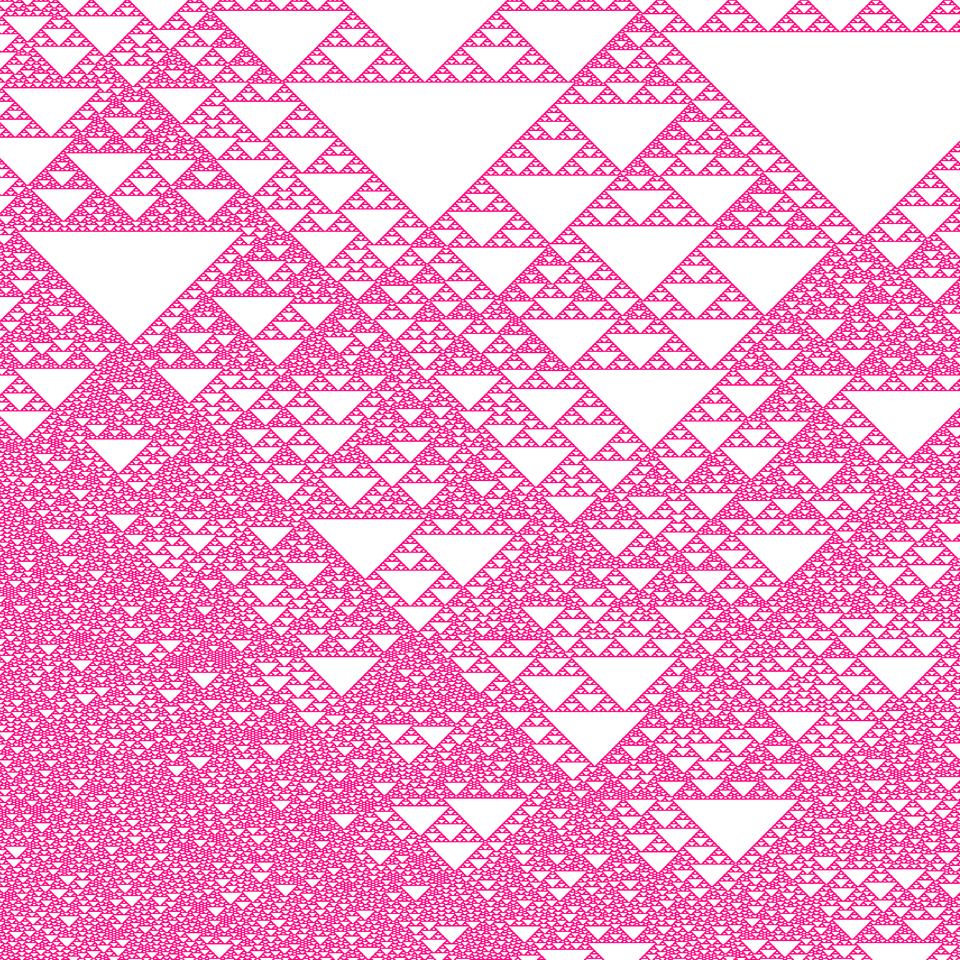
Patterns inside patterns.
Some rules nest.
// Iterate over each row, starting with the second
for row in 1...h {
    // Generate per-row allowable noise
    var rowNoise = calculateAllowableNoise()

    // Iterate over each pixel
    for col in 1..<w-1 {
        // Compute the index of the pixel row above
        let idx = (row - 1) * w + (col - 1)

        // Determine the bit pattern based on the three pixels above
        var result = 0b000000
        if newMap[idx]     { result |= 0b000100 }
        if newMap[idx + 1] { result |= 0b000010 }
        if newMap[idx + 2] { result |= 0b000001 }

        // Determine the new pixel value, possibly applying noise
        let newValue = shouldApplyNoise() ? !rules[result] : rules[result]
        newMap[row * w + col] = newValue
    }
}What I owned
I came up with the idea, built the engine in C4, made the images, and picked and published the series.
-
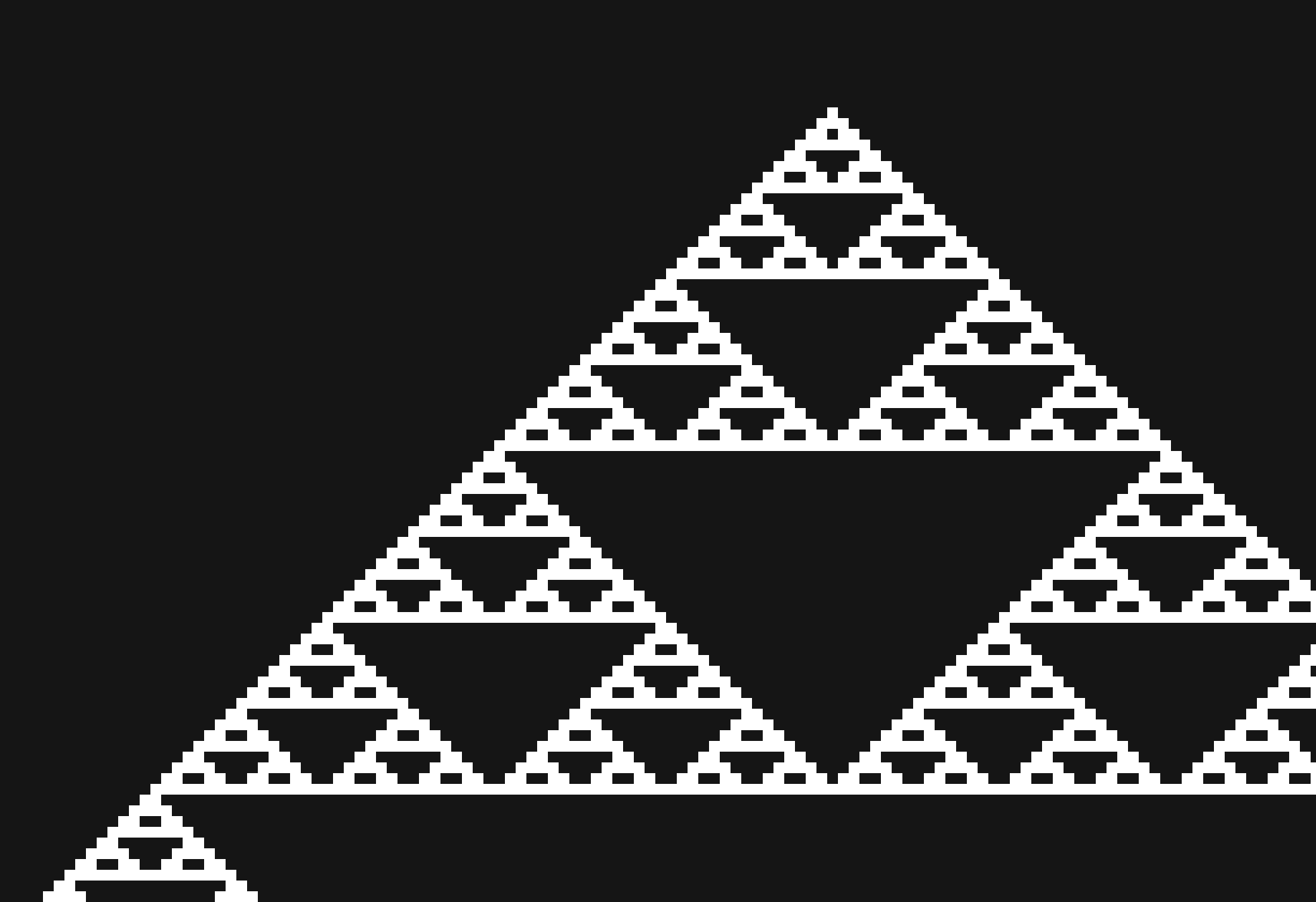
The rules.
I built my own cellular automata engine in C4, starting from a Pixel() class I'd written years before, so that a simple rule sets every pixel from the three above it.
-
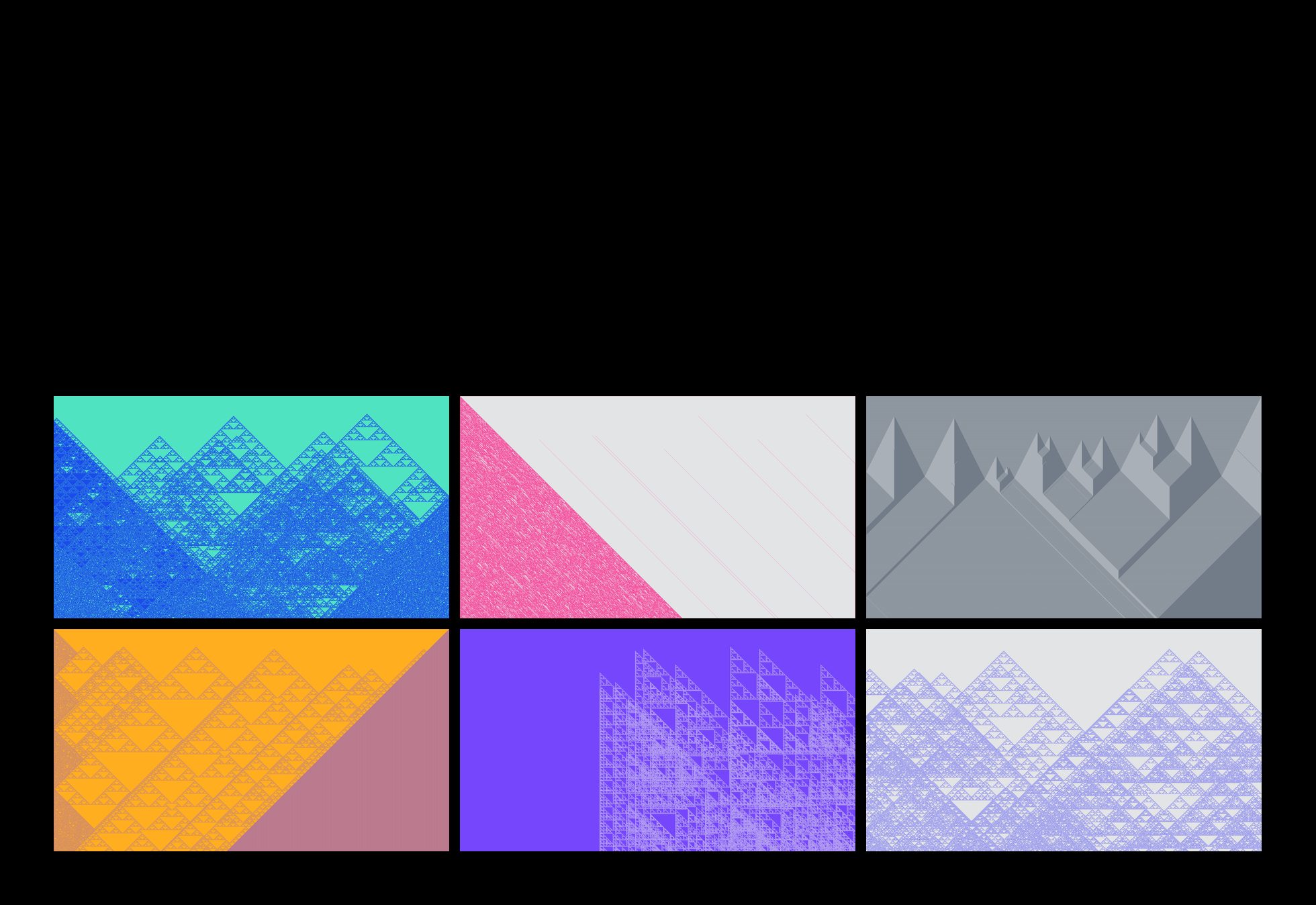
The series.
I made the images, looked at every one, and picked and published six series by hand.
-
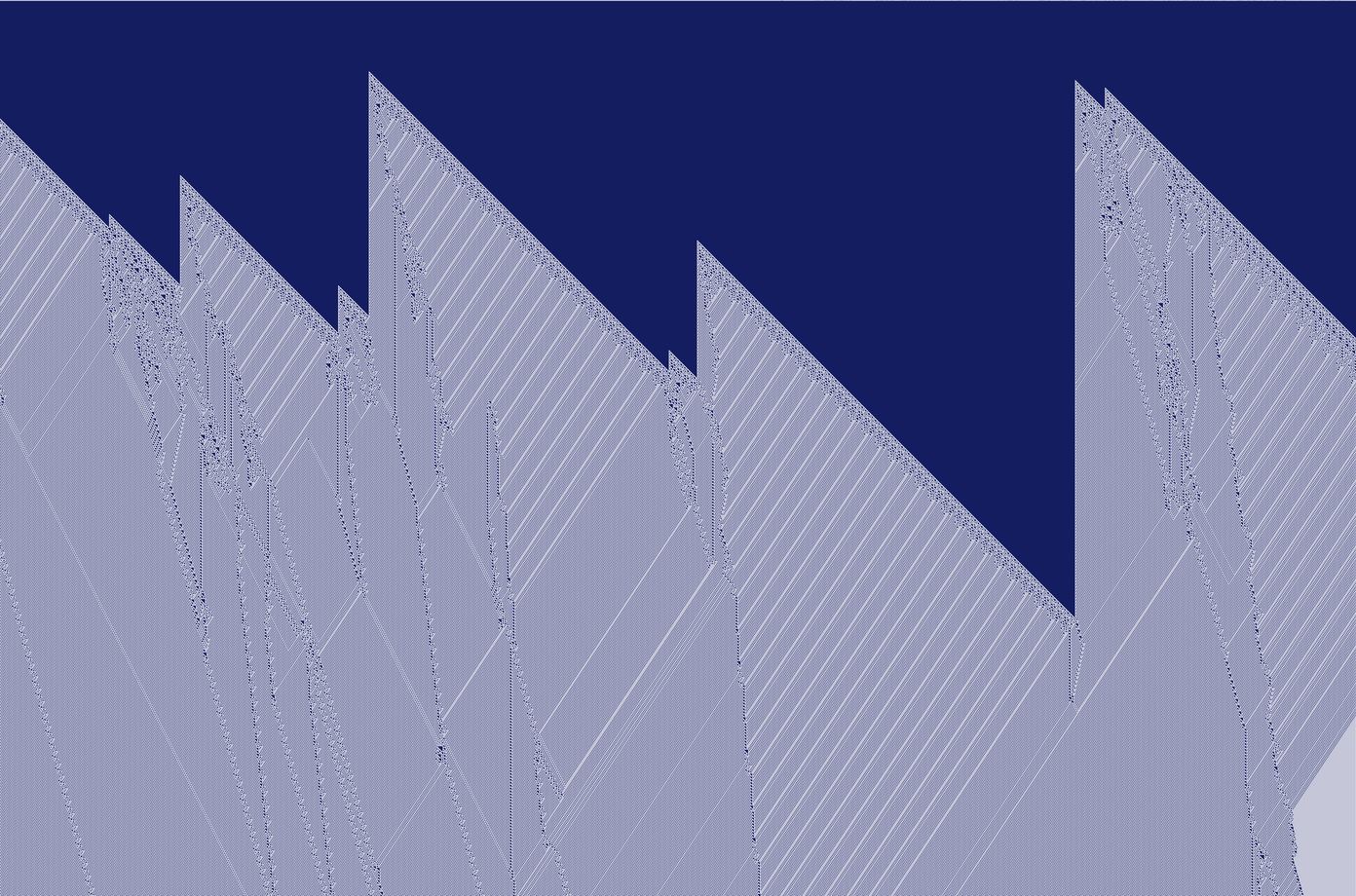
The prints.
I picked Automata back up to make Christmas presents, bought a printer, and made ten one-of-a-kind prints.3
-
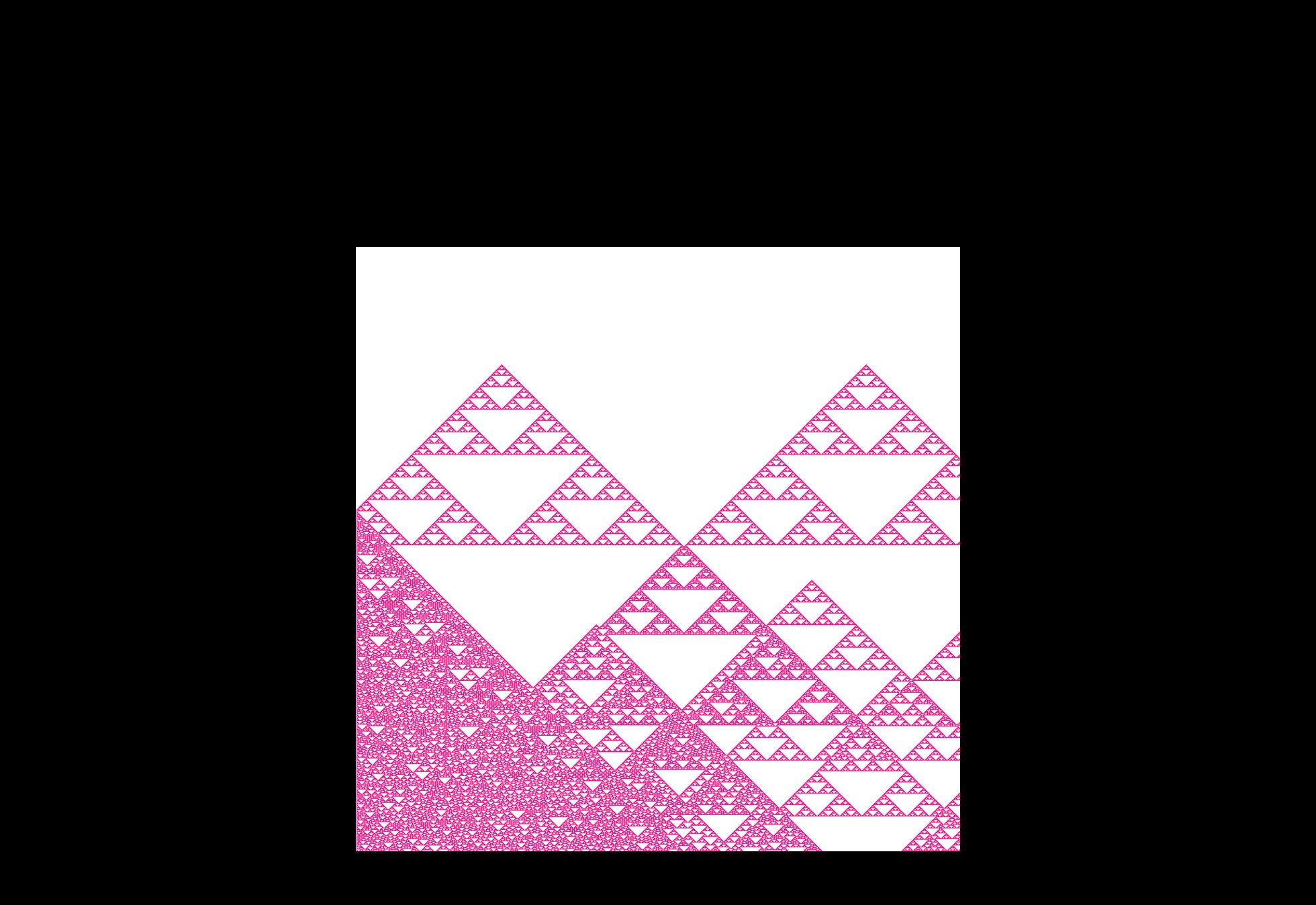
The LP covers.
I made the covers for my cousin's LP in 2026, as technical artist.4
The solution
One piece, from any distance.
Several rules run down each piece, and each draws its own pattern. They had to flow from one rule into the next.
From across the room it flows.
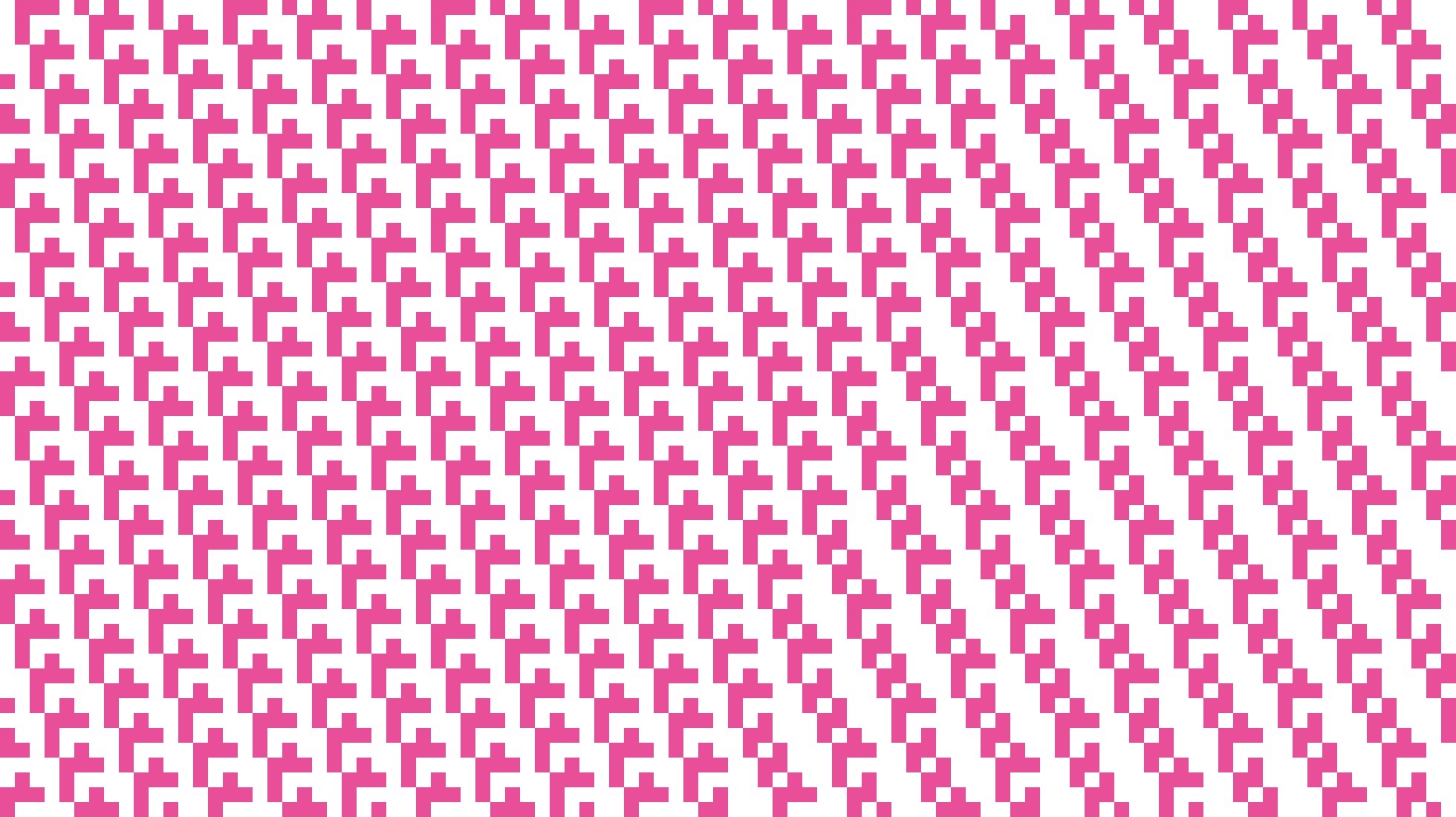
Up close, the rules show their nuance.
At first you shouldn't know what's going on, or where one rule ends and the next begins.
Underneath
Each rule takes over from the last.
Each rule grows out of the pattern of the one before, and the shapes carry across the join.
-
The colours had to bridge the rules, so the whole piece read as one.
-

Across the join.
The same piece runs on into the next rule.
-
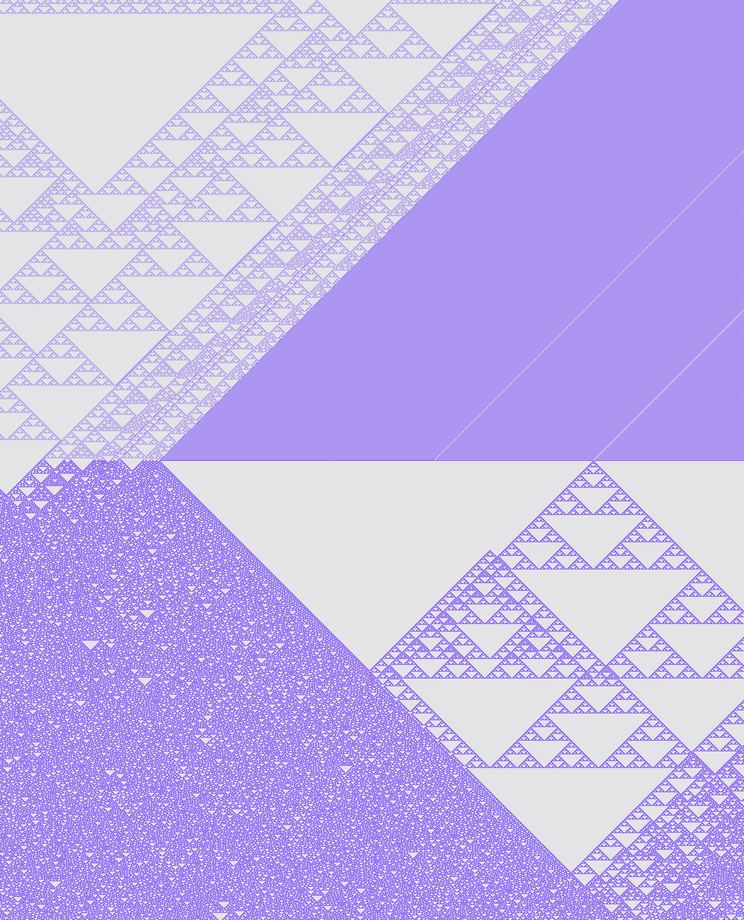
Patterns carry over.
The next rule picks up the band.
-

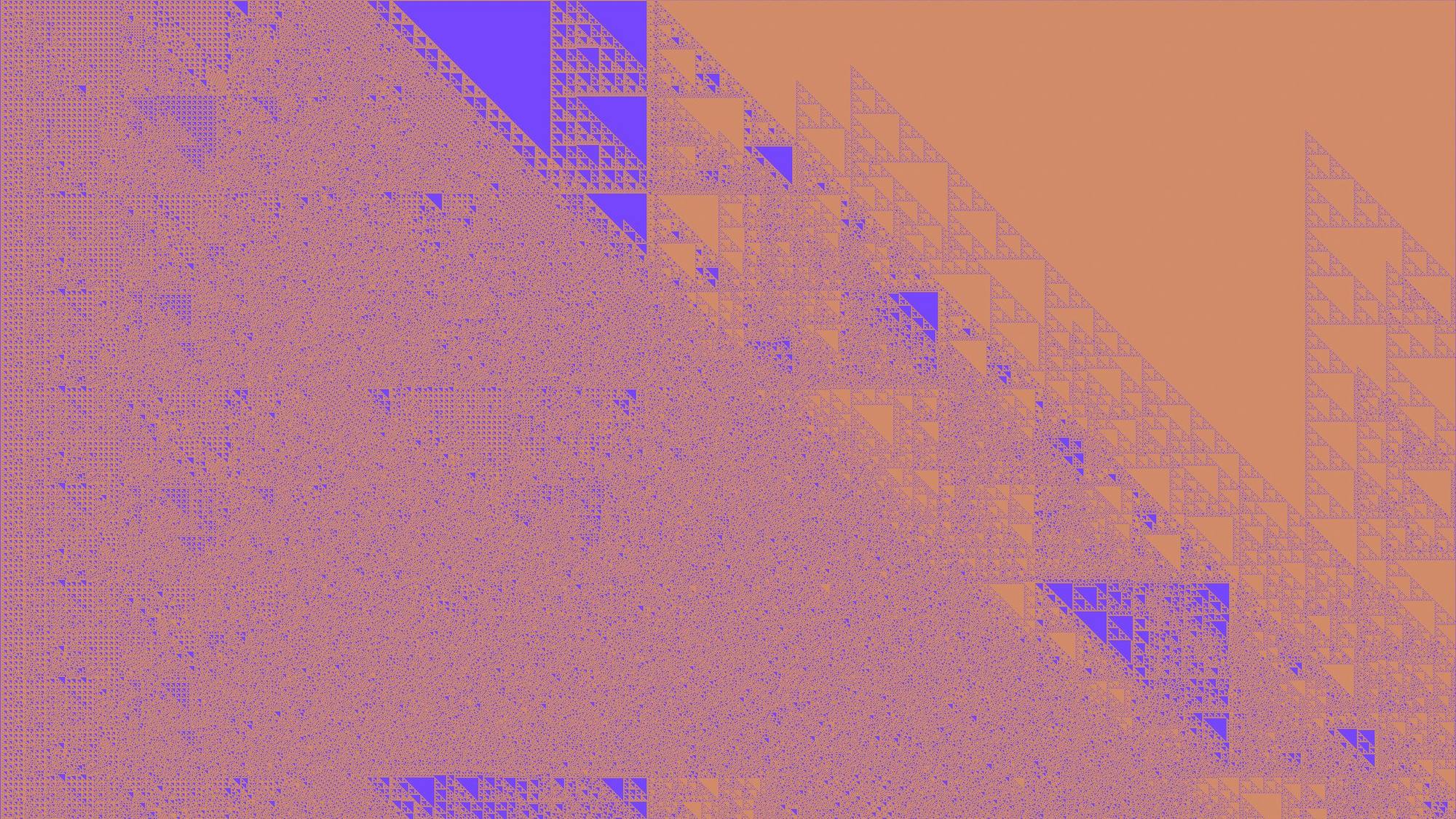
Copper into violet.
The next rule opens with a row of violet patterns.
-
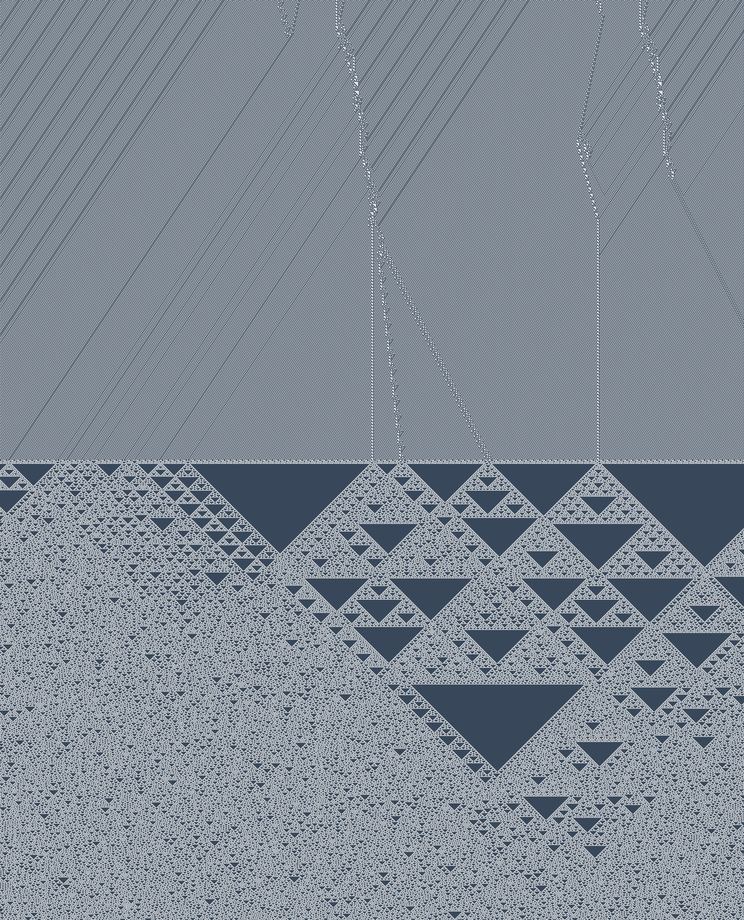
Grey on grey.
Nested patterns start dark, right at the join.
Tough calls
9,000 images, 6 kept.
Every piece here was picked by hand. I looked at every image, gigabytes of them, and cut almost all of it.5 Each series uses two colours.
The first idea, years earlier, was 256 books, one for each rule, every page a new run of it.6 I still want to create that.
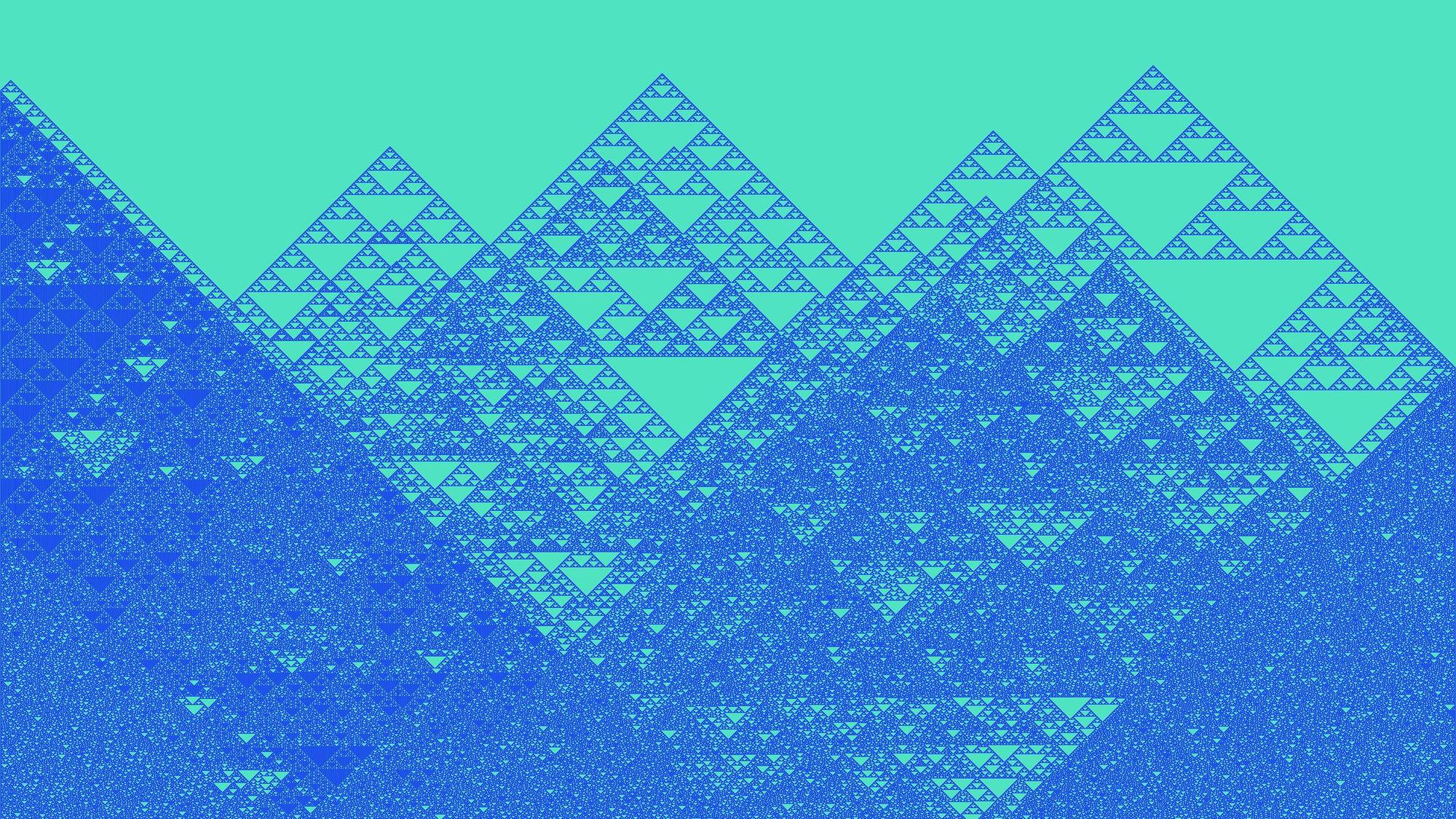

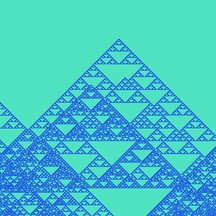
Blue patterns rise into teal.
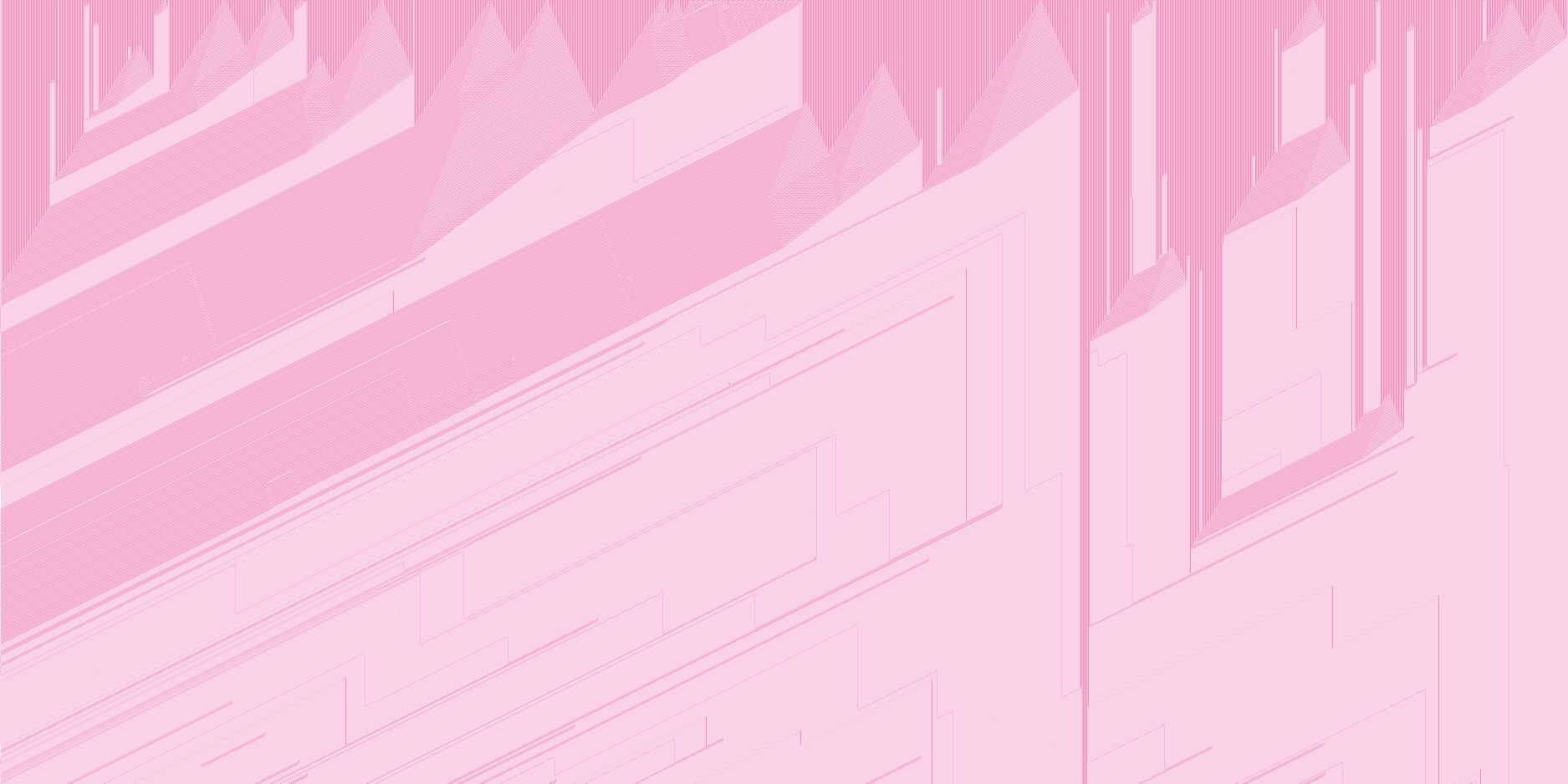
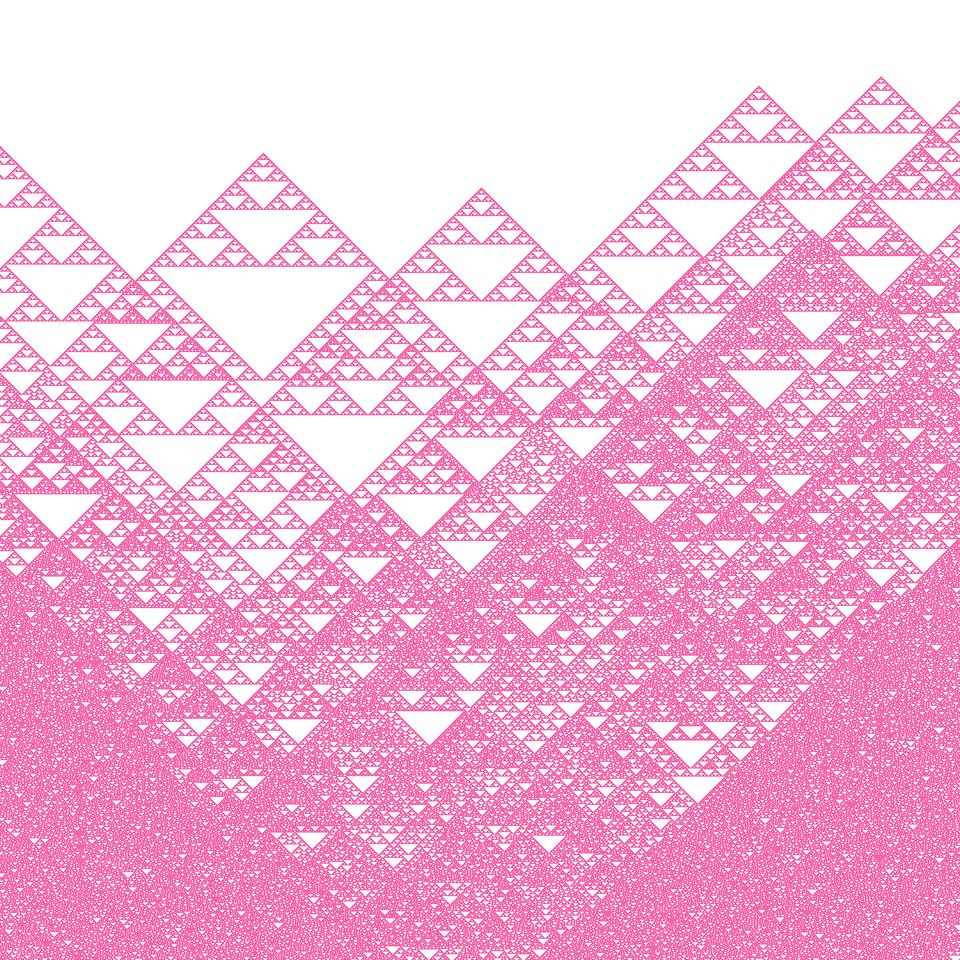
Hot pink shapes hang over a pale pink field.
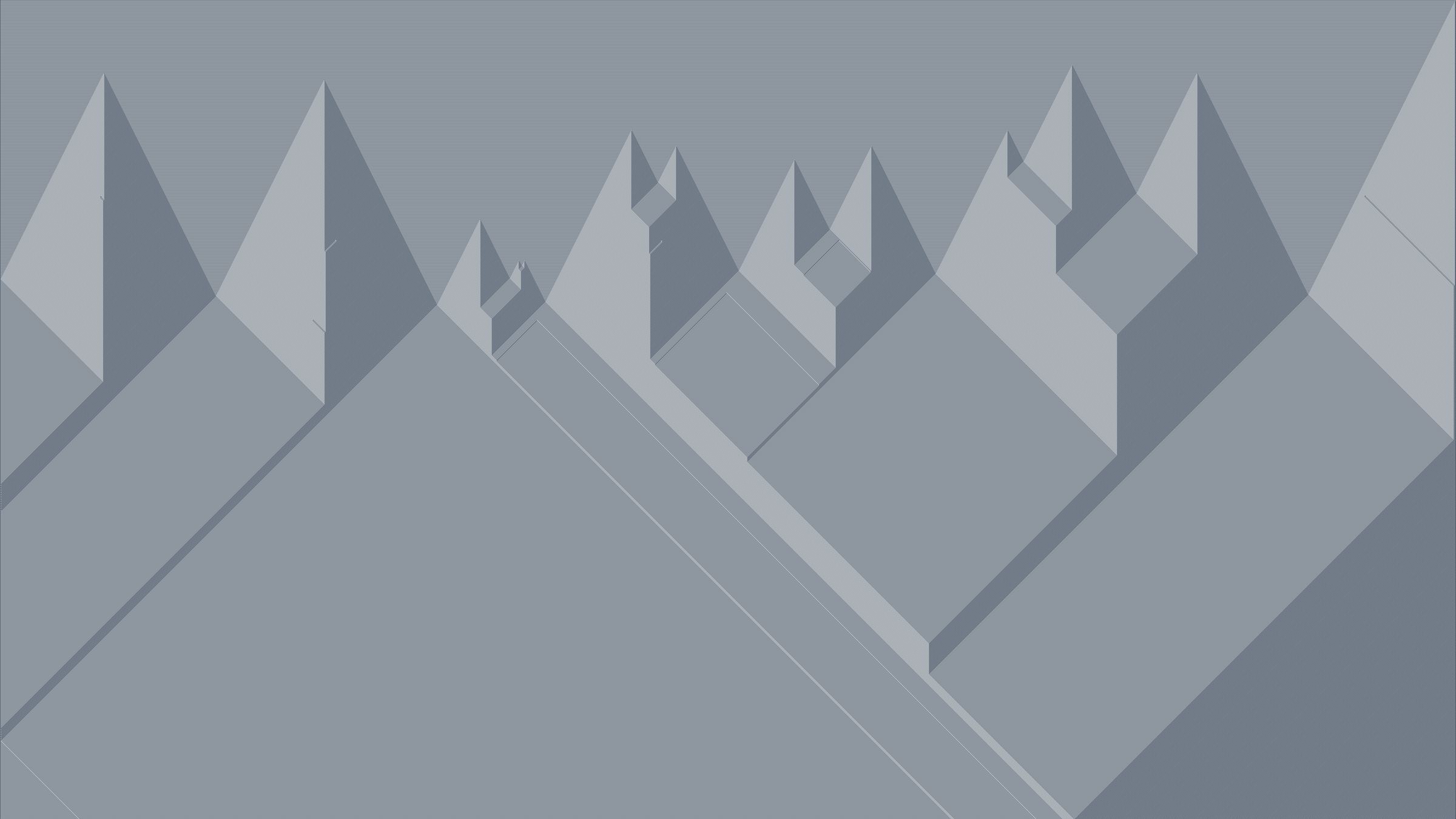
Greys run on long diagonals.
Copper and violet meet on mauve.
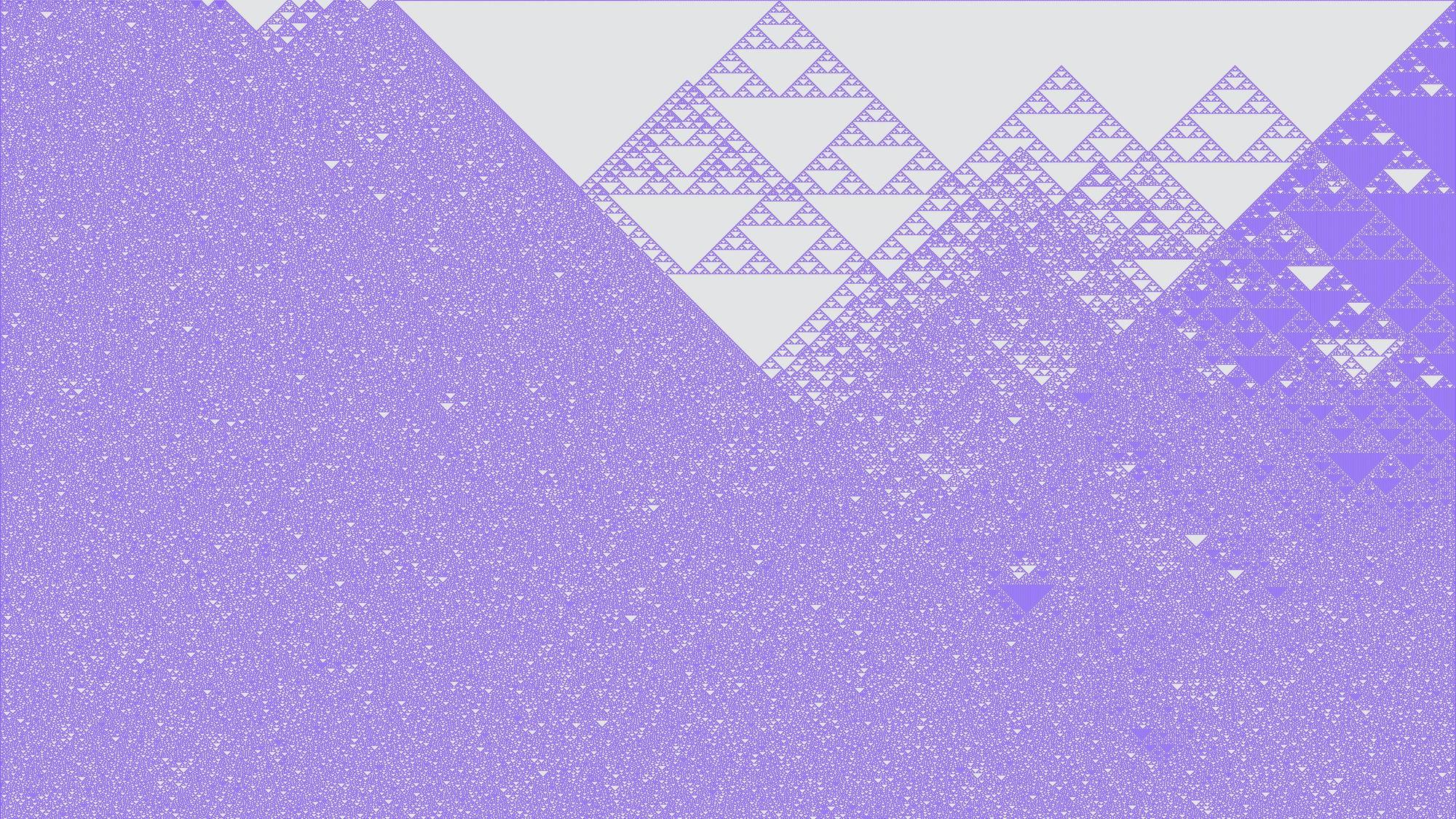
A violet field under a row of patterns.
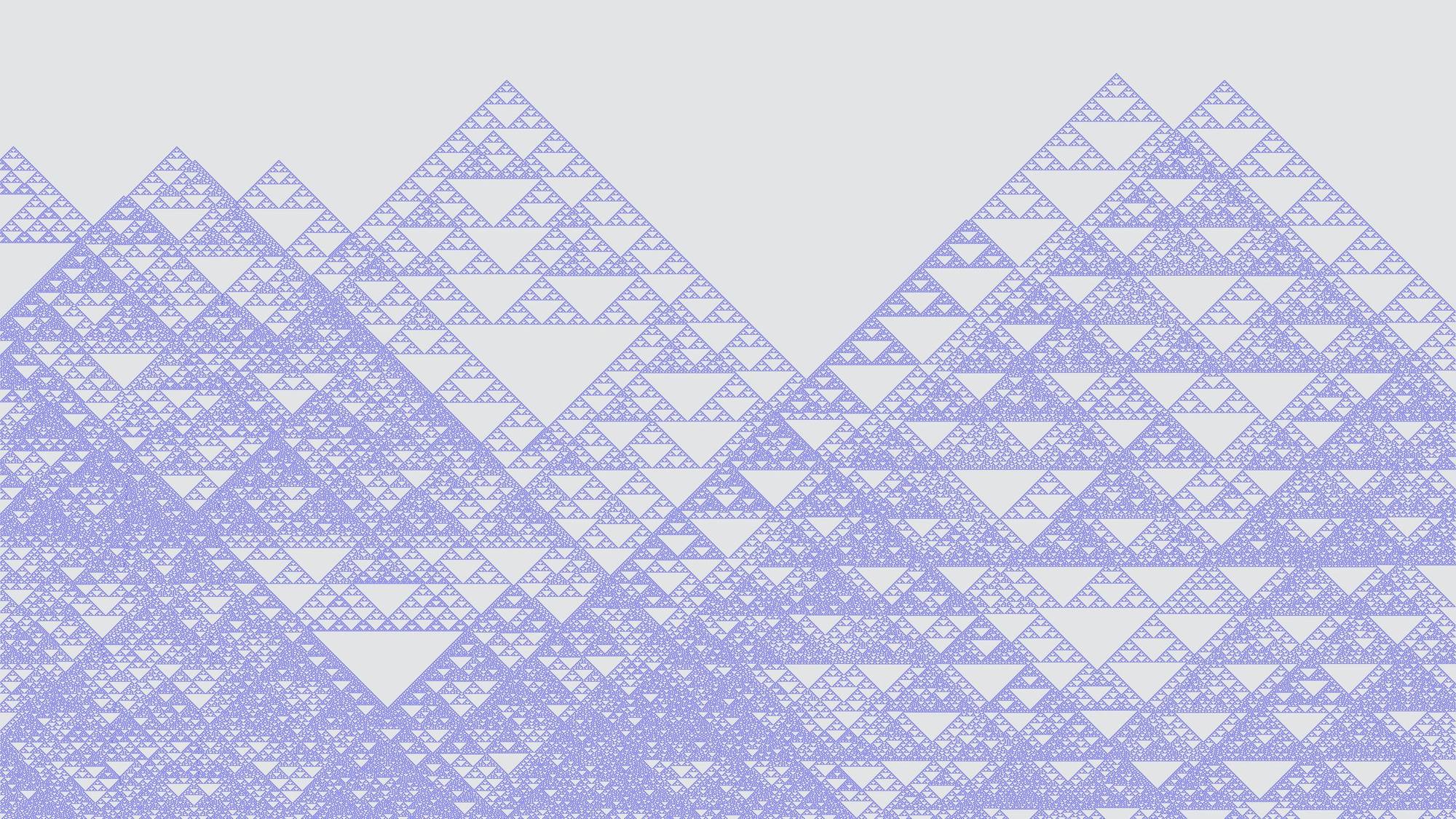
Blue patterns on pale grey, which read as lilac from a distance.
The outcome
One gift became a record cover.
It gave me a window back into the expressive work I'd been missing for a long time. A year later I picked it back up to make Christmas presents, and bought a printer.
The piece I gave my cousin became the cover of his new LP.
0
Stat to come.
0
Stat to come.
0
Stat to come.
-
Each person got one print, cut from a series of ten images woven together, one rule each.3
-
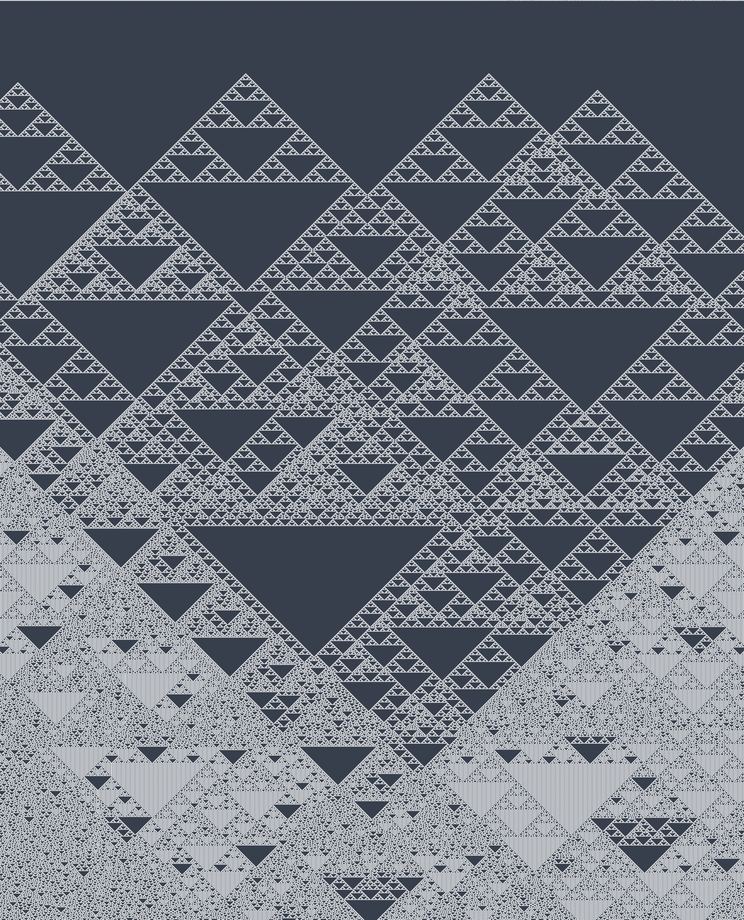
The series was one of a kind, and so was the print.
-
WantedA finished print on a wall, with people for scale
A finished print.
Picture to come.
My take
Questions? Answers.
-
What was your part?
All of it. It's a solo project. I came up with the idea, built the engine, made the images, and picked and published the series.
-
What is it built with?
My own cellular automata engine. It started on a Pixel() class I'd written years before.
-
Was any of it commissioned?
Yes. In 2026 it led to a commission for the covers of my cousin's LP. I made them as technical artist, through Postfl Design & Development Inc.
-
Where can I see the series?
All six are in the gallery above and at postfl.com/automata.

Flow.