 Flow
Motion design, made easy.
Flow was a creative production tool that blended motion and interaction design.1 I invented its timeline, designed it, and built its front end.
Project facts
- Role
- Founder, product and design lead, engineer
- Years & team
- 2015 to 2023. Core team of five, including me.3
- Product
- A Mac app for motion, IXD and handoff
- Users
- 24K+6
- Funding
- I raised $1.75M CAD2
- Import
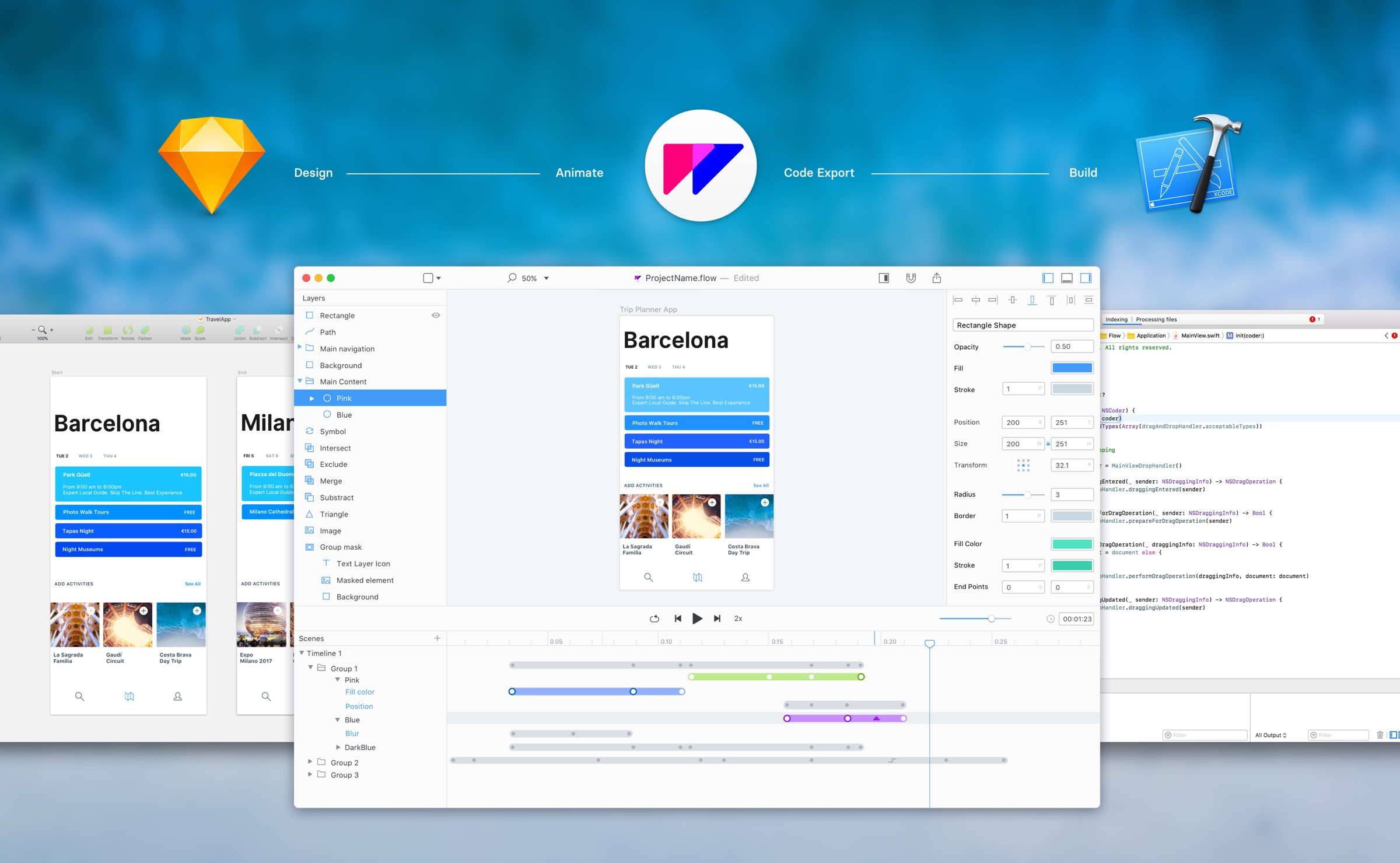
- Figma, Sketch and SVG1
- Code export
- iOS, Mac, Web, React, SVG, Lottie5
- Media export
- Movies up to 4K (with audio), GIFs and images1
Get to know Flow.
The problem
Designers want to stay in Flow.
To put motion in an app, a designer had tools like After Effects: heavy, confusing, hard to learn. Getting UX motion into a real app meant programming – which most designers didn't want to do.
“We tried to ship something without Flow, only got about 70% of the vision and it took 4 days of dev time.”Customer, Flow
Documenting motion, layout, and the handoff to engineers: every step was costly, and every step lost a little of what the designer had pictured.
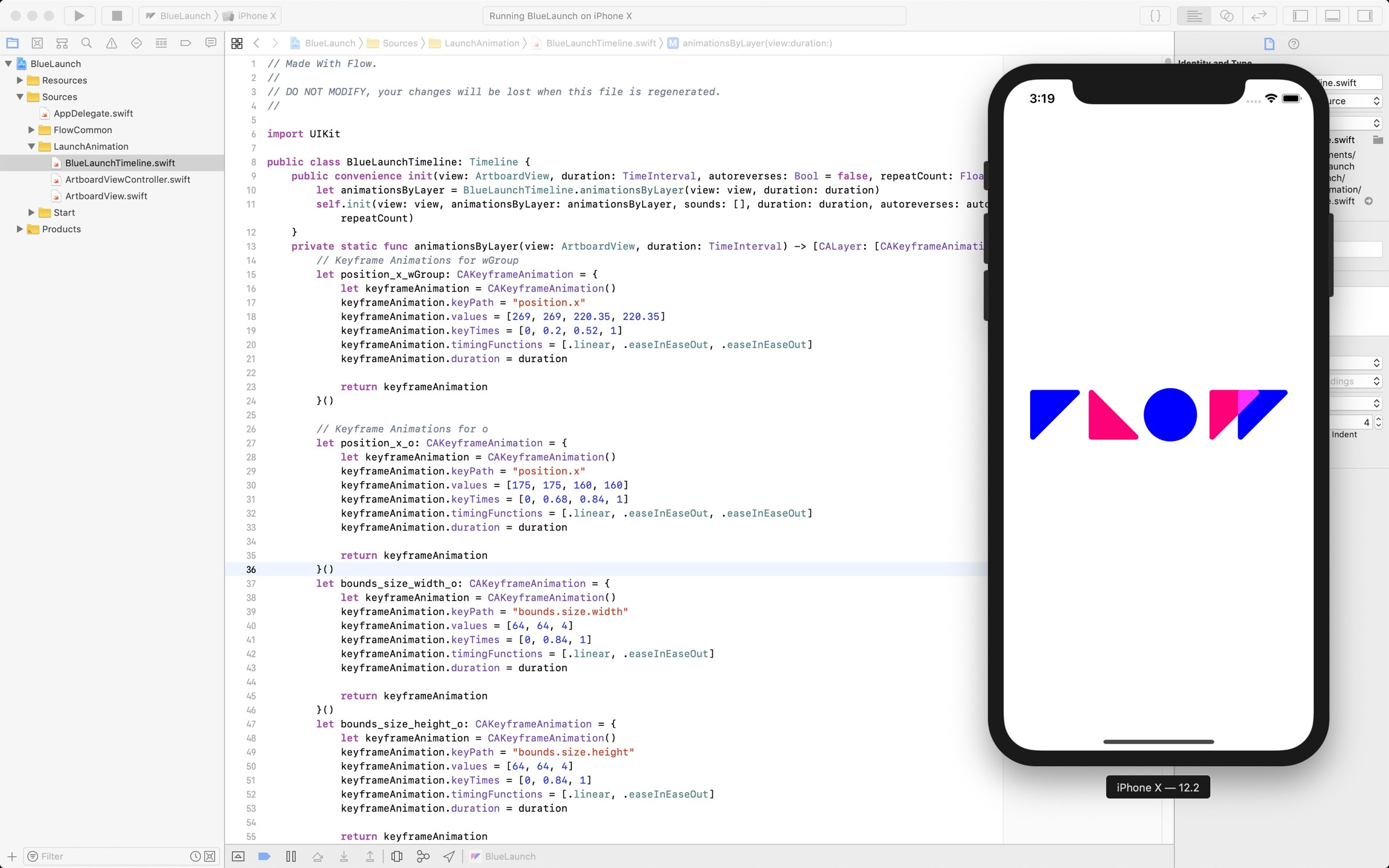
Small elements like launch animations can have a lot of code behind them to keep the designer's vision intact.
What I owned
The idea, the experience, the company.
I invented how Flow worked, designed it, built its front end, and ran the company around it.
-
The idea.
I'd spent years bridging the gap, at Ars Electronica and then building C4, and saw that designers needed to design in the medium they were creating for.
-

The funding.
I raised about $1.75M CAD for the entire project, with backing from the Canada Media Fund: I wrote the vision and business plans to get there.
-
The foundation.
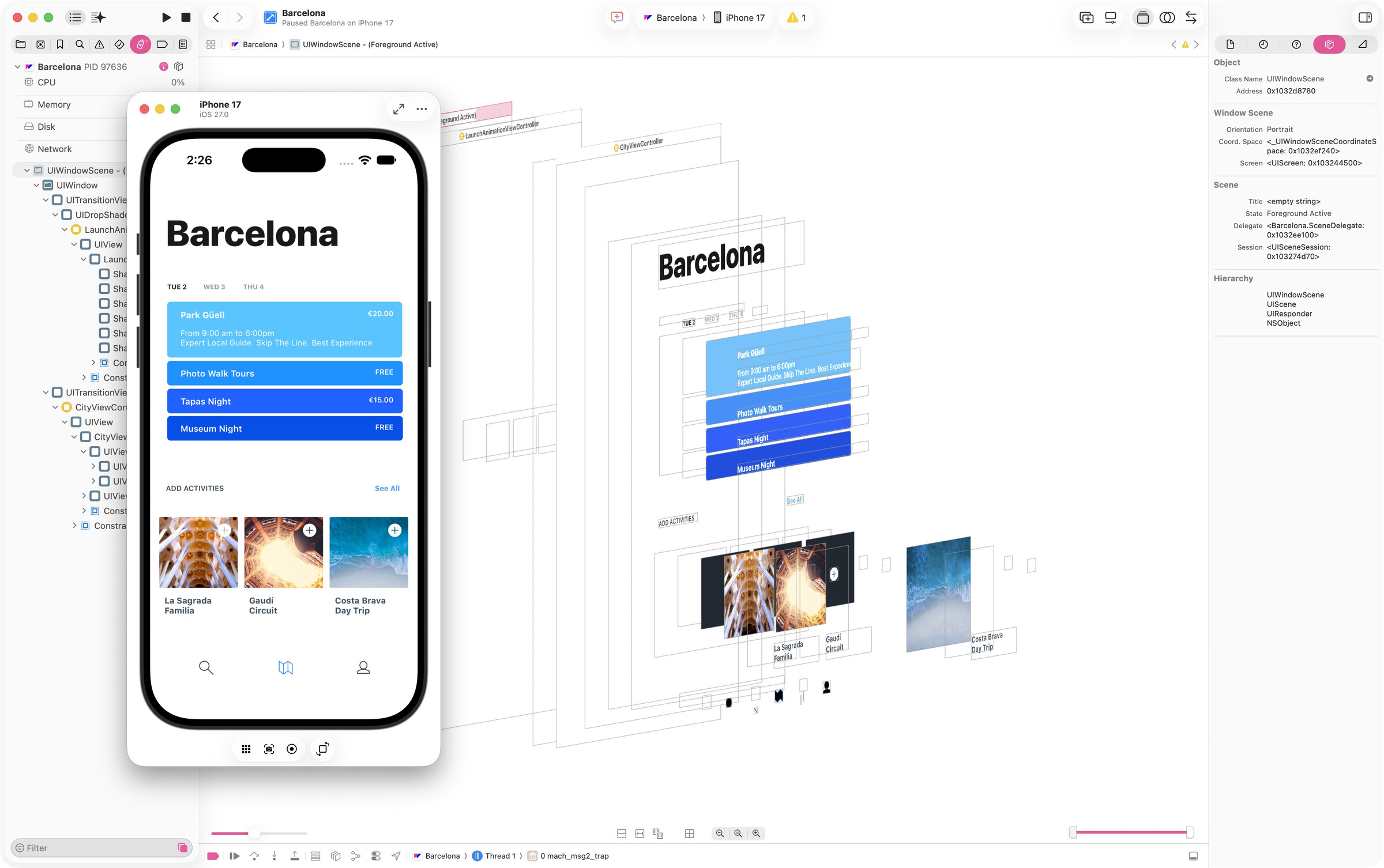
I chose to set C4 aside and build a new animation framework on Core Animation's layers, so what played in Flow was what would play in the app.
-
The interface.
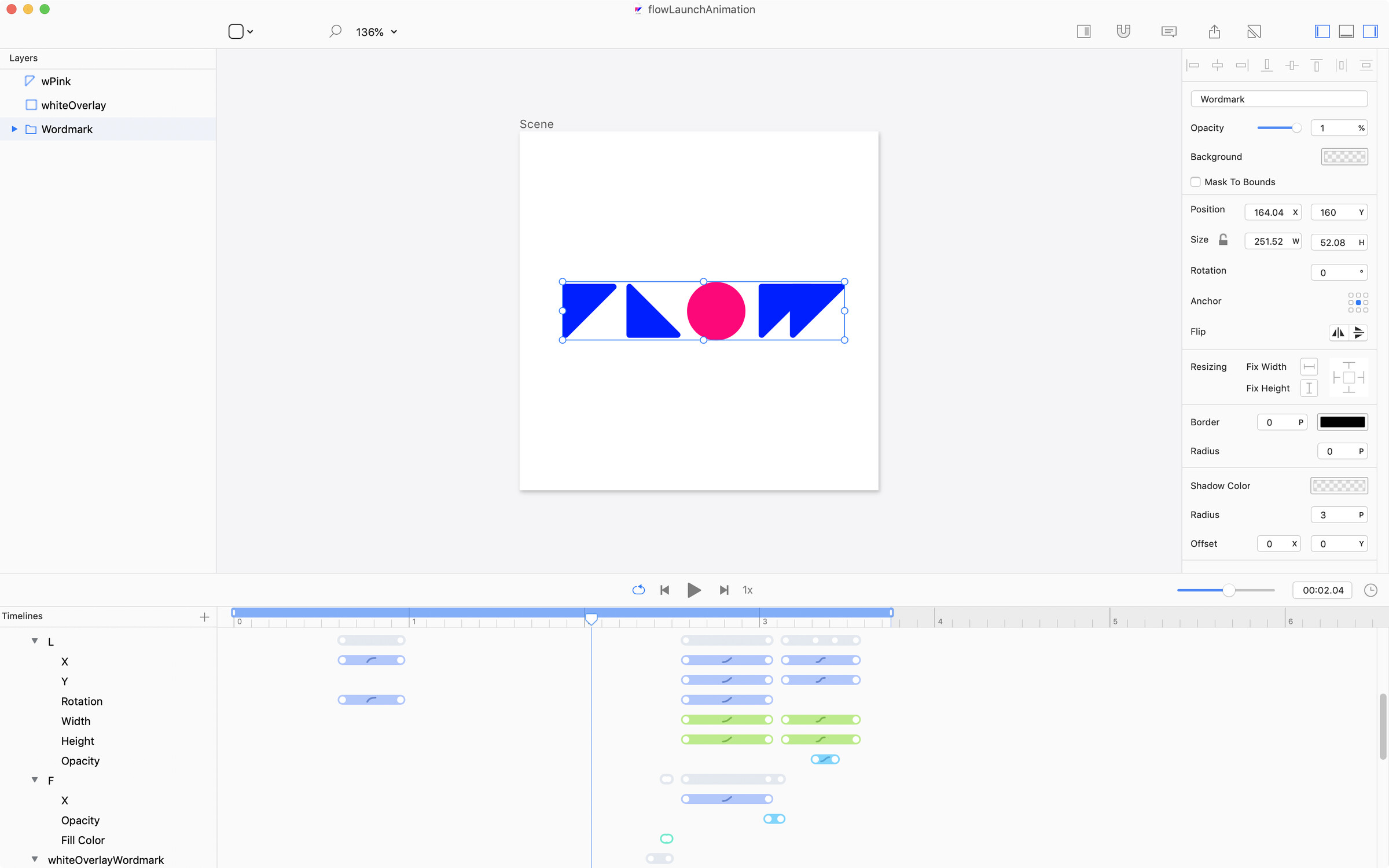
I modelled Flow on Sketch, and later Figma, so it felt like the tools designers already used from the first minute.
-
The details.
I worked out the hard interactions, built UI components, and tested it all. The engineers built the deep work underneath.
-
The exports.
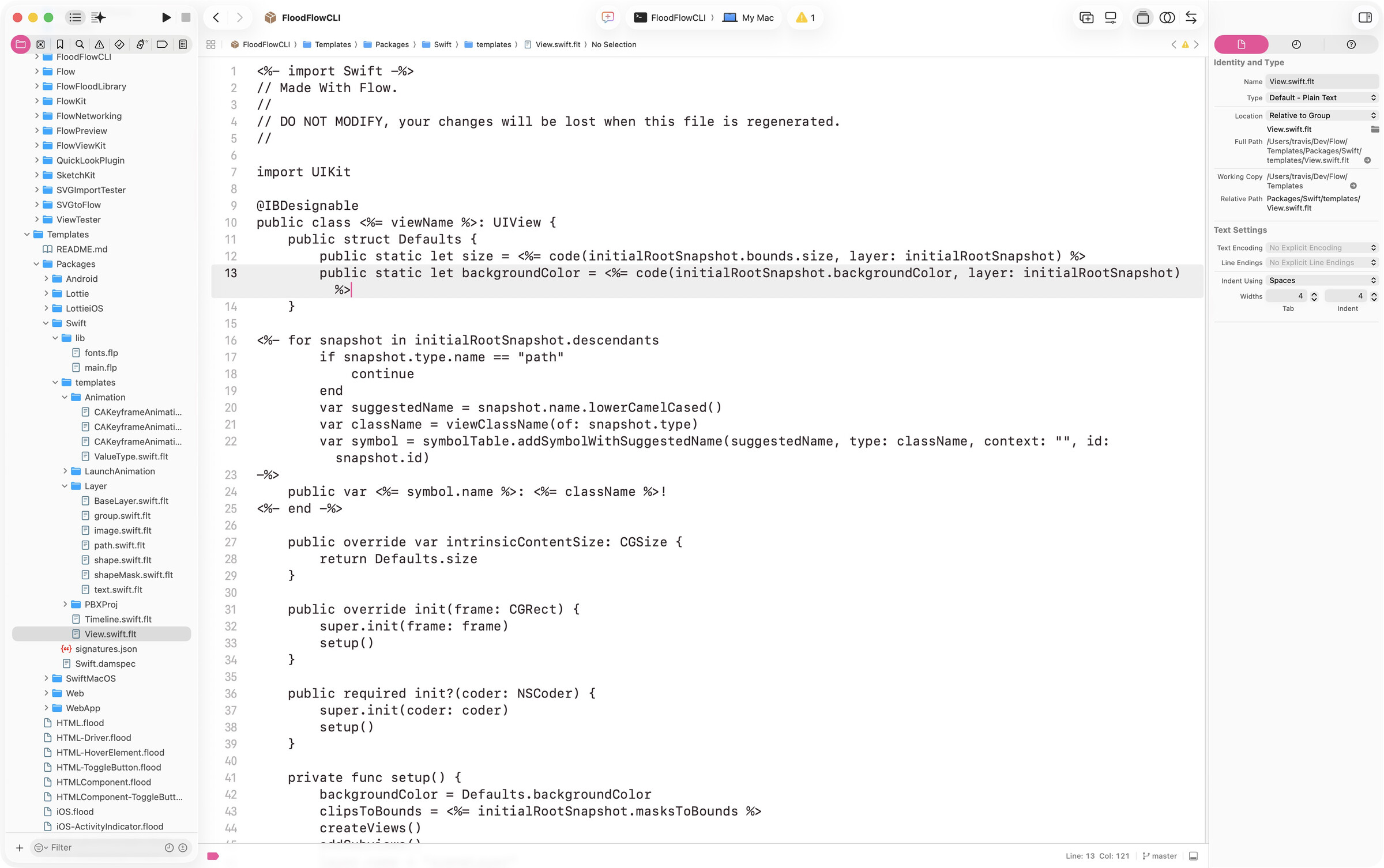
Once the engineers had built the templating language, I wrote the export templates: iOS, web, plus components from launch animations to buttons.
-
The marketing.
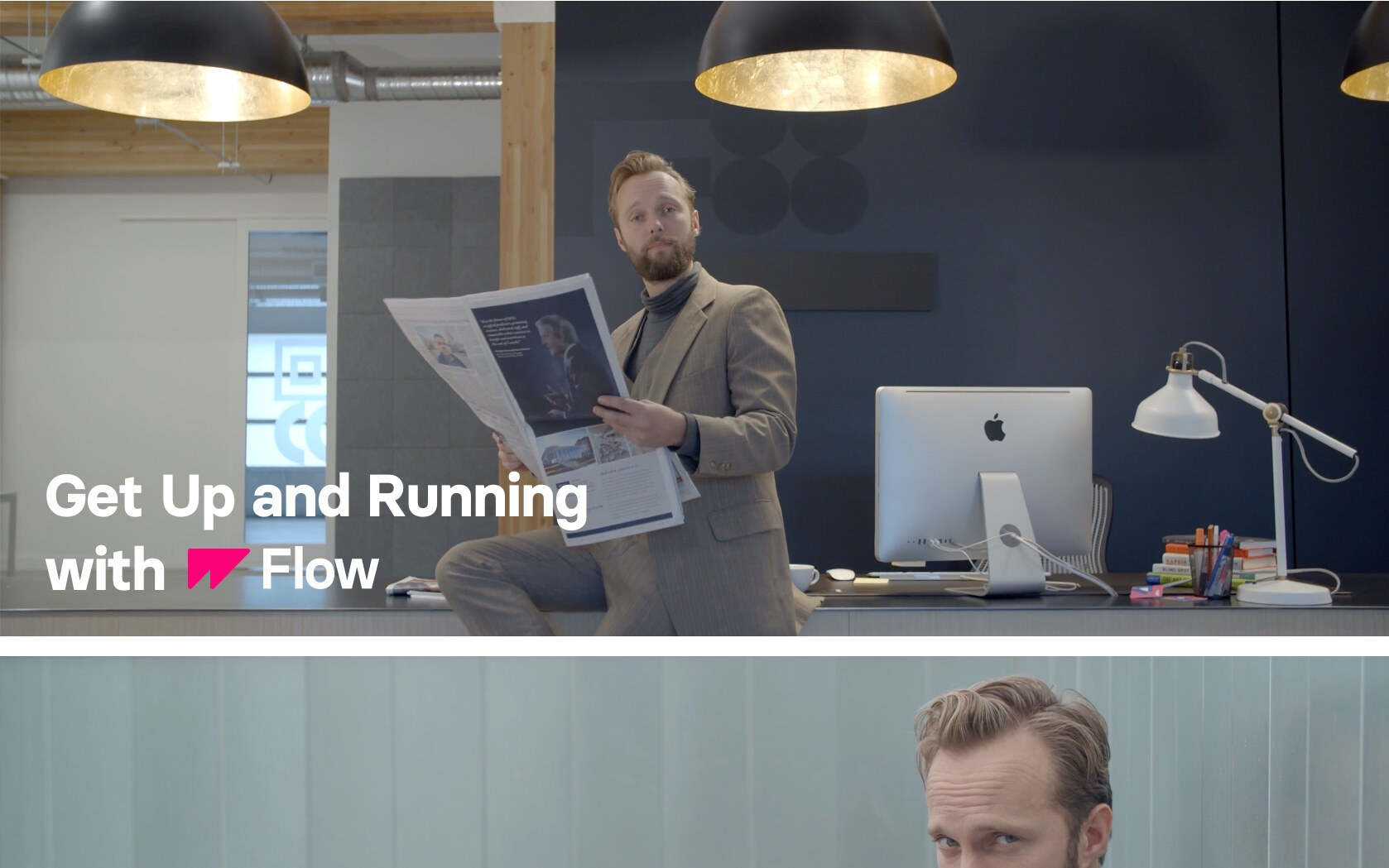
I directed every aspect of Flow's marketing: 320+ videos, the tutorials, a full course, the website, the blog as well as outreach and email campaigns.
The solution
Change anything. Flow captures it.
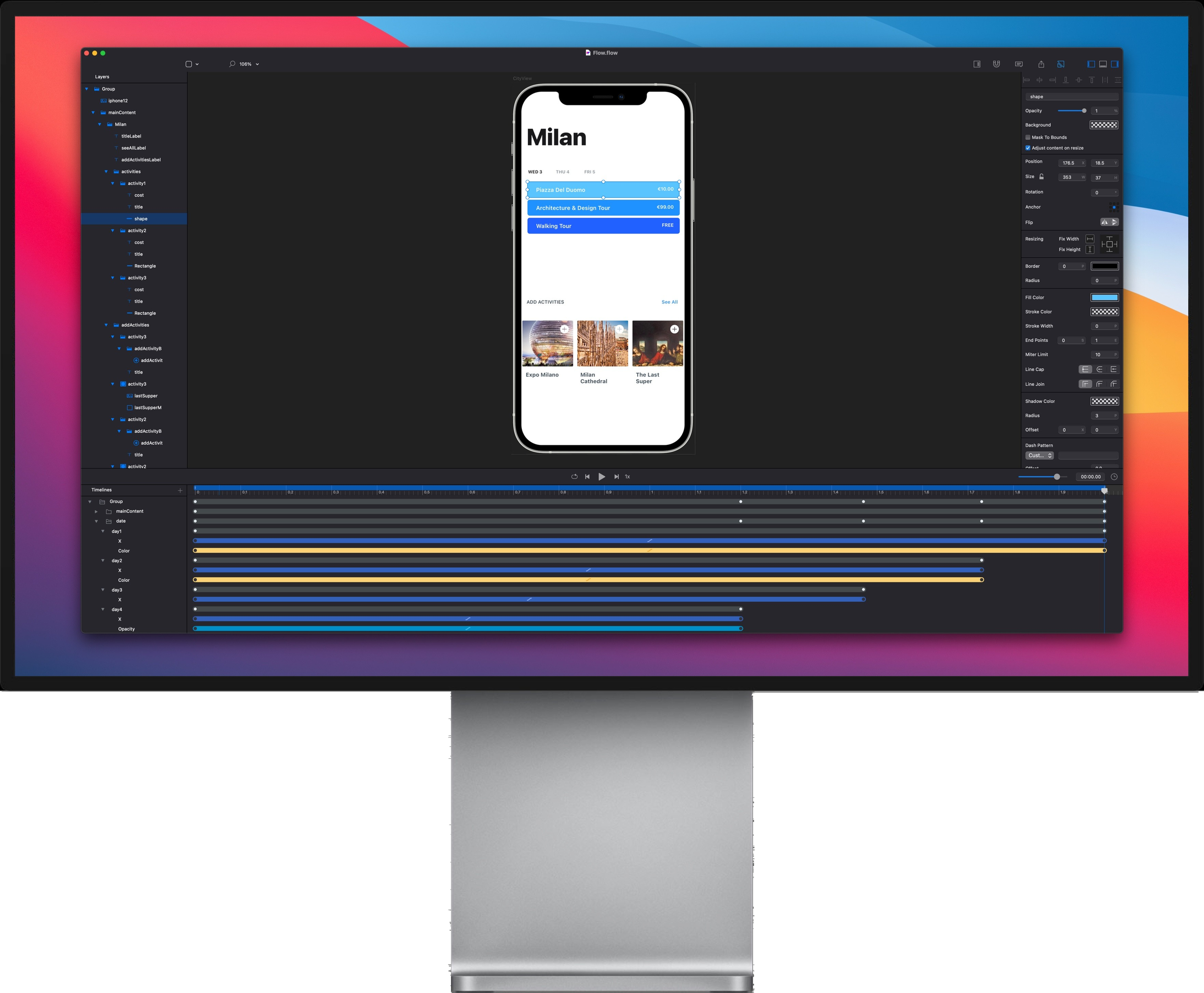
Every animation tool ran on keyframes, an interface that came out of the 80s. I invented a different one. You changed anything about a layer, its position, colour or size, at any moment on the timeline, and Flow captured it as a keyvalue.
-
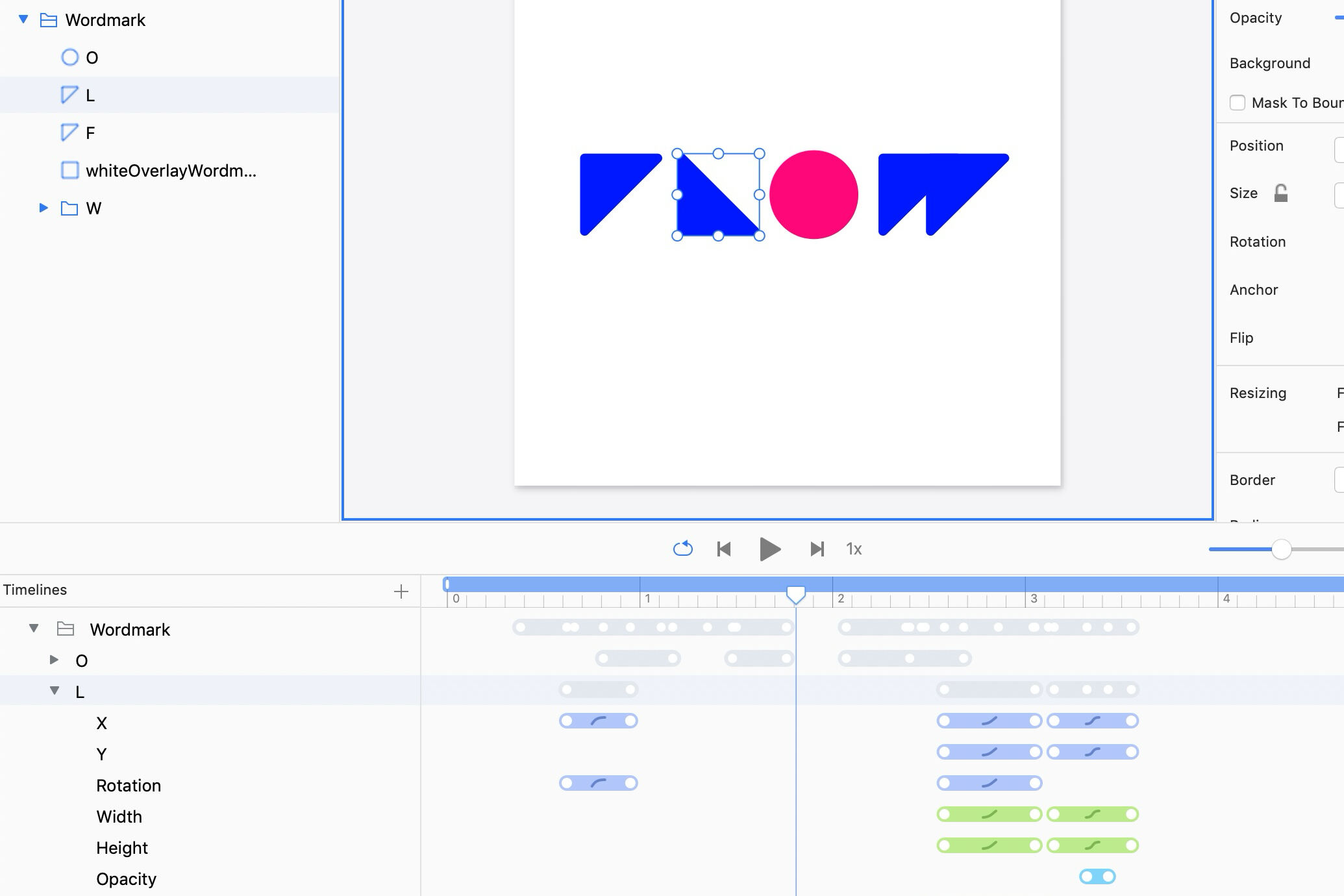
A track for every property.
Position, size, colour and rotation each got their own line, and each could move on its own time.
-
Drag the playhead to any moment.
Classic... but with some nice little extras, like snapping to keyvalues and ticks (like aligning frames in a design tool).
-
The timeline worked like the canvas.
Copy, paste, drag, distribute: the things designers did on the canvas, done to motion, across many keyvalues at once. Take that, After Effects.
-
Change the length, keep the motion.
Stretching an animation moved its keyvalues with it. You could pull one out and adjust it on its own.
Underneath
Nothing could break between design and code.
Three things had to hold. The design had to come in exactly, stay open to change, and go out as code a developer could ship.
If a layer came in wrong from Sketch, it broke the designer's vision. Every layer and effect had to come across exactly, and come across ready to move.
The model let designers keep designing. Any change, at any point, stayed part of the motion, and their creative vision was what shipped.
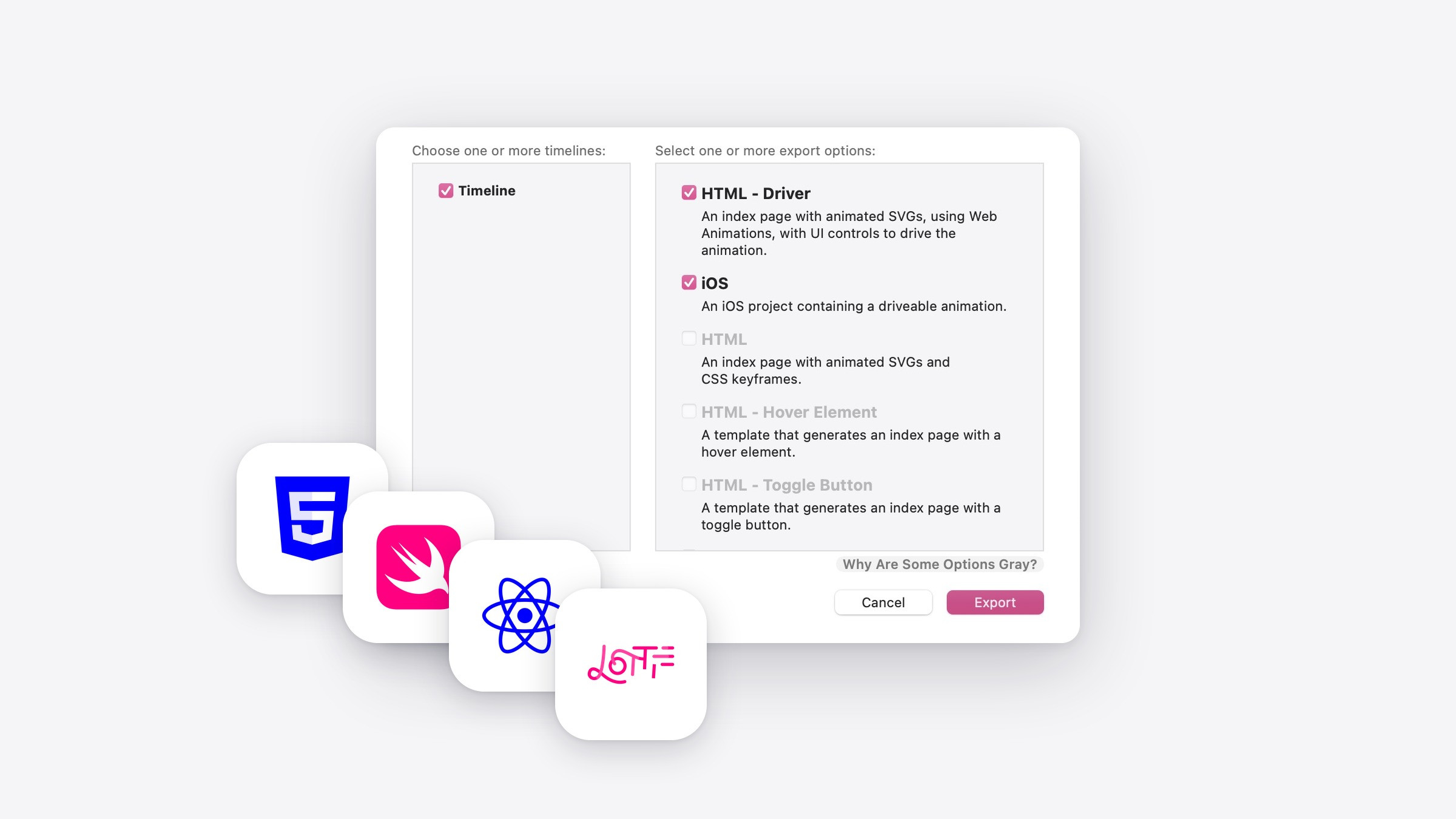
On the way out, the same motion had to become code a developer could ship. Flow exported it to fit the job: an iOS button, a whole iOS app, a launch animation.
Tough calls
Foundation first.
A new kind of interface design tool was the goal, and we were on track to develop it. Getting there meant building what it rested on, and saying not yet to everything else.
Interface design waited.
It meant moving from one screen to the next, and every move needed the layout and animation under it to be right first.
A new framework, not C4.
We planned to build Flow on C4, then built a new animation framework on the same principles instead.
The iOS export, built twice.
Once to make sure it worked, then again as a template. After that, HTML, SVG, React and Lottie came quickly.
No video effects, no 3D.
We focused on new mobile experiences, and left video effects and 3D for later.
The outcome
Designers shipped what they'd imagined.
It let people ship things that would have been impossible otherwise. They did it without learning to program. They took their motion to iOS, the web and React.
6
platforms one animation could ship to: iOS, Mac, the web, SVG, React and Lottie.5
24K+
designers experimented and shipped their visions with it.6
$300K+
in revenue.4
Used at










My take
A grind, and I'm proud of it.
For eight years3 I raised the money, ran the company, led and designed the product, built its front end, tested it and made its content.
Questions? Answers.
-
Who was on the team?
A core team of five, including me. About a dozen more joined for parts of it: engineers, designers, QA, a technical writer and marketers. Several went on to Apple, IBM, Slack, Sketch and Uber.3
-
How was it funded?
About $1.75M CAD. Three quarters came from a Canada Media Fund grant. The rest came from the revenue of Slant Design + Marketing Inc.2
-
Why did it end?
By the end of 2021 most of the team had moved on, and we couldn't raise more money. We wound it down slowly and let subscriptions run until about 2023. It was tough when it ended.3
-
What would you do differently?
The network is part of the product. Going indie works when timing does the network's job. Otherwise you need backing.
M/O.