 M/O
A ring of iPads you can reach up and touch.
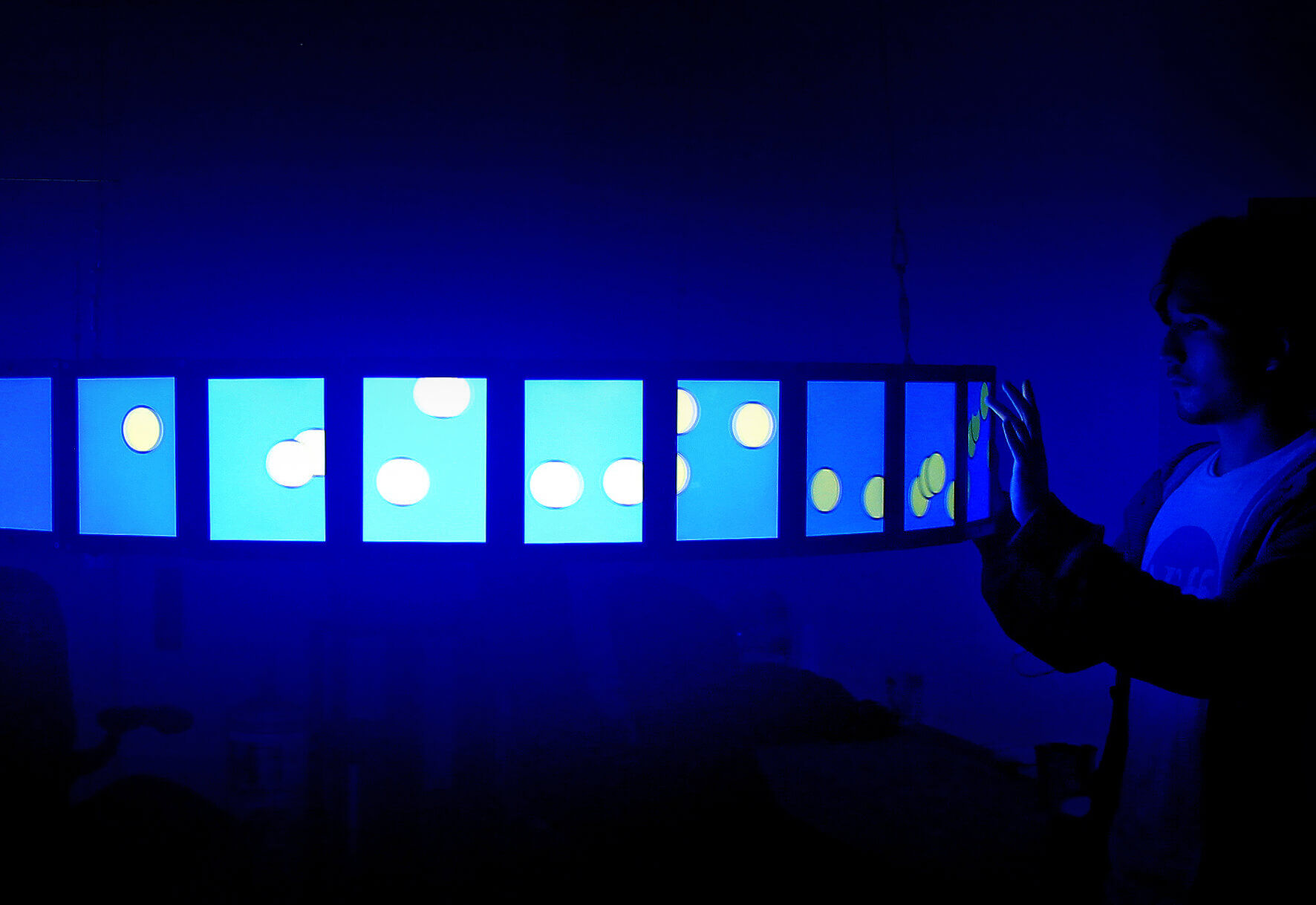
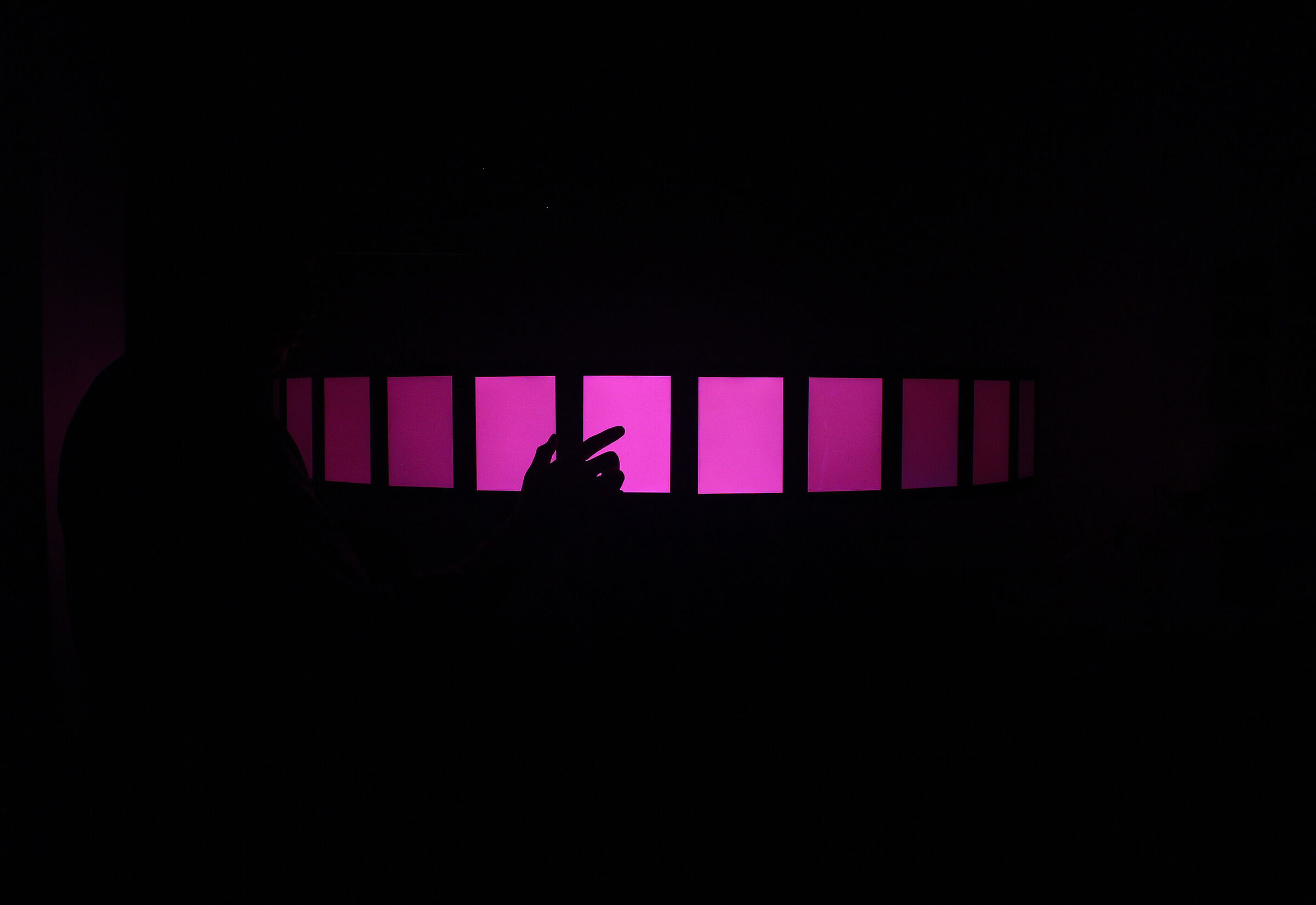
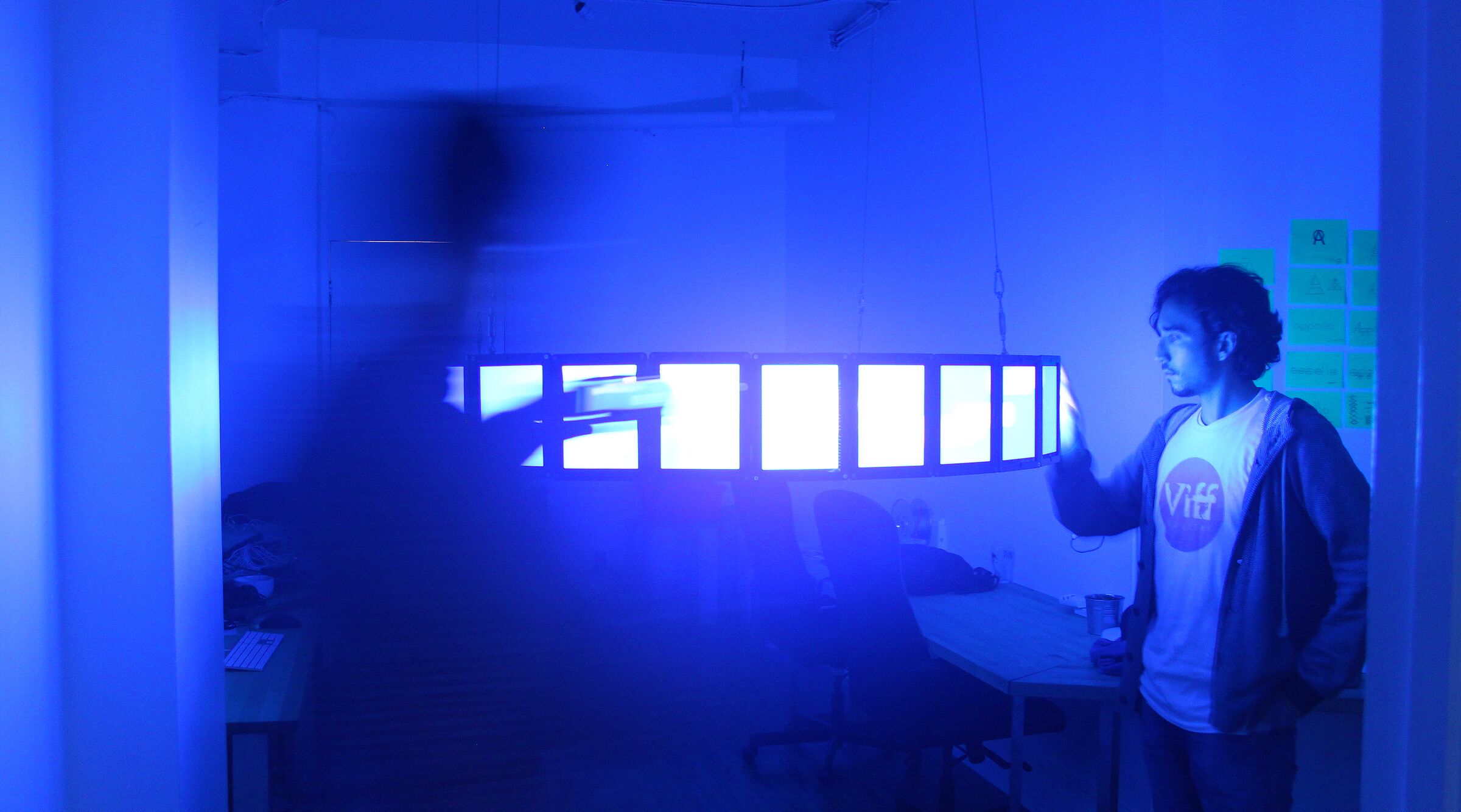
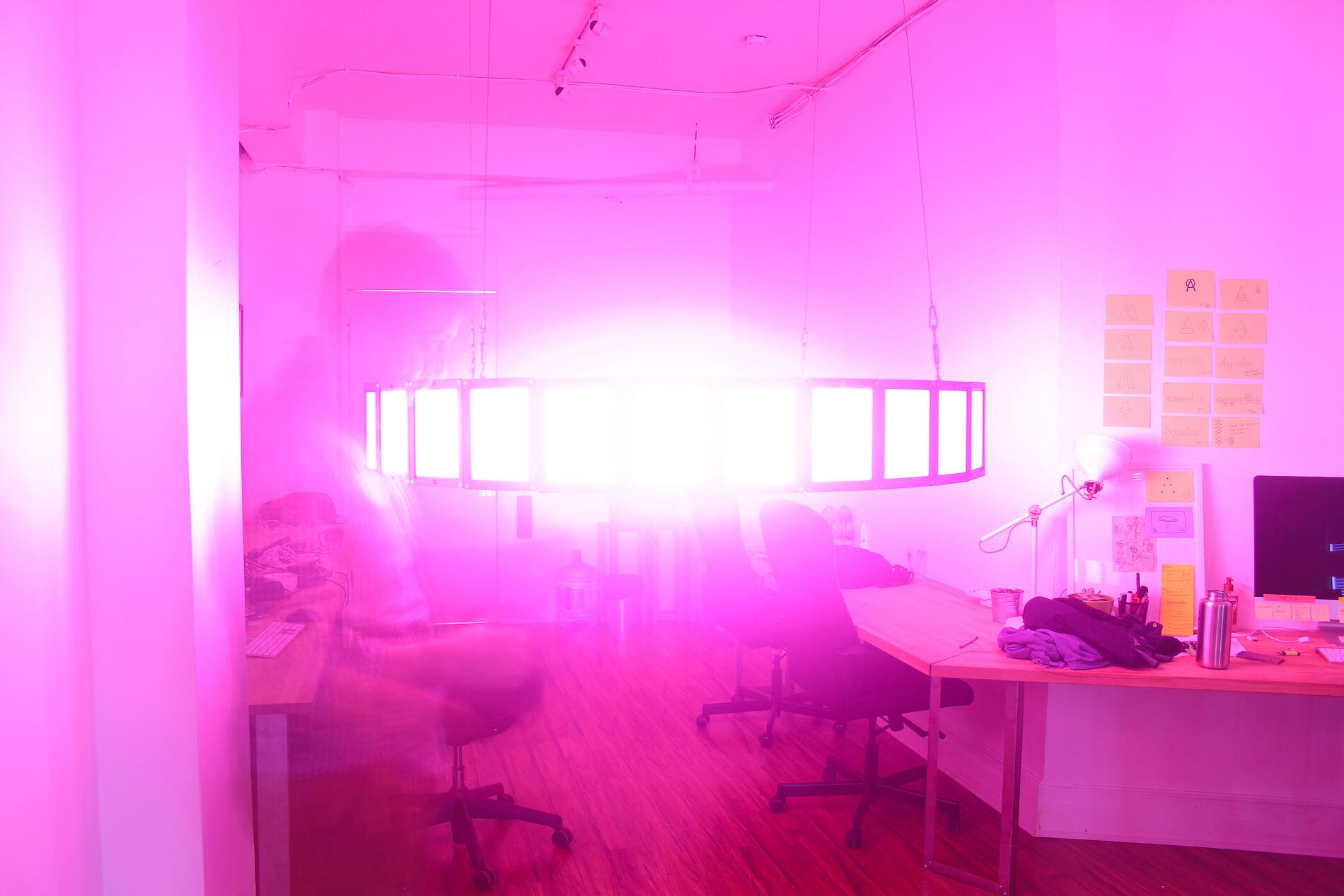
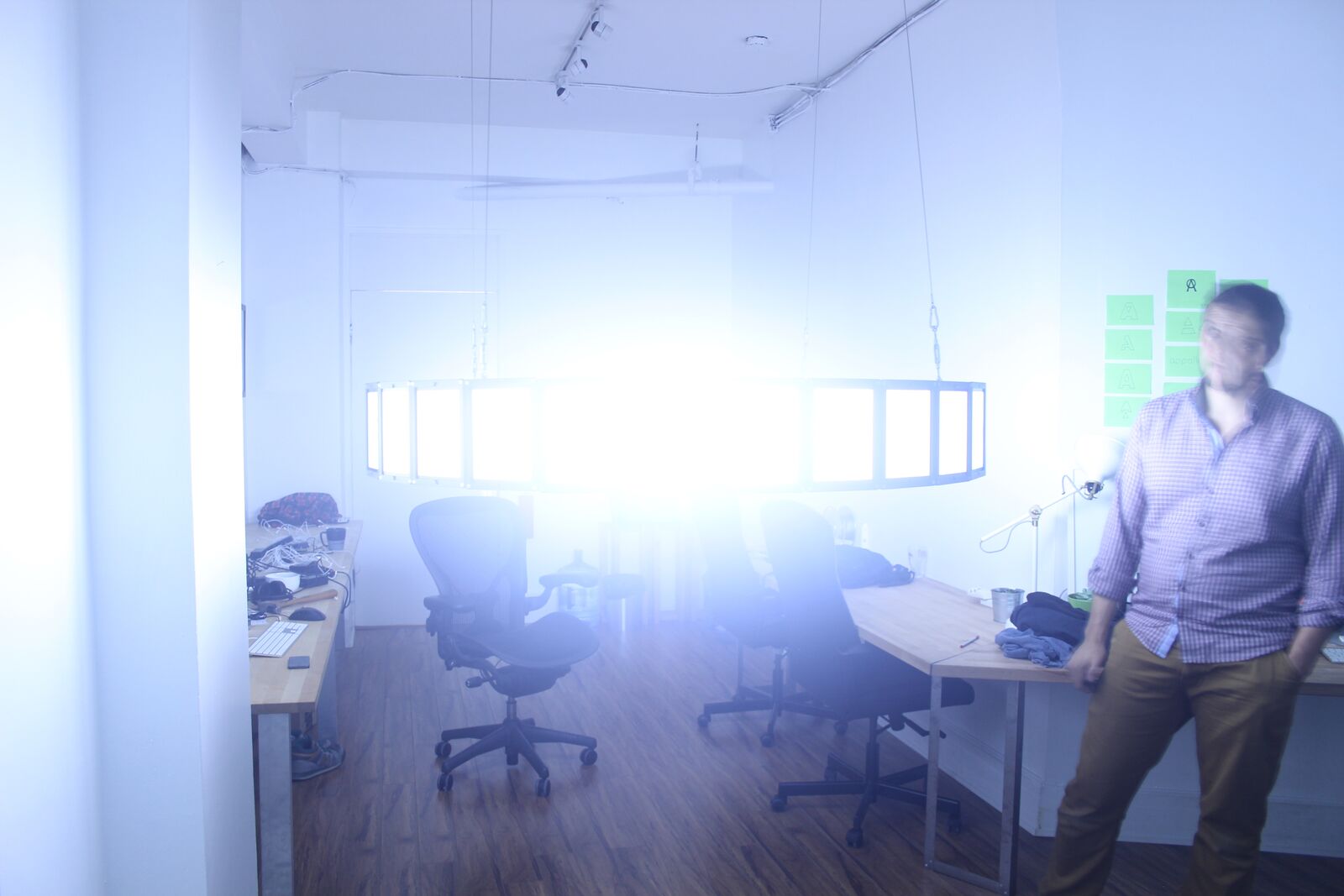
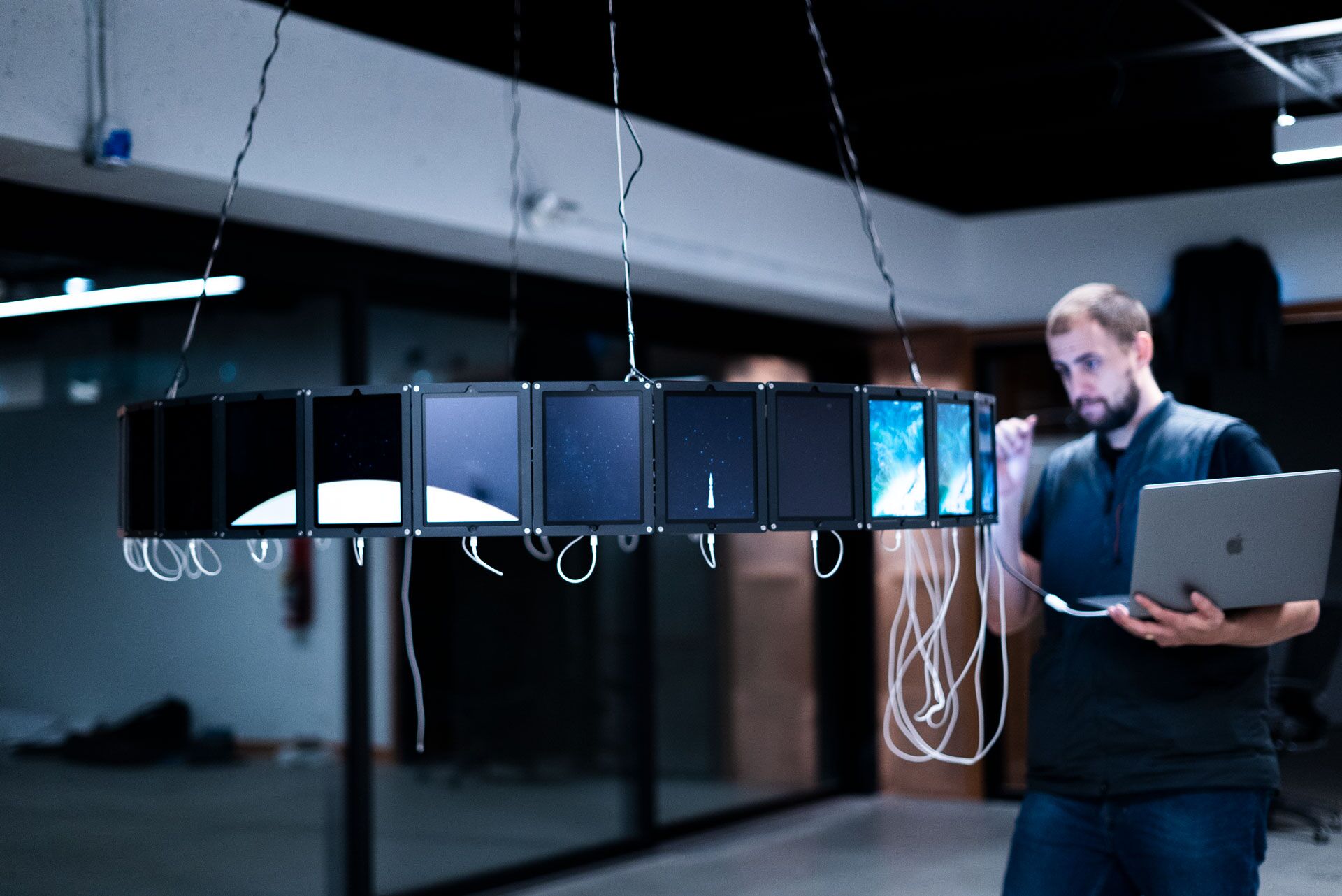
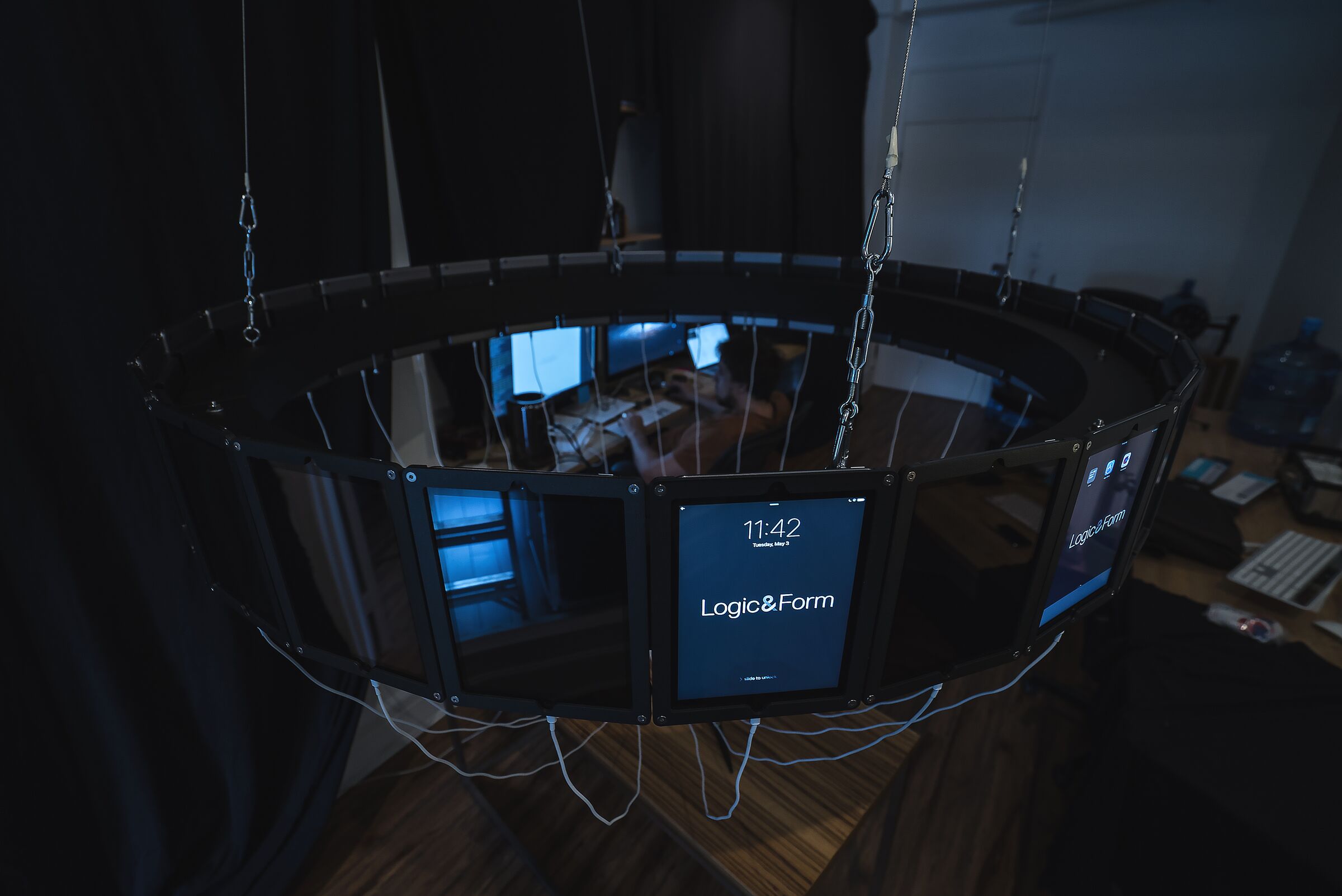
Twenty-eight iPad minis hang in the dark and play one picture between them.1 Touch any screen and the whole ring moves with you.
Project facts
Get to know M/O.
The problem
We needed a signature piece for our new studio.
On CityBits, the installation we made before M/O, you walked up and steered it with your phone. One device controlled another, just by being near it. I pictured a ring of iPads, all linked, that could be a chandelier or whatever you put on them.
What I owned
From the 3D model to every pixel on it.
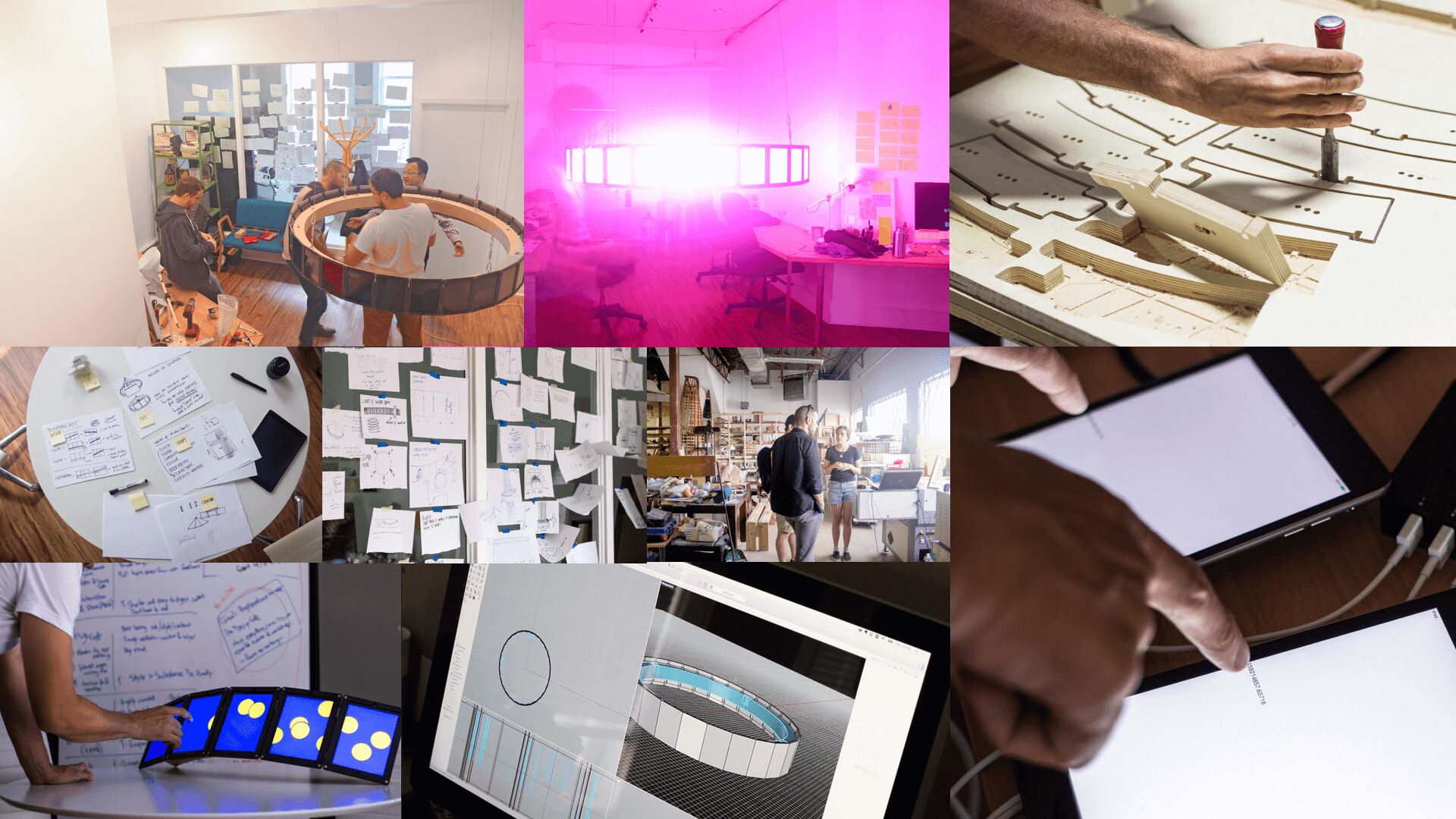
I designed the ring, oversaw its build, wrote its first networking code, made every prototype and built the interface for every piece that ran on it.
-
The idea and the grant.
I came up with the ring and wrote the Creative BC grant that paid for it.
-
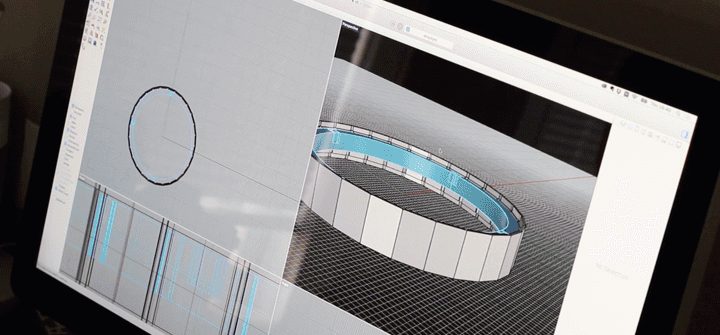
Industrial Design.
I crafted the model, sourced components and pulled it all together in Rhino.
-
The construction.
I oversaw the assembly and production of the frame.
-
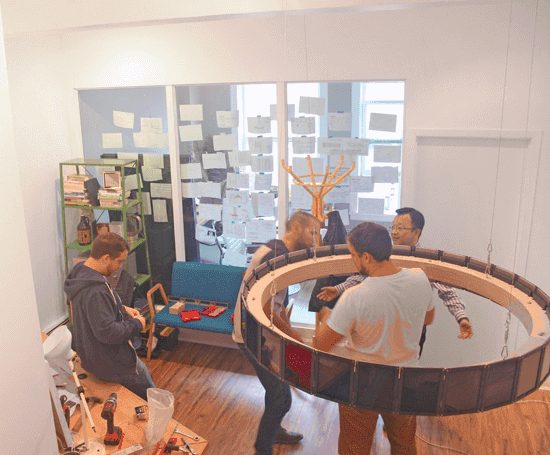
The installation.
I personally assembled the sculpture, from hanging equipment to iPad mounts.
-
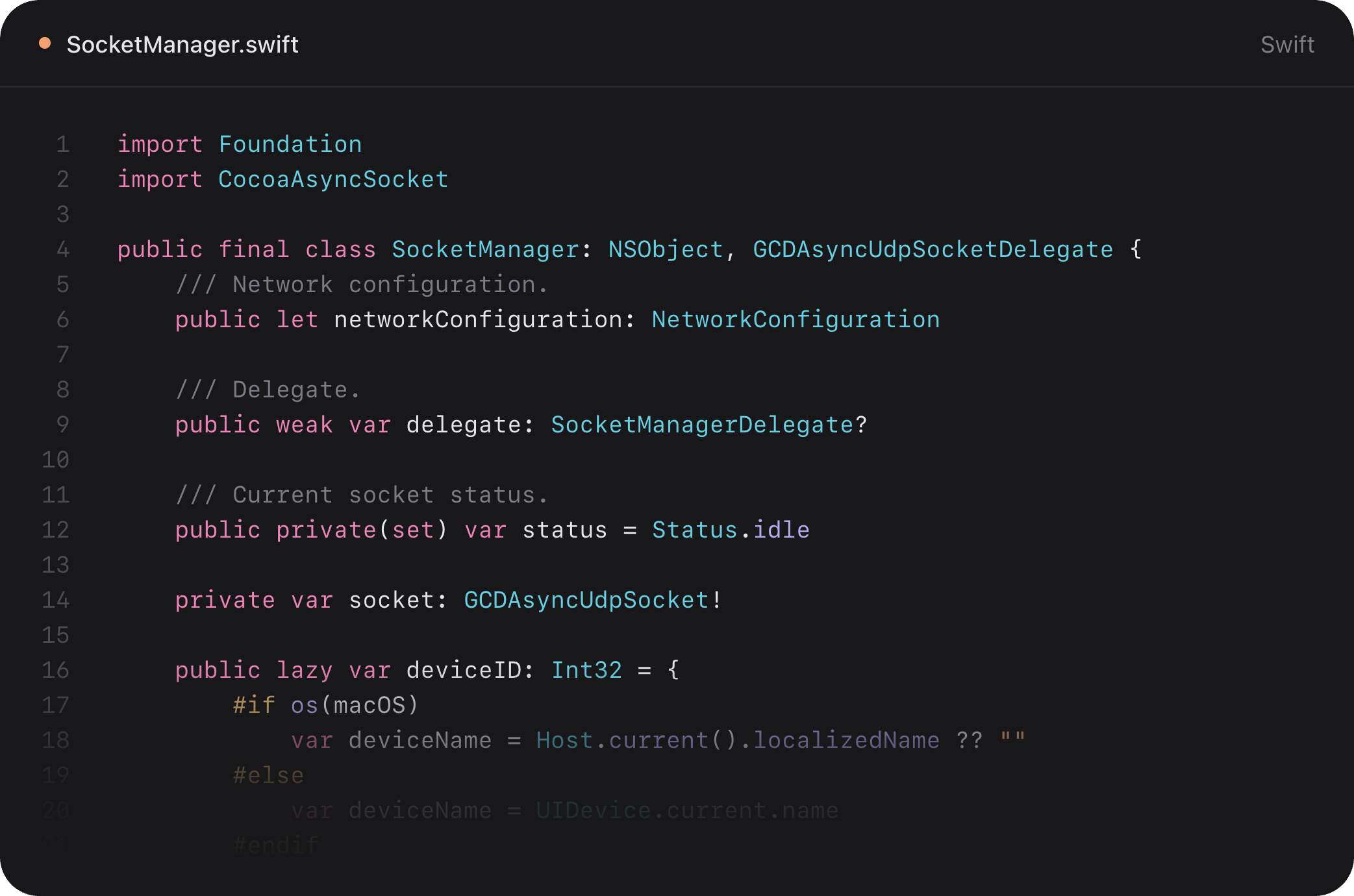
The software.
I wrote the first networking code, and built on it after Alejandro made the sync solid.
-
The prototypes.
I made all of them.
The solution
A ring of screens that felt like a single interface.
I wanted it to feel like one seamless piece: a chandelier glowing in the dark, swaying a little, that anyone could walk up to and touch. Whatever you touched moved under your hand and carried on around the ring, screen to screen. The sound travelled with it: every iPad played its own, so you could hear a comet cross the ring.
Underneath
Any number of screens speaking to one another.
A single canvas, wrapped around a ring of 28 iPads.1 Each screen showed its own slice. Touch one, and every screen moved with it, all in sync.
Prototypes. Interacting on one sent a signal to all of them.
Each screen drew its own slice, and one touch moved them all.

MONode / MOHub. Our own networking code, linked each iPad via its device name, MO1 to MO28. The id was used to coordinate touches.

One canvas, 28 screens wide. Each iPad uses its device id to offset and draw its slice.
C4. Every installation on M/O used C4 for graphics and touch.
Tough calls
The budget shaped the form.
These were artworks, so nothing was cut to make a delivery. We wanted to keep building new things on M/O, and what we could afford decided the shape they took.
Smaller screens, a full ring.
I wanted big iPads. We couldn't afford enough of them to make a ring. The ring mattered more. We went with minis, and they looked kind of cool.
Network, not Bluetooth.
It began with the Bluetooth proximity work from CityBits. In the end we built our own networking code.
A line, not a ring.
At Resonate it went up flat along a wall, about 12 iPads wide.
What we never built.
Murals across a wall, a version that recorded as you walked, and the ring hung as a chandelier for good.
Resonate, Belgrade
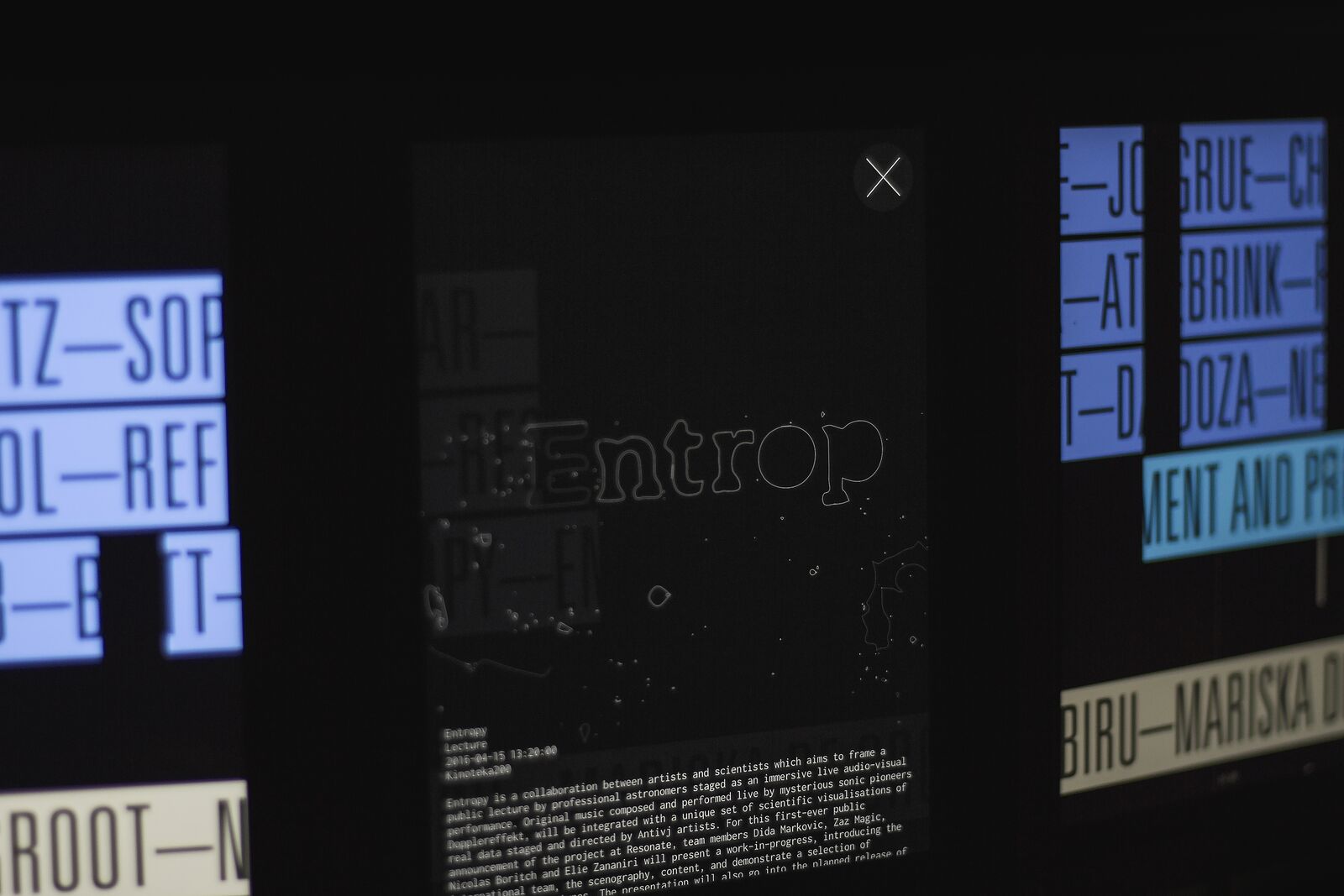
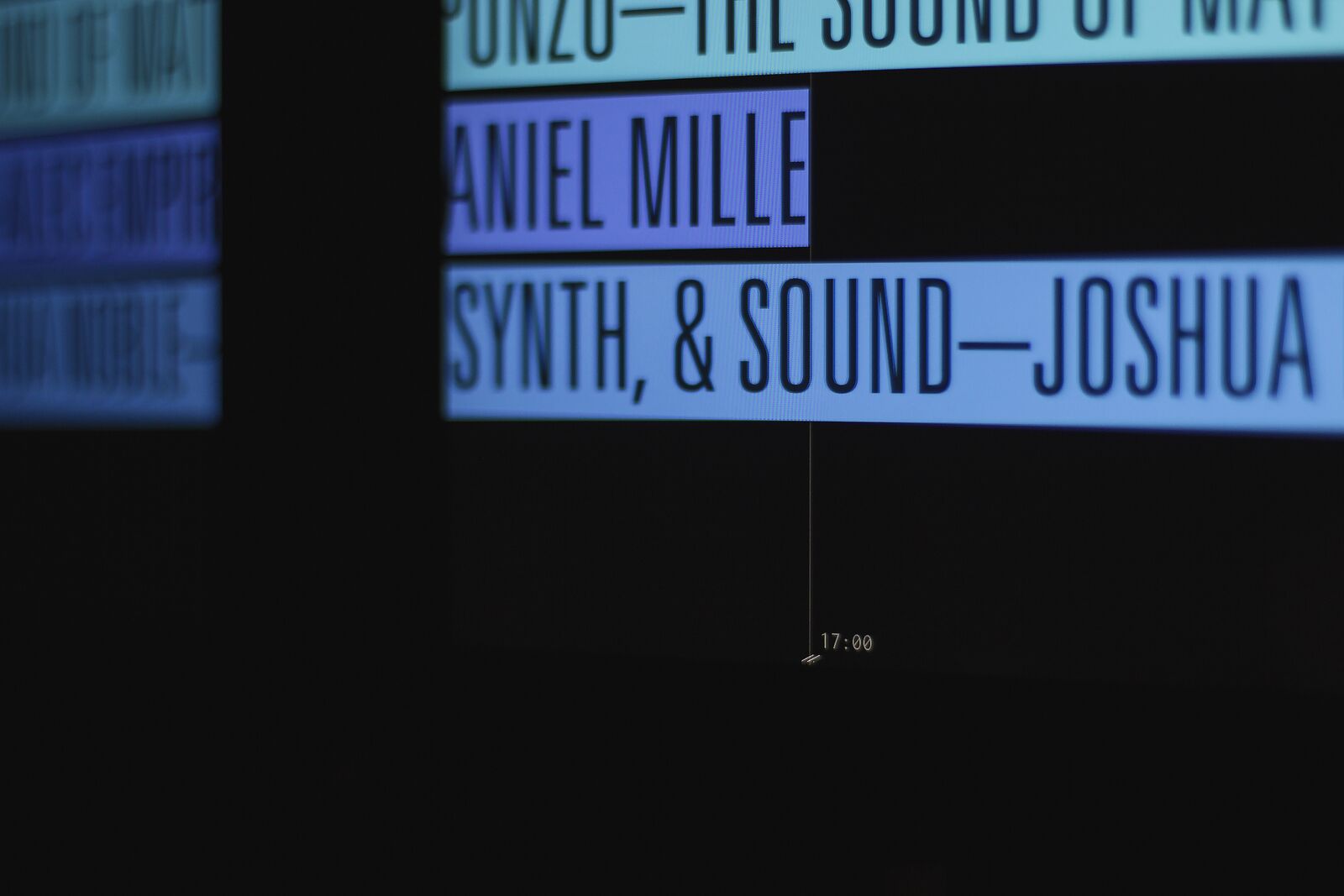
A schedule you could touch.
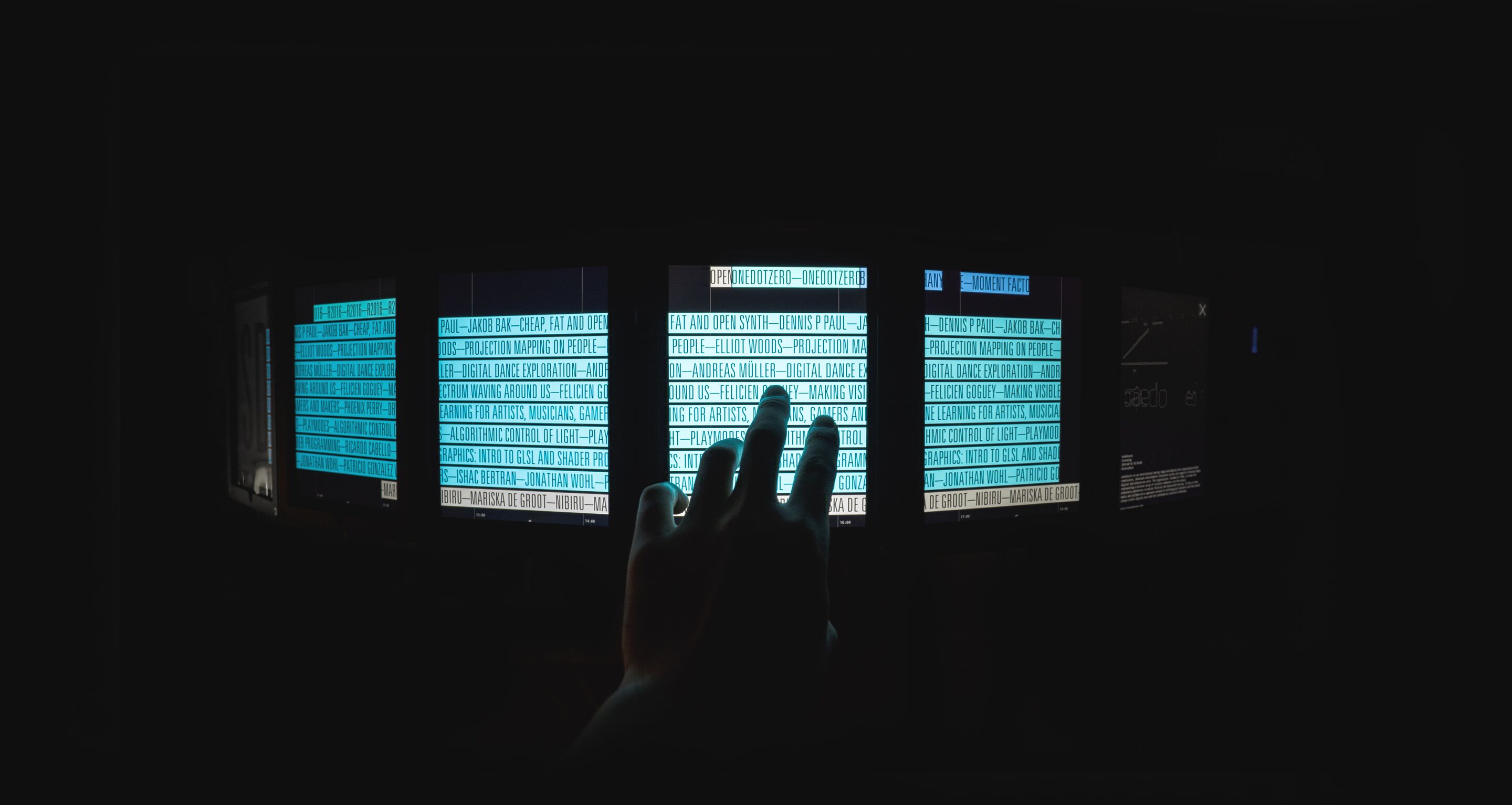
M/O opened at Resonate, a festival in Belgrade, laid flat along a wall as the festival schedule. Resonate commissioned it. It was the subject of my workshop, "Building Universes for M/O", and part of my talk.
The festival schedule, opened and scrolled by hand.
TIFF Kids, Toronto
Planets you could touch.
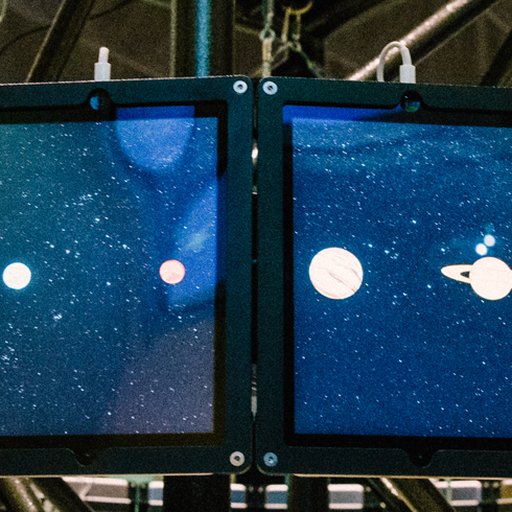
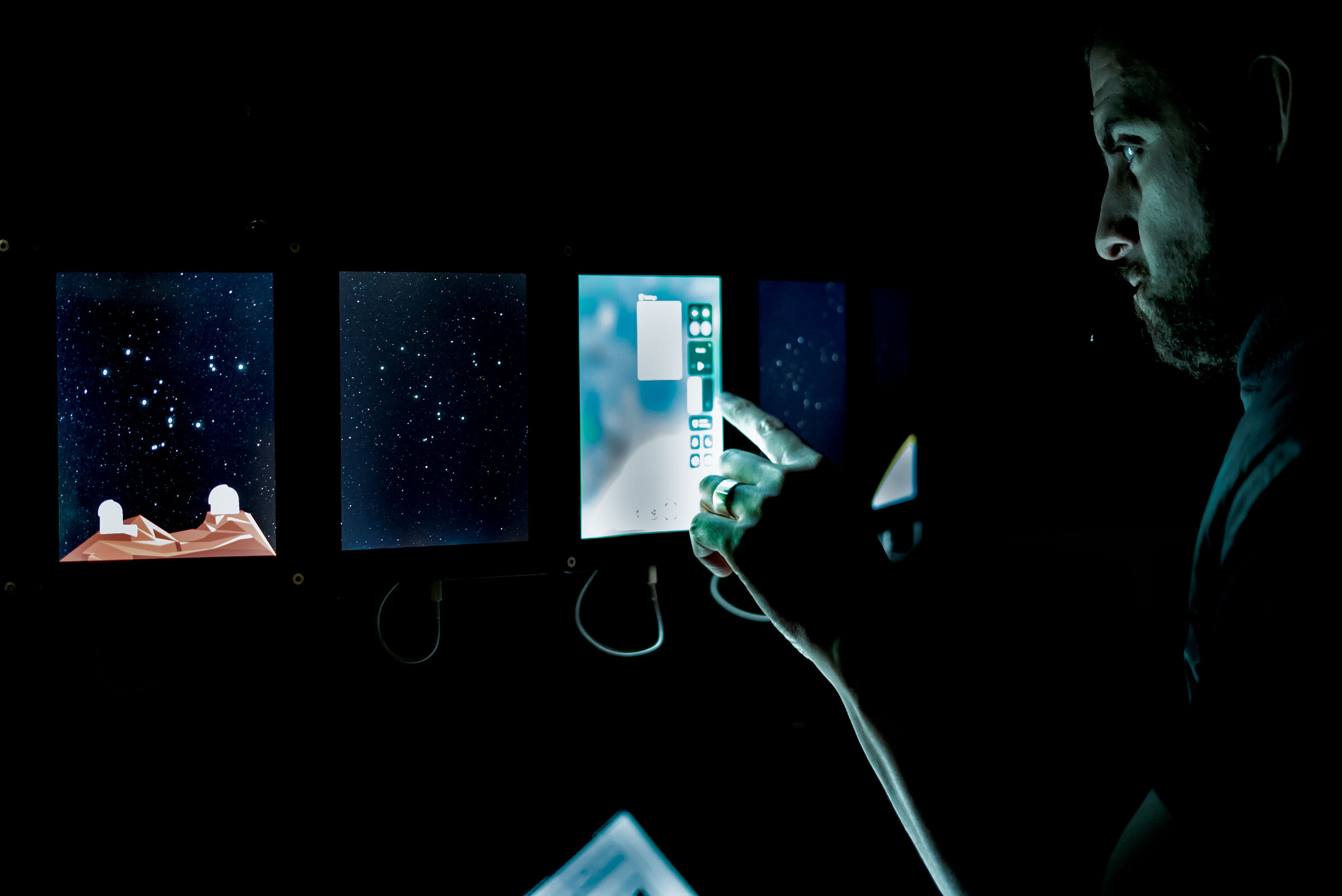
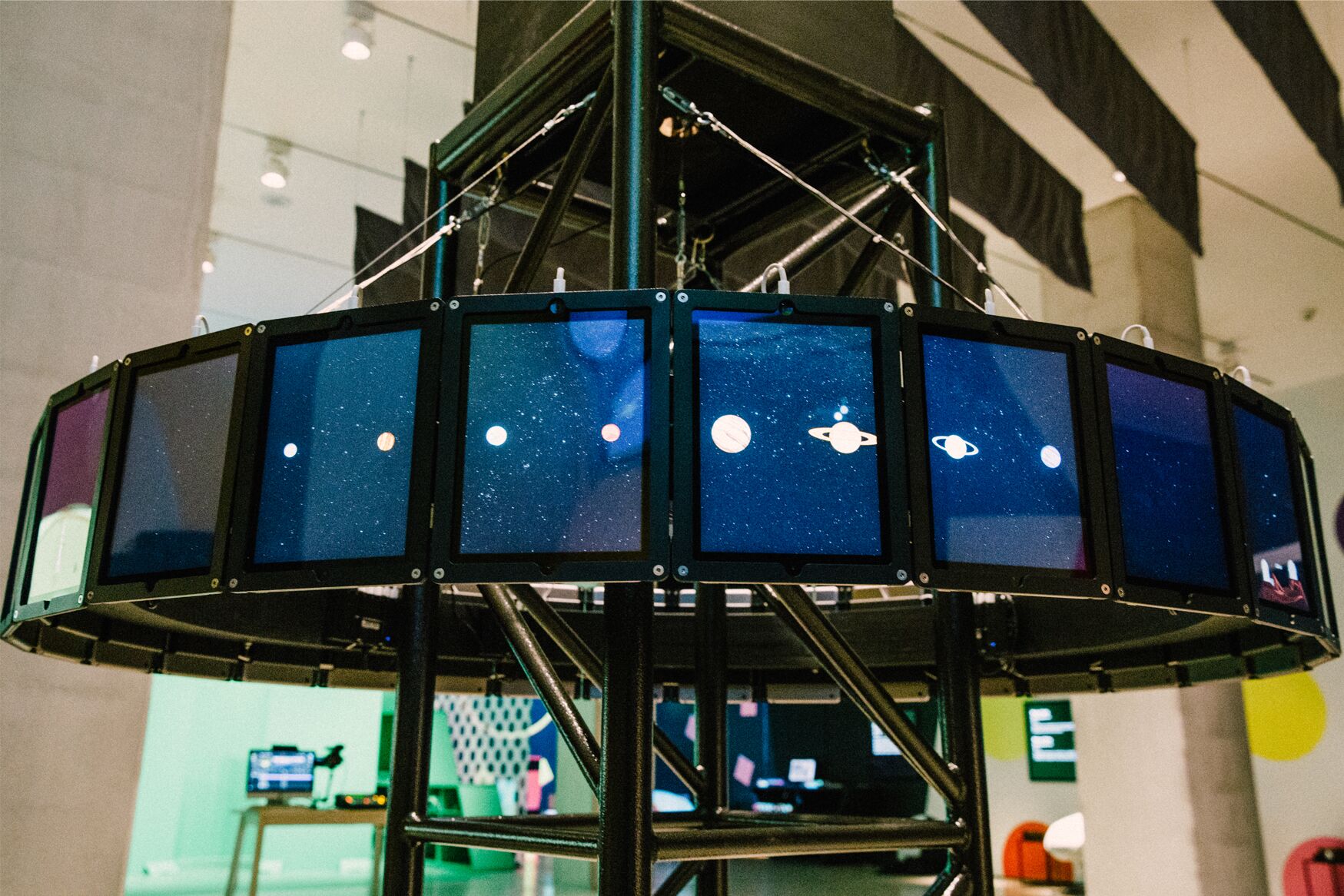
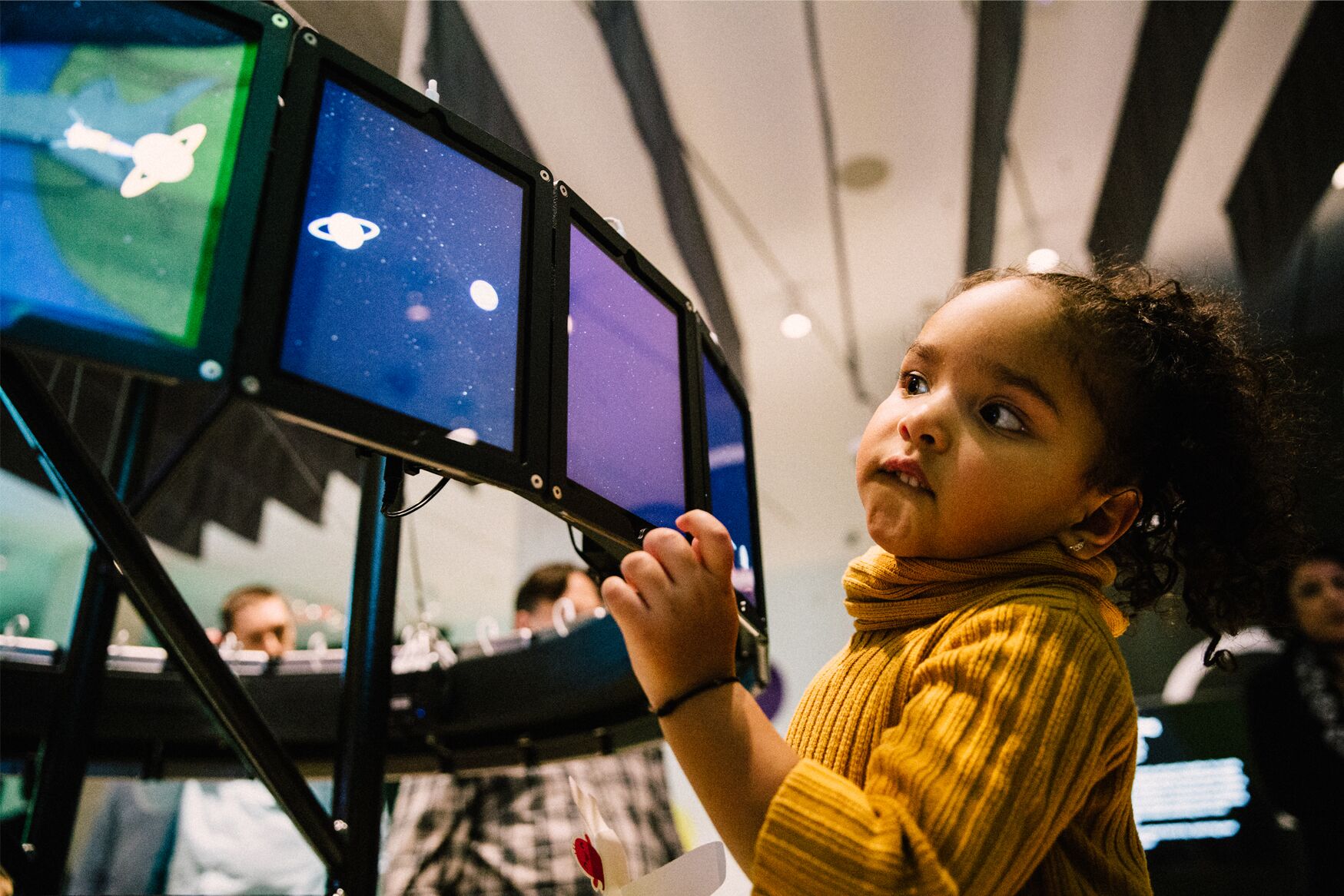
Then TIFF Kids, the children's space at the Toronto International Film Festival, for months. Kids reached up and steered a space landscape around the ring.
-
A universe overhead.
Planets, comets, rockets and constellations, all the way around 28 screens.
-
Ages 5 and up.
Touch, drag and flick celestial bodies.
-
Look up.
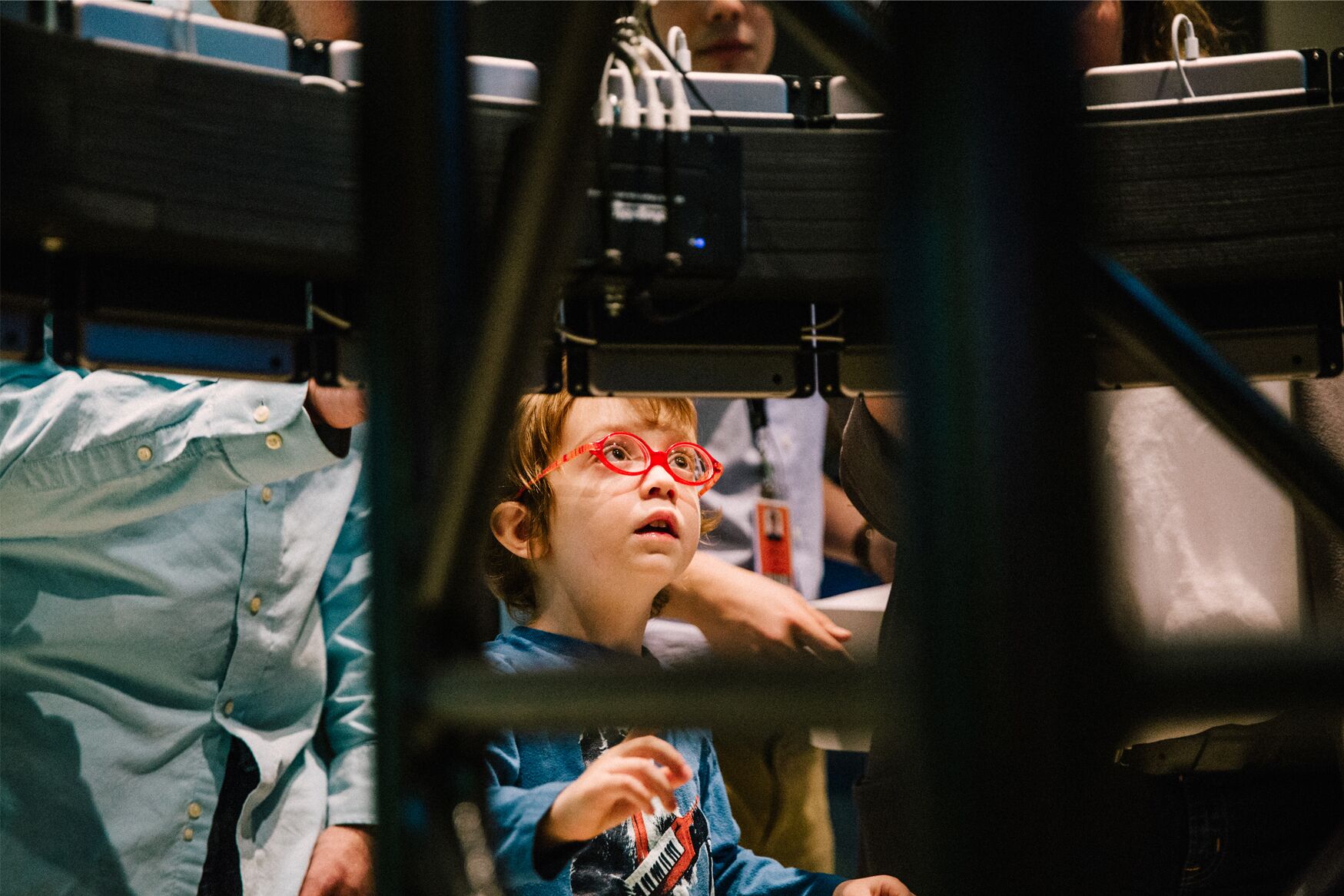
The ring hung overhead, the sky running all the way around it.
-
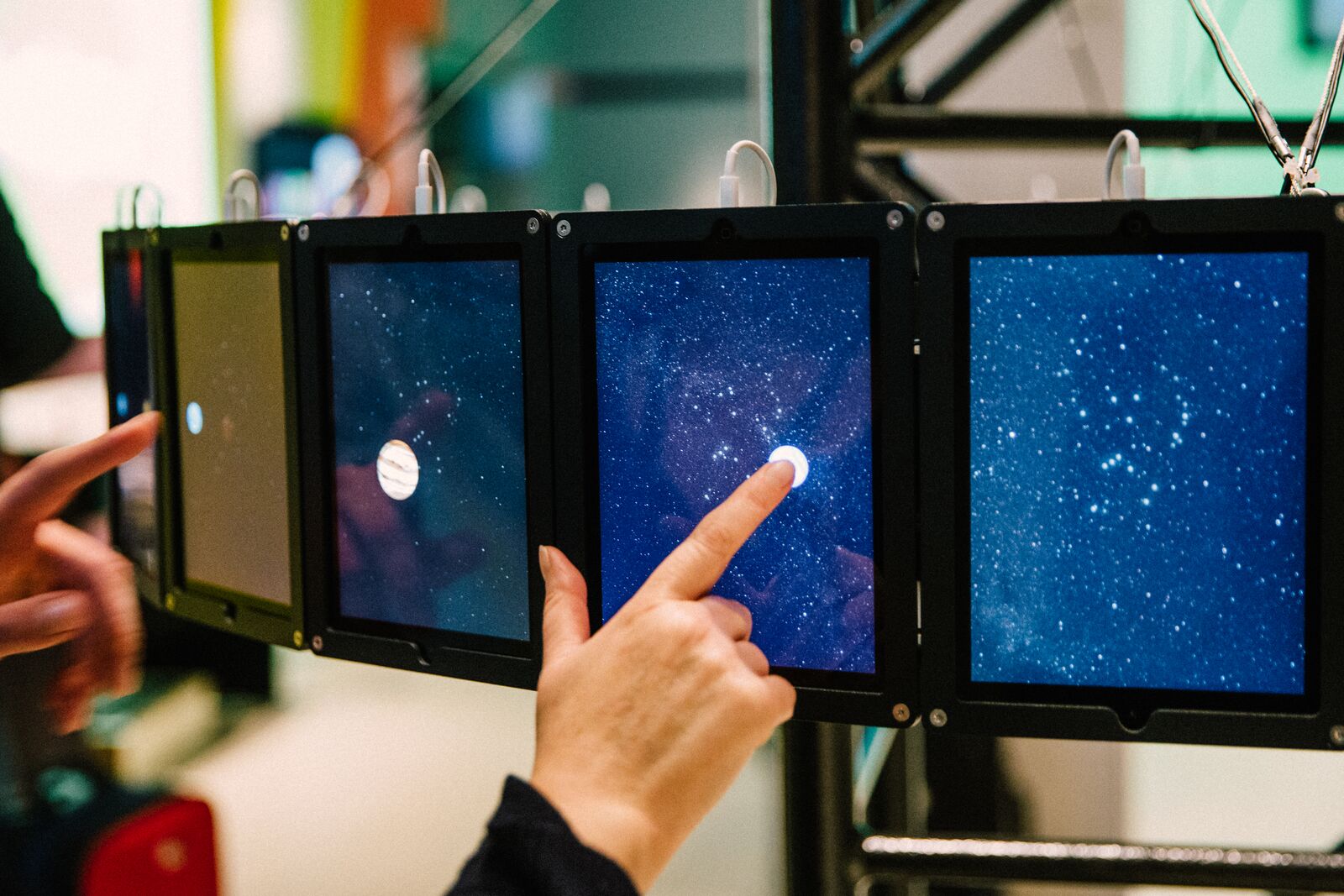
Two hands, two planets.
Each person steered their own part of the ring.
The outcome
A signature piece that queued up everything after it.
The ring ran many artworks, from a festival schedule in Belgrade to a space landscape in Toronto. Its sync code, MONode, went into the Interactive Wall's first touch prototypes, and the pitch for the wall opened its work with M/O.
My take
Could I make a new kind of interface out of a few linked devices?
That was the question, and M/O was the answer: twenty-eight iPads that felt like a single screen.
Questions? Answers.
-
How was it funded?
A Creative BC Interactive Fund grant, which I wrote.4
-
How did 28 iPads stay in sync?
Every iPad ran the same app, at the same time. The canvas was 28 iPads wide, and each one knew its place on the ring and drew only its slice. A touch on one sent a signal to all of them. I started with a Bluetooth prototype; in the end we built networking code instead, and Alejandro Isaza turned it into the MONode library.
-
What did it sound like?
28 channels of spatial audio, across the iPads. At TIFF Kids, a rocket crossed all 28 screens and its sound followed it.1
-
What made the graphics?
C4, my open-source framework for iOS. M/O pushed what we could do with it.
Clausage.