 Logic&FormIn progress
Interaction. Design. Art.
Logic&Form was my interactive studio in Vancouver.1 We invented, designed and built concept apps, installations and interactive artworks. I started it and led its work, from the first commission to a team of 13.2
Studio facts
Get to know Logic&Form.



The problem
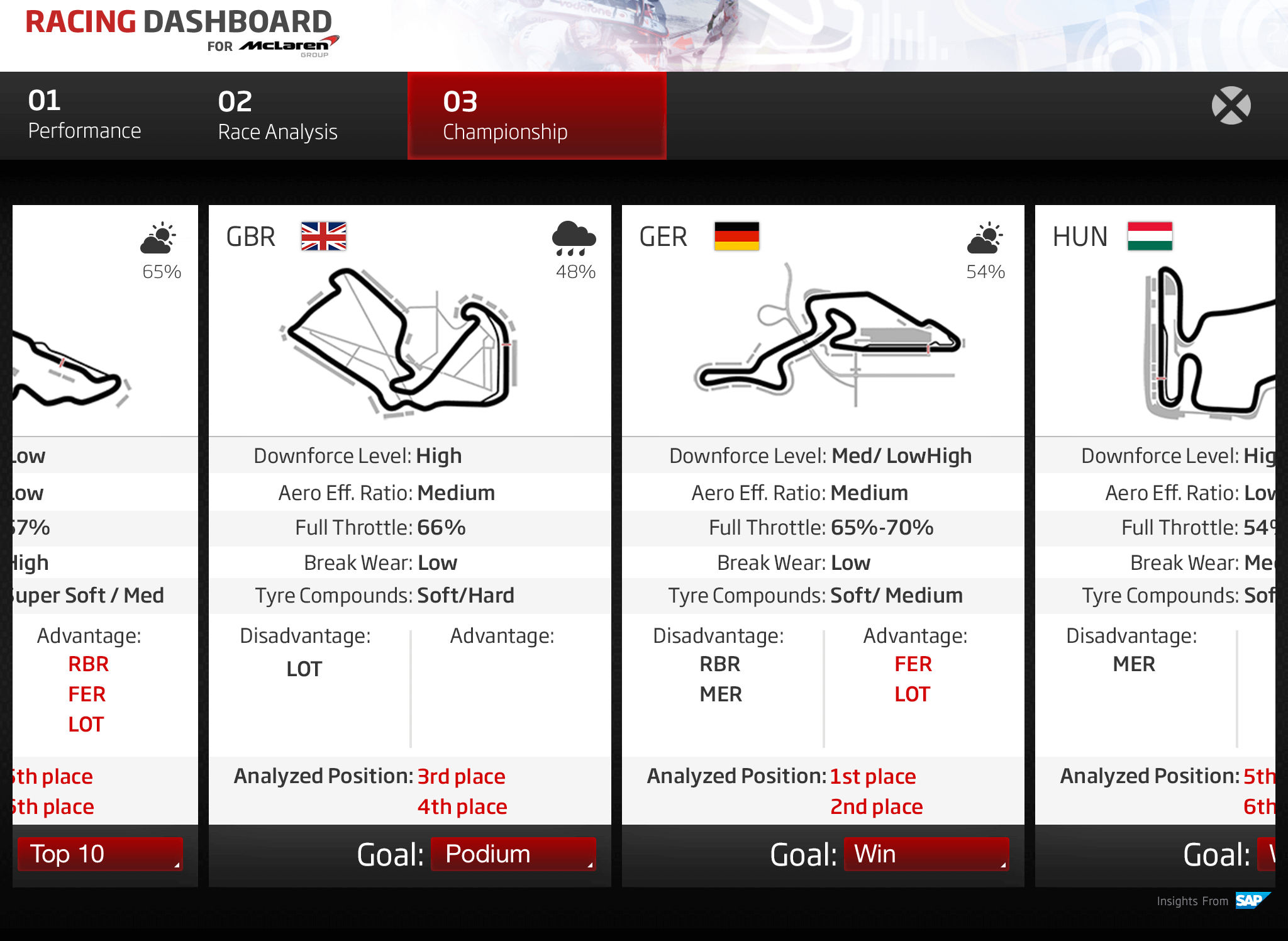
It started with concept apps for SAP.
SAP's teams came with a vision, static screens and a story. Inside SAP, an idea won its funding by moving on stage at Sapphire, the company's conference. We built what moved. Friends at Slant Design + Marketing commissioned me in 2012, while I was still in Calgary.
Everything that moved was drawn in C4, the framework I'd built for iOS. It got me the first real interactive work for a big company, and every project the studio made before the Interactive Wall ran on it. With it, we started to bring in more work. In 2013 I joined Slant as a partner and gave my interactive work its own name.1 The teams got funded. The guy leading them, his career took off. We were there helping.
Learn more about C4A concept app for SAP: stores and products on a map.
-
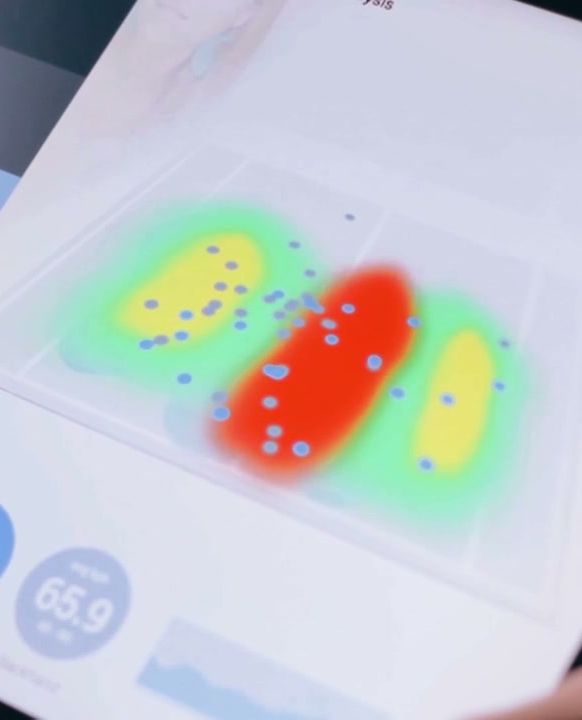
Tennis statistics for the Women's Tennis Association.
Where a player's shots landed, as a heat map.
-
WantedA concept app on stage at Sapphire: the presenter and the big screen. Photo or video still, 3:2, 1400px wide
A concept app on stage at Sapphire.
To come.
What I owned
What I owned, and what the team did.
-
WantedThe Logic&Form team together, any year: in the studio, at a launch or at the wall's opening. Photo, 3:2, 2400px wide
The studio.
I started Logic&Form inside Slant Design + Marketing, where I was a partner, and ran it as its creative director.
-
The work coming in.
I brought in the SAP apps through friends at Slant, wrote the grants for CityBits and M/O, and pitched the Interactive Wall.
-
WantedC4 at work: its code in Xcode, or the app that proved it. 4:5, 1200 wide
The framework.
I built C4, which the studio's work ran on until the wall.
-
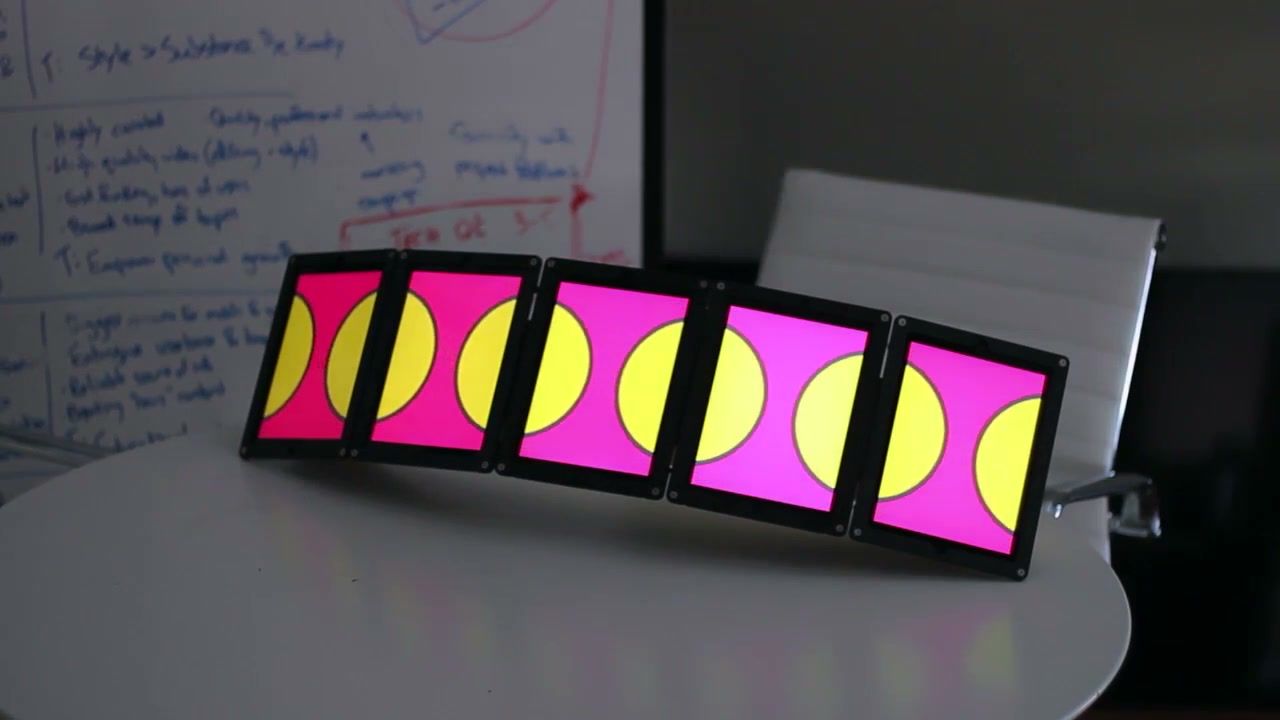
Design and code.
I designed the interactions and wrote code: the SAP apps' motion, CityBits' phone link, and M/O's first sync and its 3D model.
-
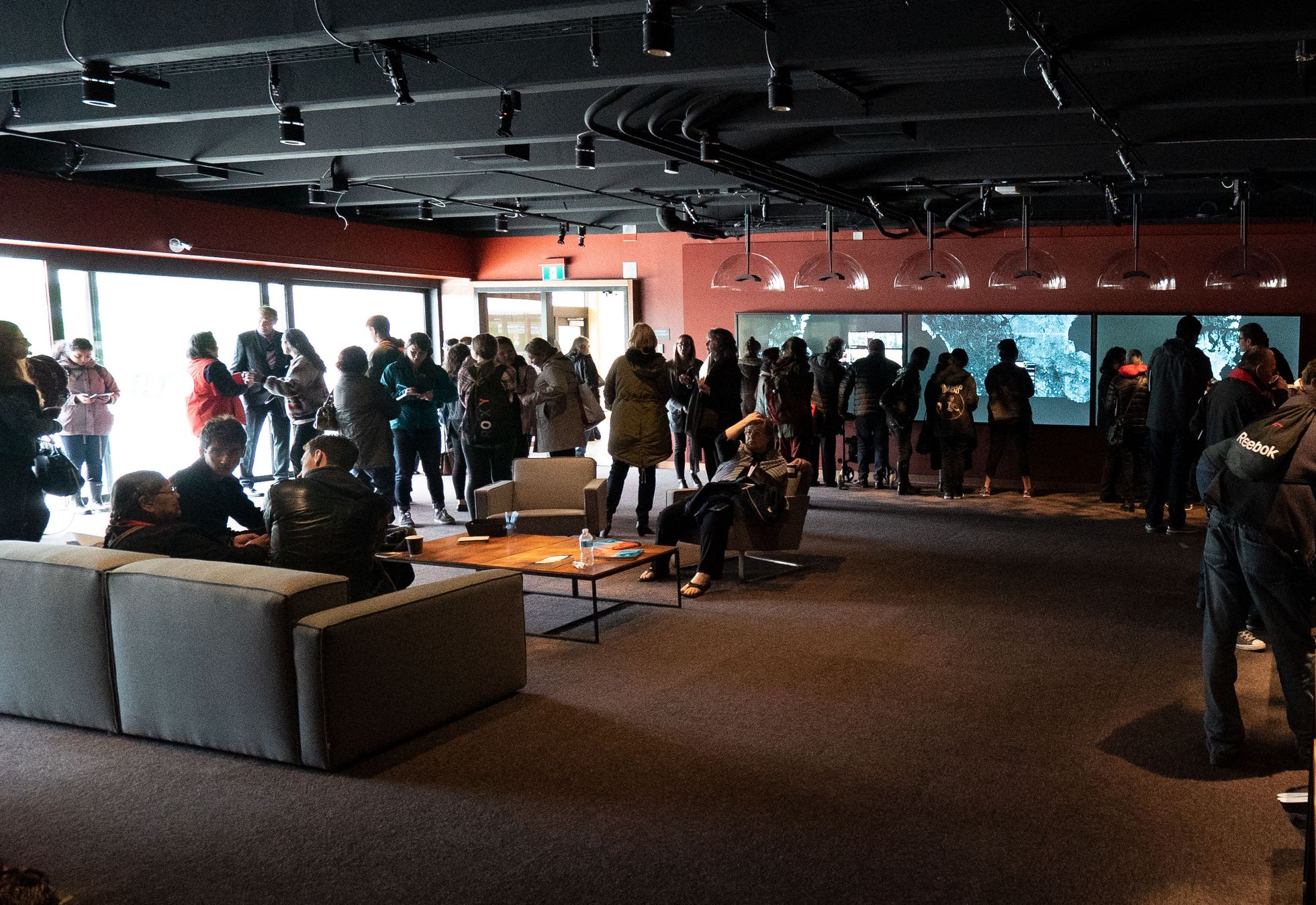
The wall.
I led its design, engineering and research as creative director.
The solution
Our own work
Commissions paid for the studio. Grants paid for our own pieces.
Halo taught me grants. CityBits was the next one. M/O was the one after that.3 Each one was a piece we could show, to win more installation work.
CityBits never went up in public, and it became the studio's signature piece anyway. M/O became the seed of the Interactive Wall.
Learn more about M/O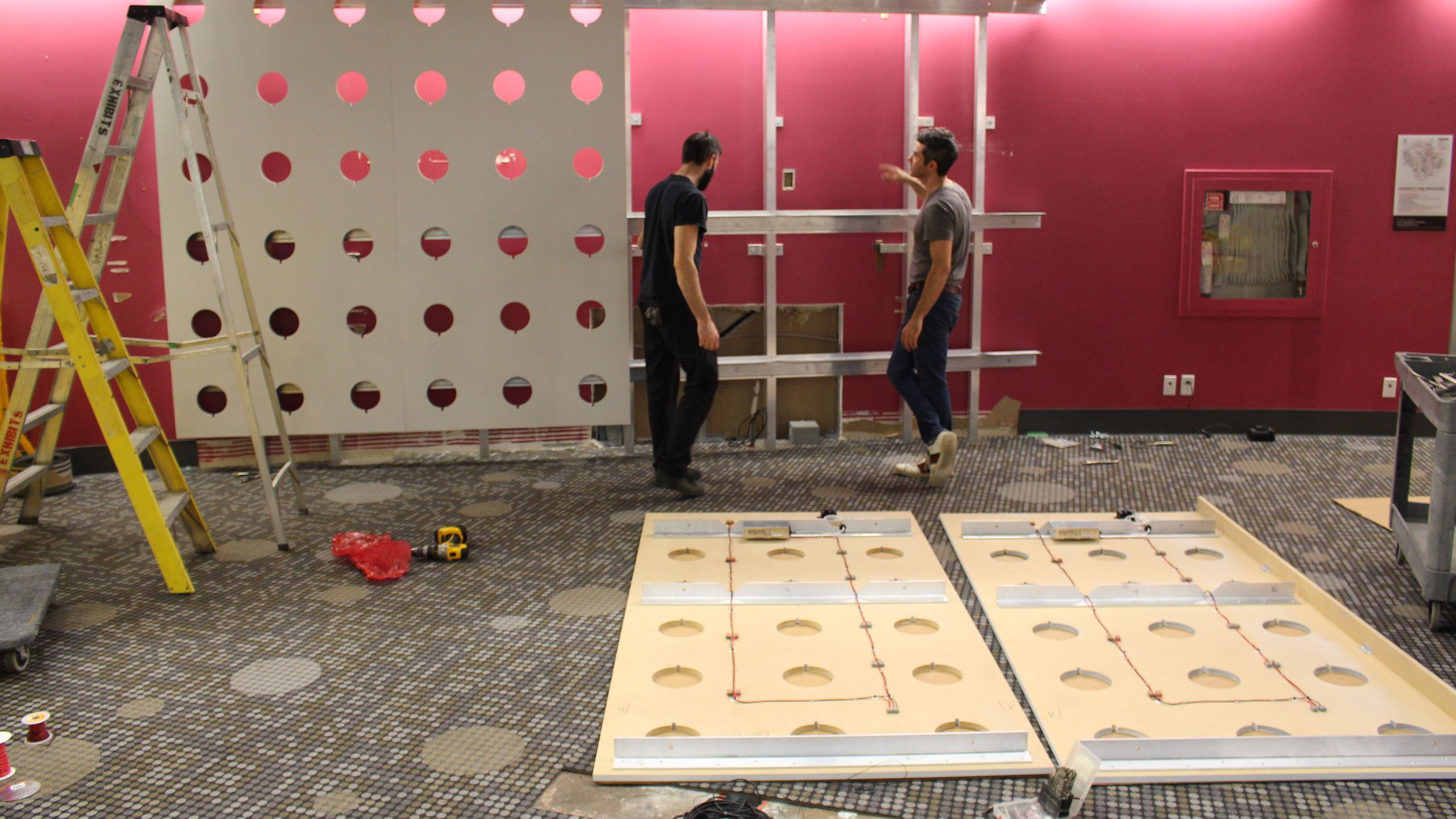
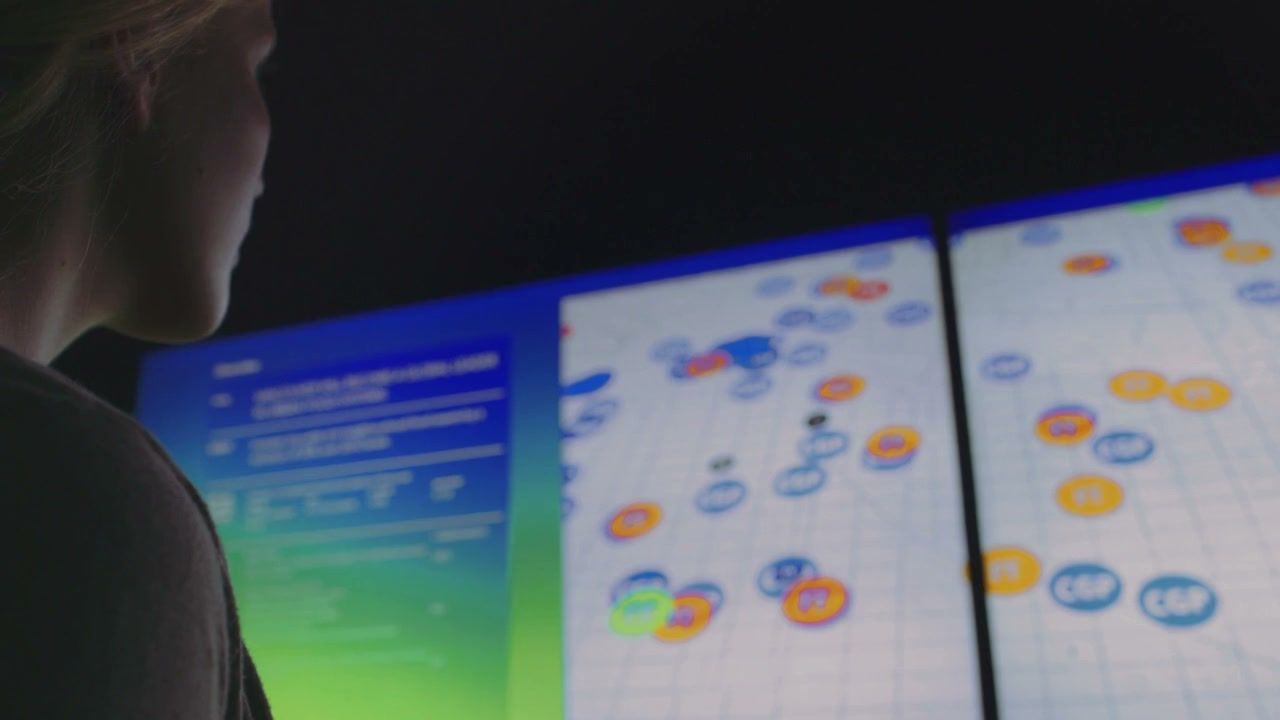
Halo, 2012. Before the studio had its name, I wrote the grant and built Halo with Alex Beim of Tangible Interaction: a wall of light rings that visitors play with three knobs. I built and assembled the panels.
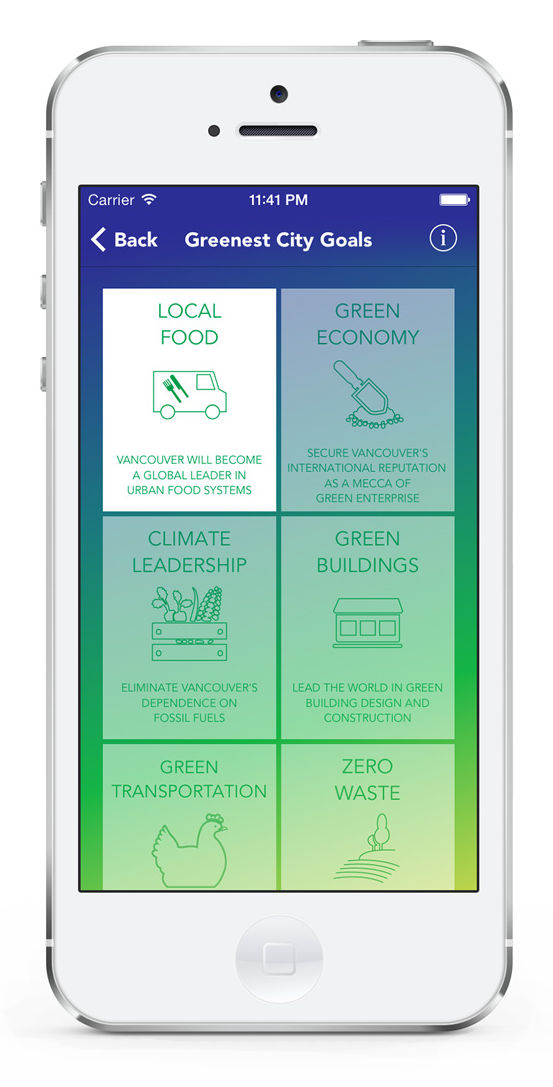
CityBits, 2013 to 2014. The studio's first installation of its own, on Vancouver's Greenest City 2020 plan. Walk up to the two screens with the app open, and your phone steers them.
M/O, 2015 to 2017. Twenty-eight iPad minis in a ring, acting as one screen. It opened at Resonate in Belgrade, then ran for nine weeks at TIFF Kids in Toronto.5
Underneath
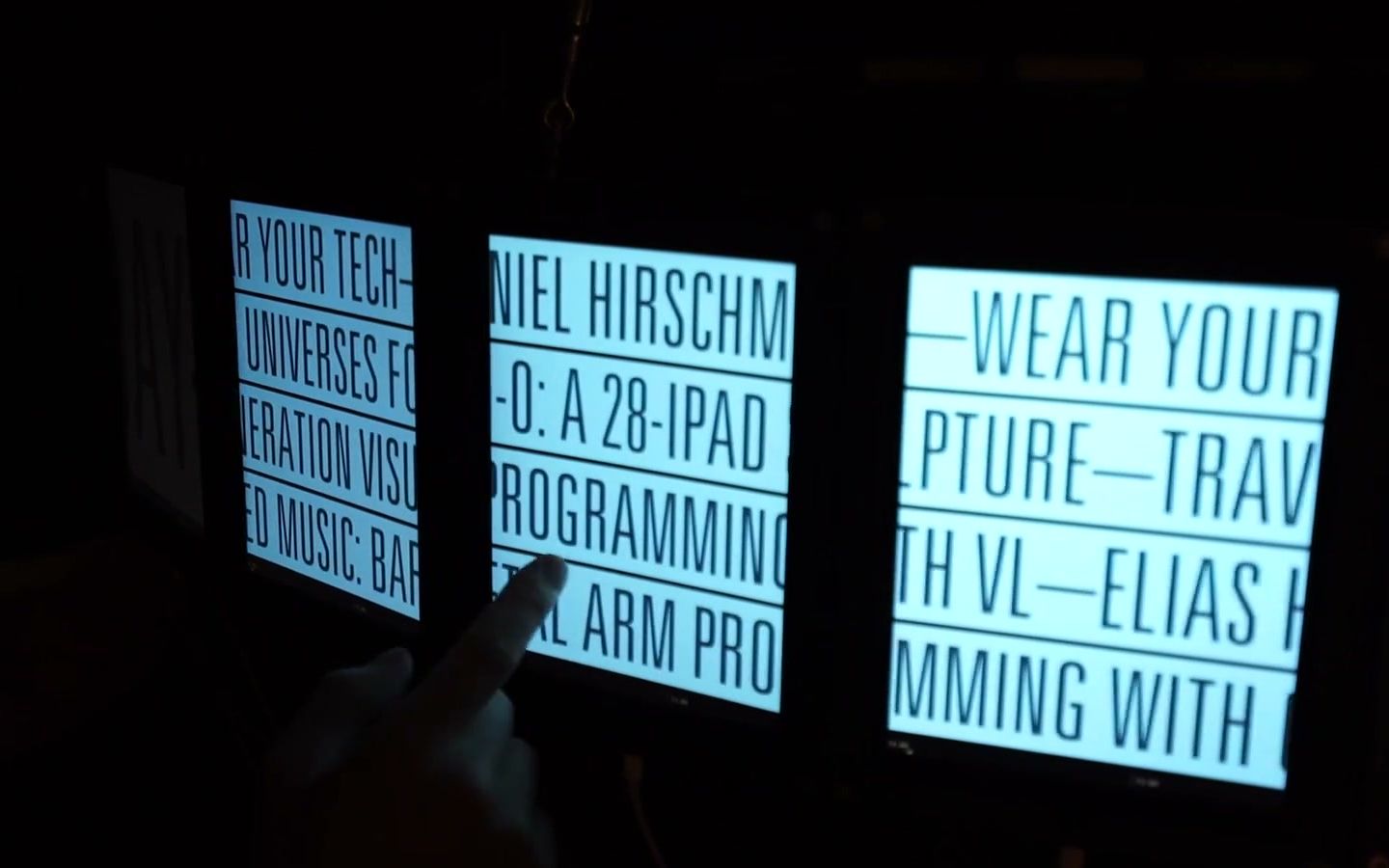
Each piece needed something nobody had built.
The hard part was one nobody would see. For CityBits, a phone had to sense it was near the screen. For M/O, 28 iPads had to move in step. For the wall, a Mac had to turn raw touches into gestures.
-
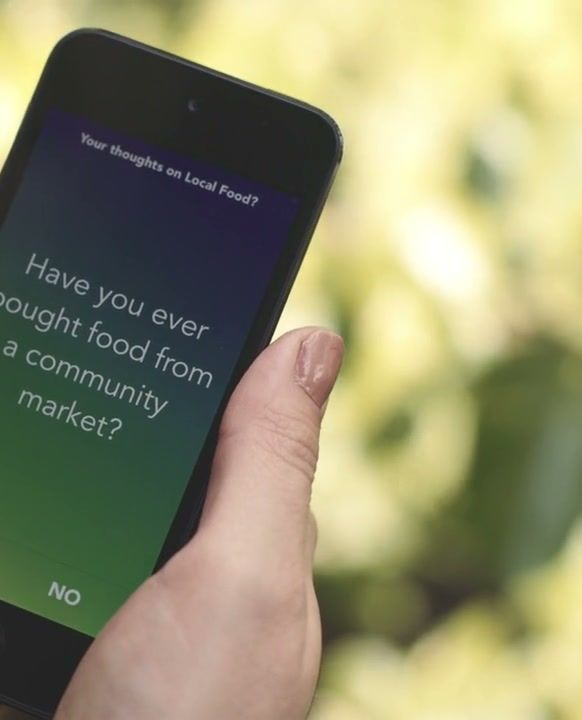
Walk up, and the phone connects.
Apple had just released iBeacon, on CoreBluetooth, with no documentation. I reverse-engineered it.
-
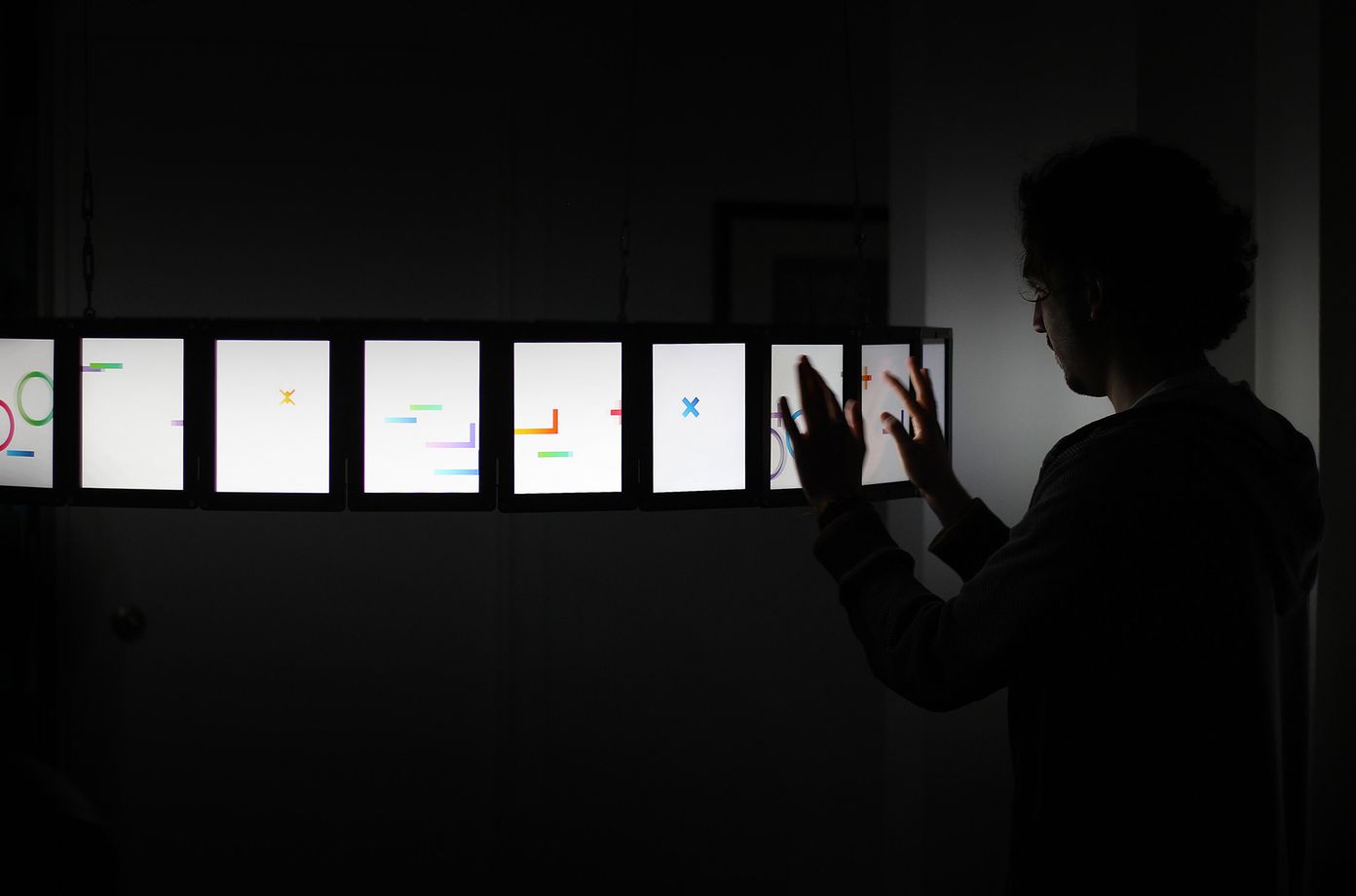
Twenty-eight iPads, moving in step.
Each iPad drew its slice of one canvas, and a touch on one reached them all. I wrote the first sync; Alejandro Isaza made it solid.
The wall's screens gave raw touches and nothing else, and macOS had no gesture system for them. So the team built one, MacGestures, with a Raspberry Pi behind each screen to send its touches to the Mac.
public func handle(_ touch: Touch) {
    touchReceived?(touch)

    switch touch.state {
    case .down:
        handleTouchDown(touch)
    case .moved, .up:
        if let handler = handler(for: touch) {
            handler.handle(touch)
        }
    }
}Sources/Helpers/GestureManager.swift, github.com/logicandform/MacGestures.CityBits' phone link led to M/O. M/O's sync code went into the wall's first touch prototypes.
Tough calls
The Interactive Wall
Our largest project began as a call for proposals.
UBC's Indian Residential School History and Dialogue Centre wanted an interactive wall, and we came in on a referral. The studio hadn't built a large, technically complicated installation yet. I pitched it as M/O made much larger: many screens and many touches, kept in sync.
Learn more about the Interactive Wall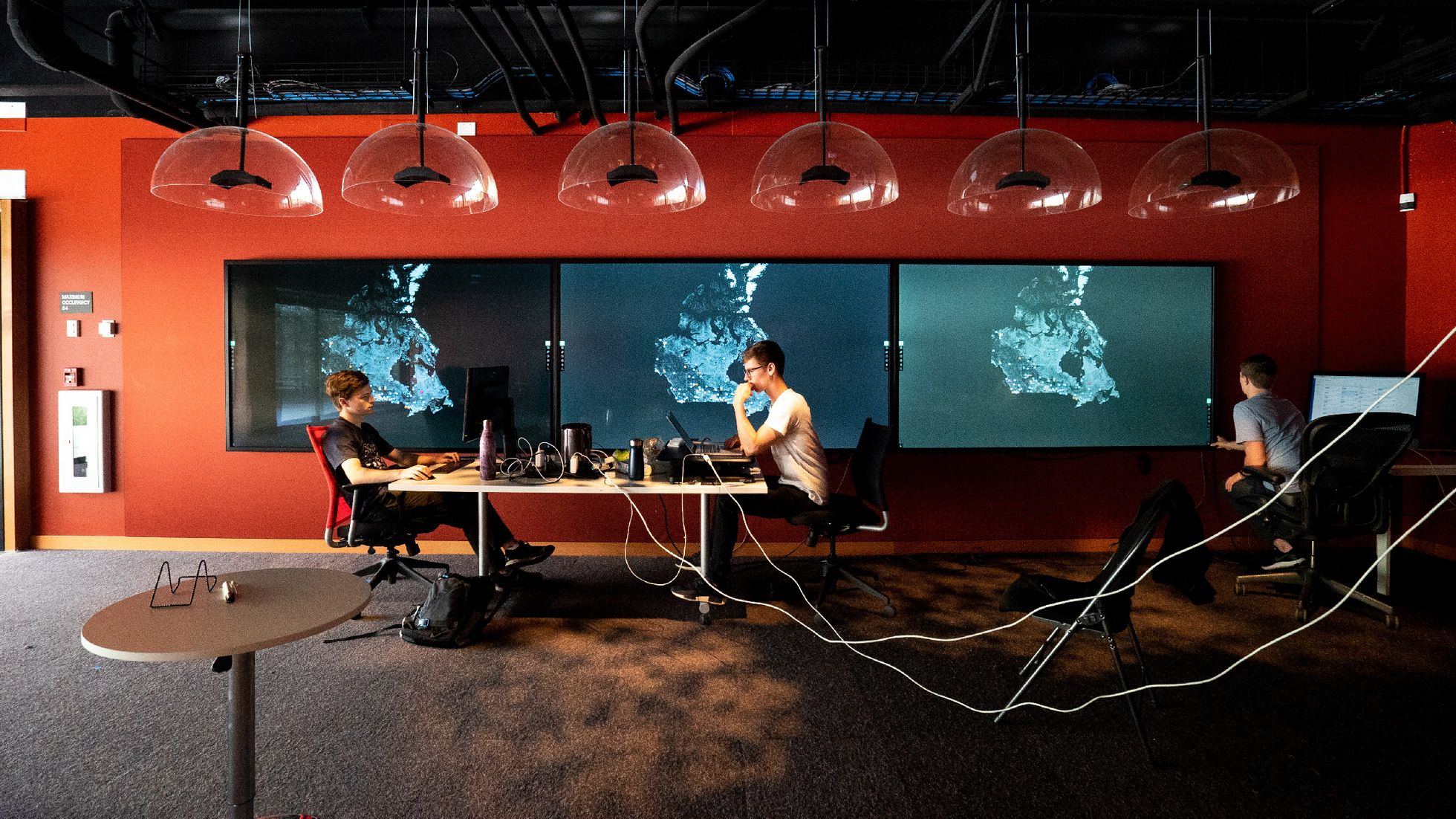
The team at work in front of the wall, 2018.
This is exactly what I had envisioned.The Centre's director, at the opening
The outcome
Some of it is still running.
Halo has been at Science World for over a decade, and Science World commissioned a rebuild. The wall is still the Centre's interface, and its code is open source.
Flow, the design tool I started in 2015, grew inside the studio and became my main work. The Interactive Wall, delivered in December 2018, was the studio's last major project.1 In 2026 I'm back on the wall, keeping it running through POSTFL.
Learn more about FlowMy take
I was making the work I had in mind.
I didn't set out to fill a gap in the market. I had a framework, a few people and some resources, and I wanted to make interactive work for clients and for ourselves. C4 was the seed bed. My artwork grew on it, then SAP, then Logic&Form, then Flow.
Questions? Answers.
-
Was Logic&Form a company of its own?
No. It was the name for my interactive work inside Slant Design + Marketing, where I was a partner. The two had different clients and offered different services.
-
How was the work paid for?
Commissions, and grants for our own pieces. SAP's concept apps paid from 2012. Creative BC's Interactive Fund gave $50,000 for CityBits in 2013 and $50,000 for M/O in 2015.3
-
Was everything built on C4?
Everything before the Interactive Wall. The wall ran on macOS, so its apps used M/O's sync code and a new gesture framework, MacGestures.
-
Who did you work for?
SAP, and UBC's Indian Residential School History and Dialogue Centre. Resonate commissioned M/O for its 2016 festival. CityBits and M/O were our own pieces, funded by Creative BC.
-
Where is the code?
The wall's core and its touch libraries are open source, at github.com/logicandform.6 M/O's sync code stayed private.
M/O.