 Board Watch
New design roles, the morning they open.
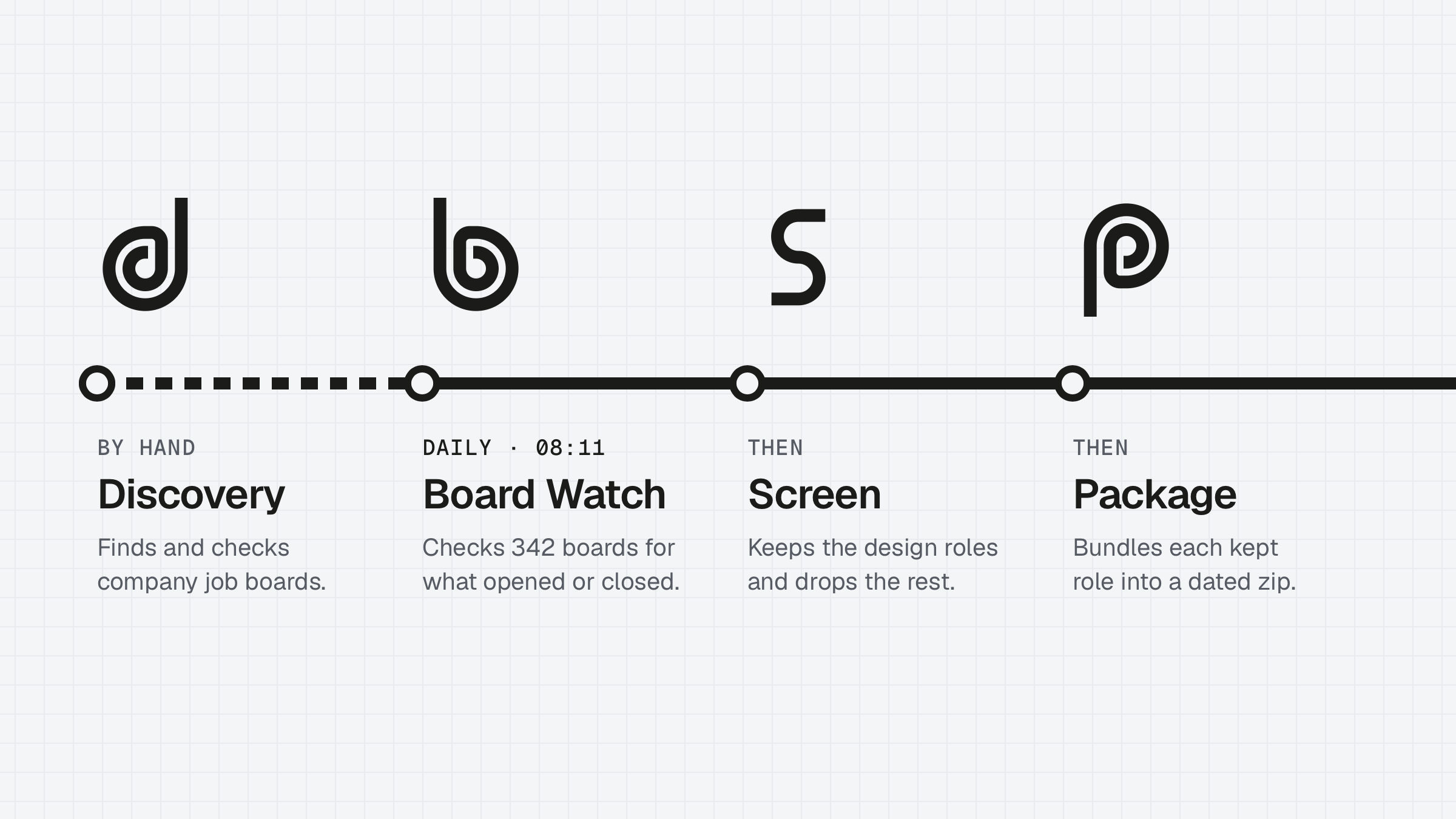
Four agents that find the company job boards I care about, check them each morning and hand me what's new in design and design engineering. Built in a weekend, on Gumloop, a platform for AI agents.
Project facts
- Product
- Multi-agent pipeline
- Role
- Prompt engineer
- When
- Q3 2026
- Runs on
- Gumloop
- Agents
- Discovery, Board Watch, Screen and Package
- Built in
- A weekend
- Runs
- Every morning for 10 minutes1
- Feeds
- My own assessment pipeline, which judges fit
Get to know Board Watch.


The problem
Too many boards to check by hand.
The design roles I wanted were spread across 342 company job boards, on seven different hiring systems.4 What I had were emails from LinkedIn, TrueUp, Greenhouse and Welcome to the Jungle, full of poorly matched roles. A role could sit open for days before I saw it. I wanted to know about a role the morning it opened, without checking a single board myself.

What I owned
From the boards to the files on my machine.
I designed and built the four agents, the chain that runs them each morning, and the hand-off into my own assessment pipeline.
-
The agents.
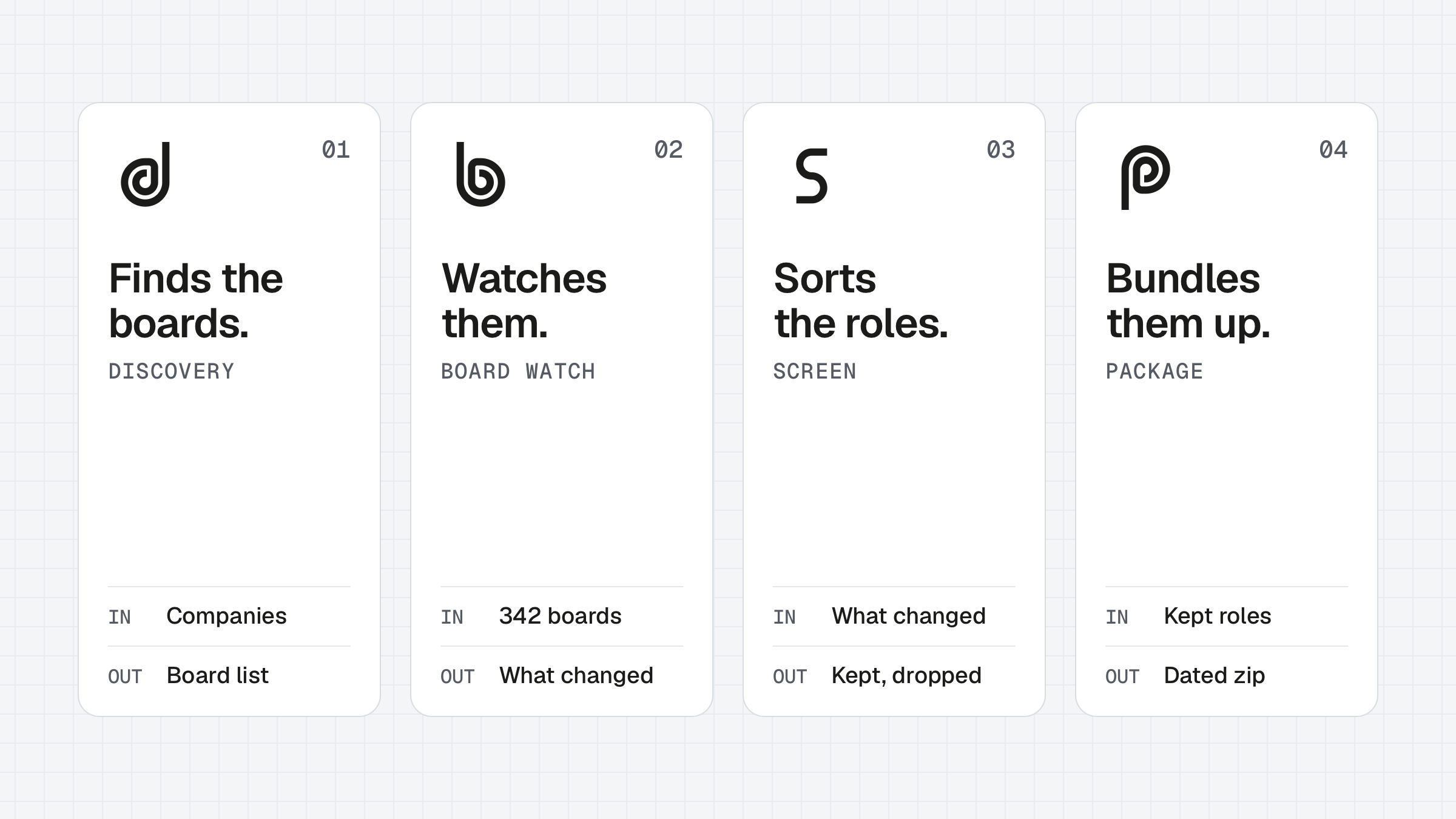
I broke the work into four agents in Gumloop, where you make an agent by writing out what it does. One finds the boards, one watches them, one sorts the roles, one bundles them up.
-
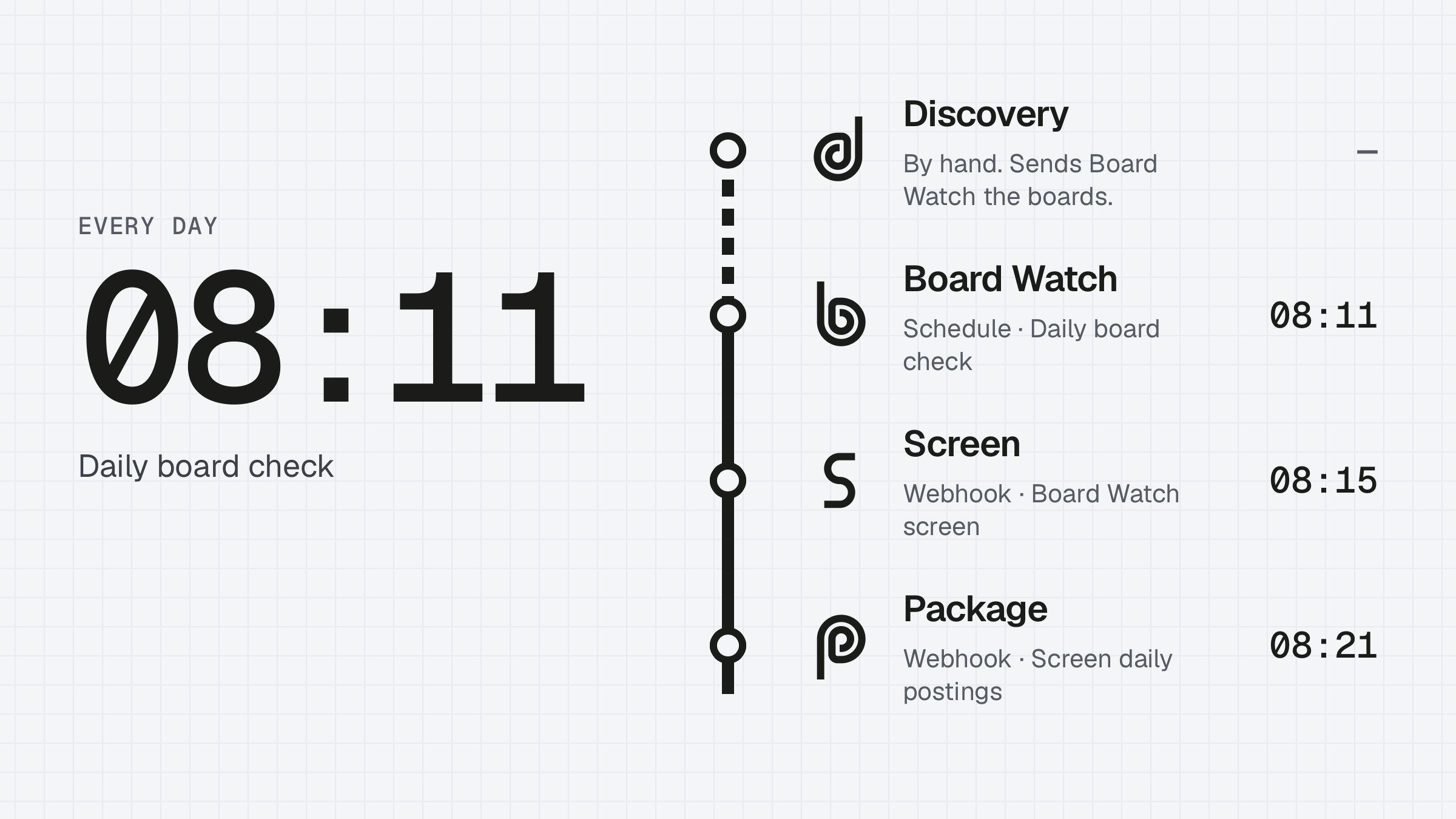
The morning run.
I chained the three daily agents so they run every morning without me. Board Watch starts at 8:11, and each agent starts the next when it's done.1
-
The judgement.
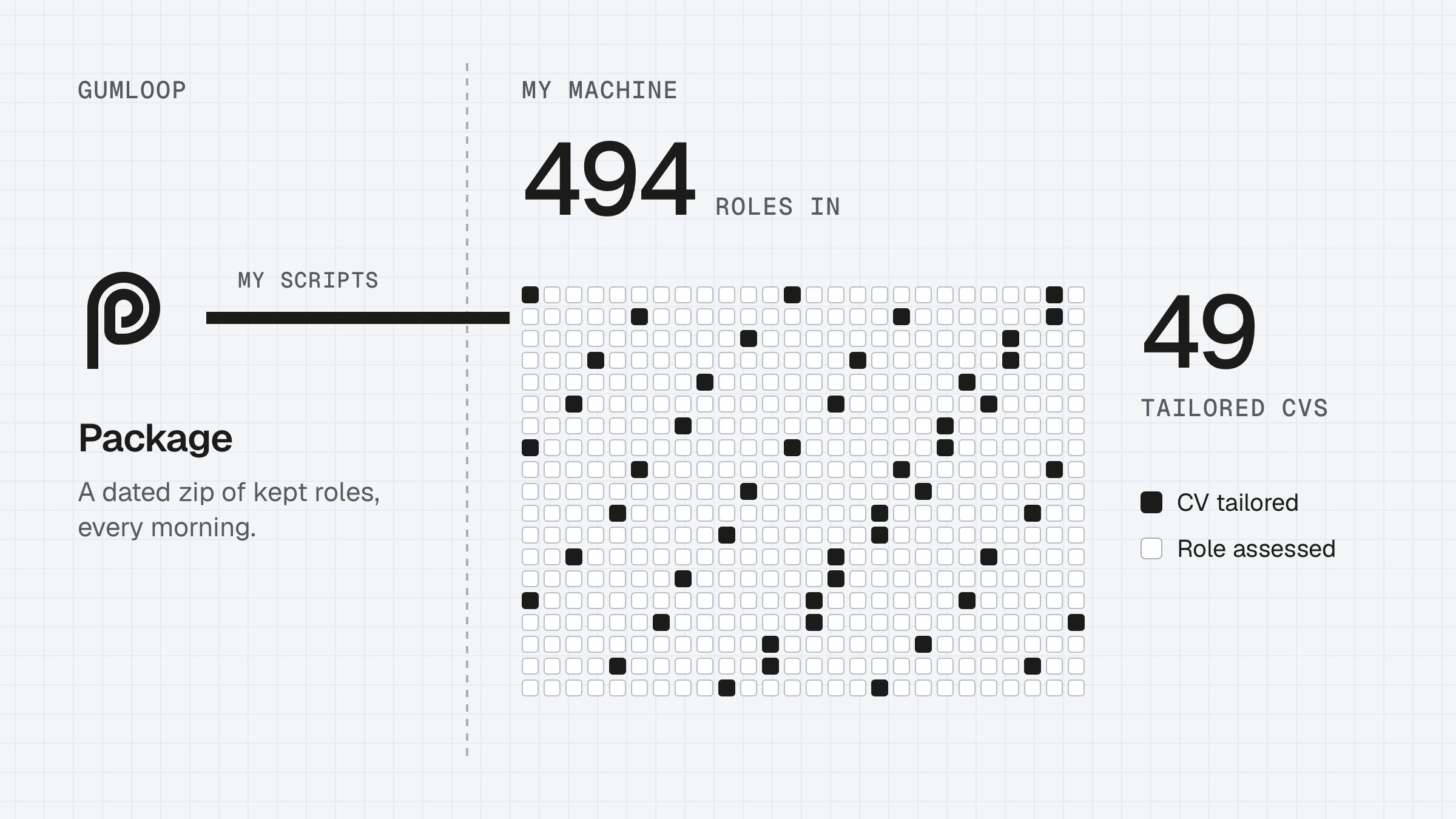
I kept judging fit on my own machine, where my assessment already ran, and built the scripts that bring each day's roles into it.
The solution
A list I can trust, every morning.
Every morning, a list of what changed: new roles, and ones that closed. Each role that passes screening arrives as a file holding everything I need to review it. If I couldn't trust that list, I'd be back to opening boards myself. One miss: "ux engineer" matched inside "Linux Engineer", and a DNS role turned up in my list. Screening matches whole words now.


One morning's report. The boards that changed, then what opened and what closed.
One file per role, with the full posting. Tables list what was kept, and what was dropped and why.
Underneath
It remembers yesterday.
Reading a board is easy. Knowing exactly what opened and closed since yesterday is what makes the morning list worth reading. The watcher keeps a copy of every board, and each morning it checks the boards against that copy. When I add a board, its design roles all come in as new, once. After that first copy, I don't wake up to roles that have been around, or that it's already reported.
-
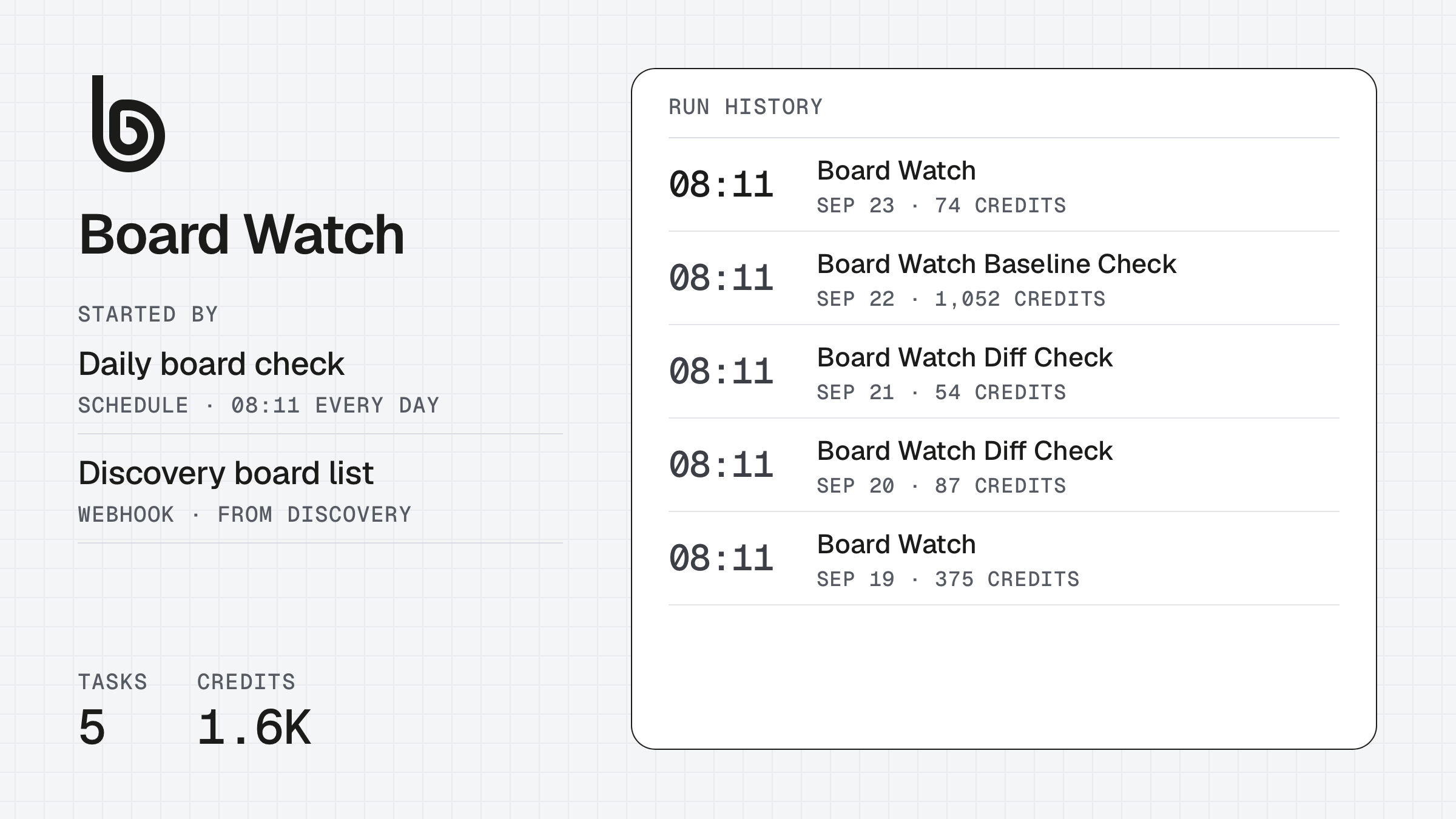
Board Watch.
Watches every board and finds what opened and what closed.
-
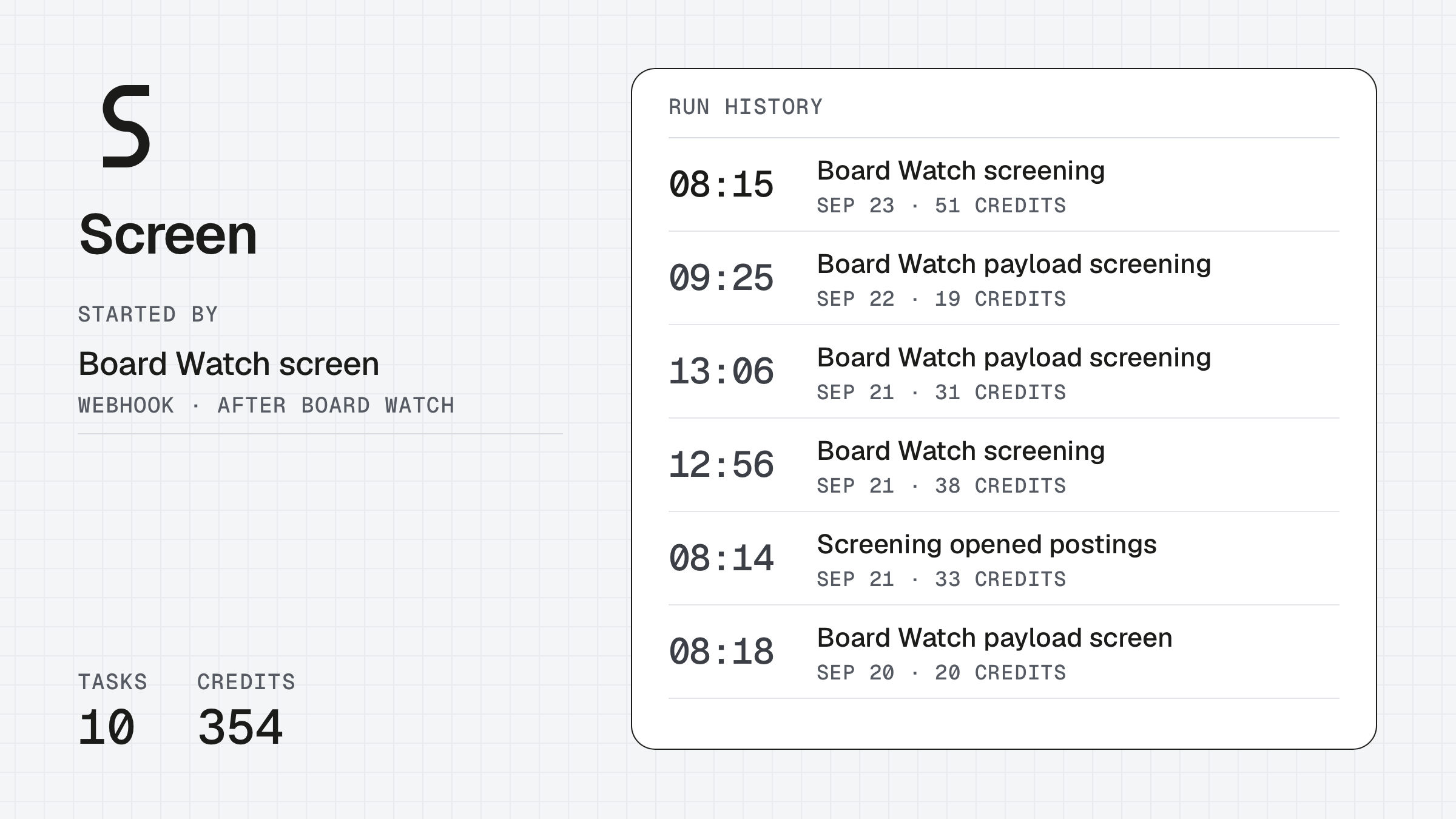
Screen.
Keeps the design work and drops the rest, with a reason for every drop.
-
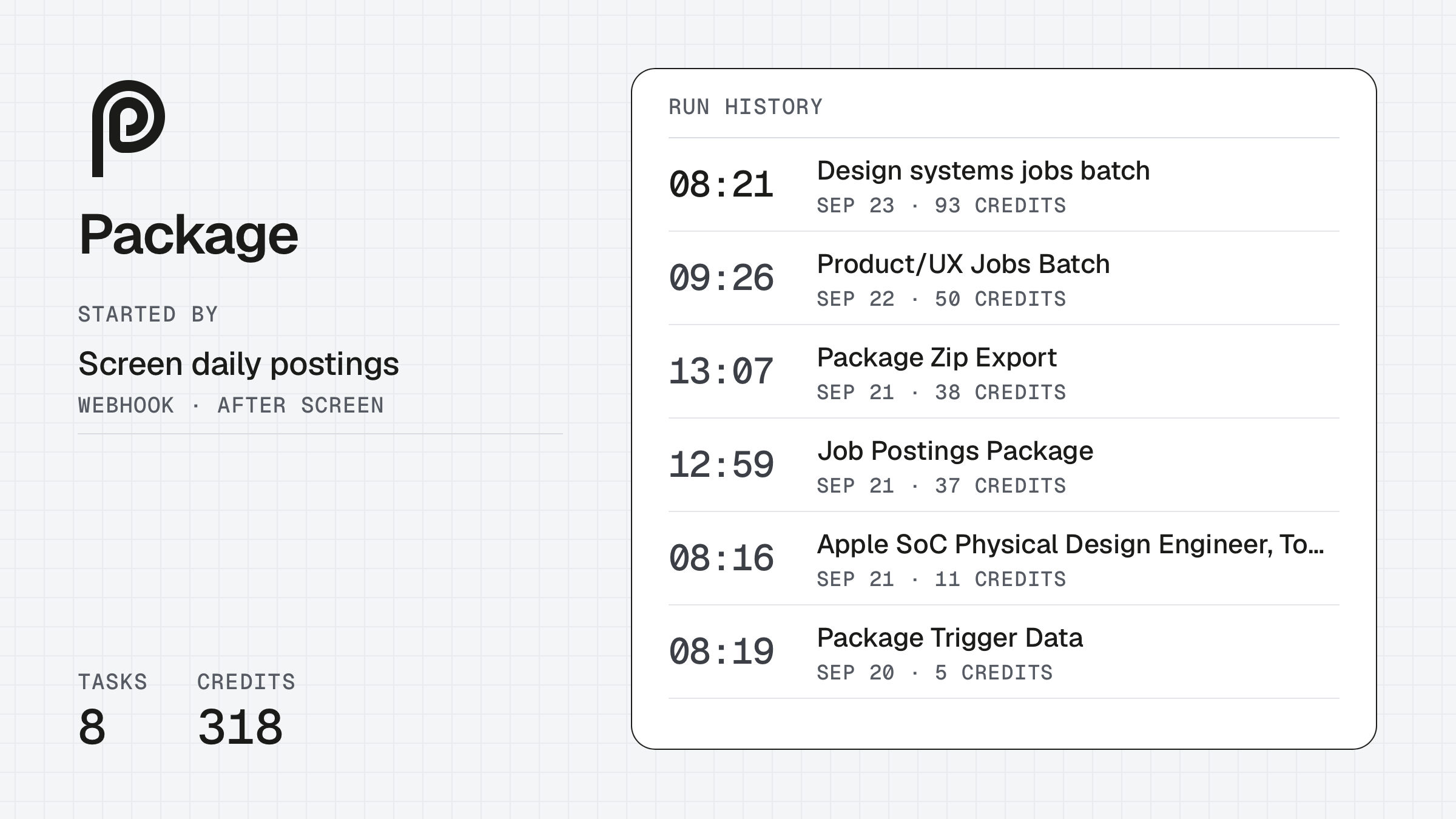
Package.
Fetches each kept posting and bundles the day's files into one zip.
Tough calls
I left the judging out.
I already had an assessment I trusted, running on my own machine. The agents were built to feed it. None of them scores fit or ranks roles. The only sorting they do is by the keywords and titles that match the work I do.
Finding new boards doesn't run every morning.
It's expensive, so I start it by hand when there are new companies I want to watch.
Gumloop for the automation.
I could have built it all myself, and it would have cost nothing to run. Gumloop gave me the automation: the morning schedule, a saved copy of every board, and each agent starting the next.
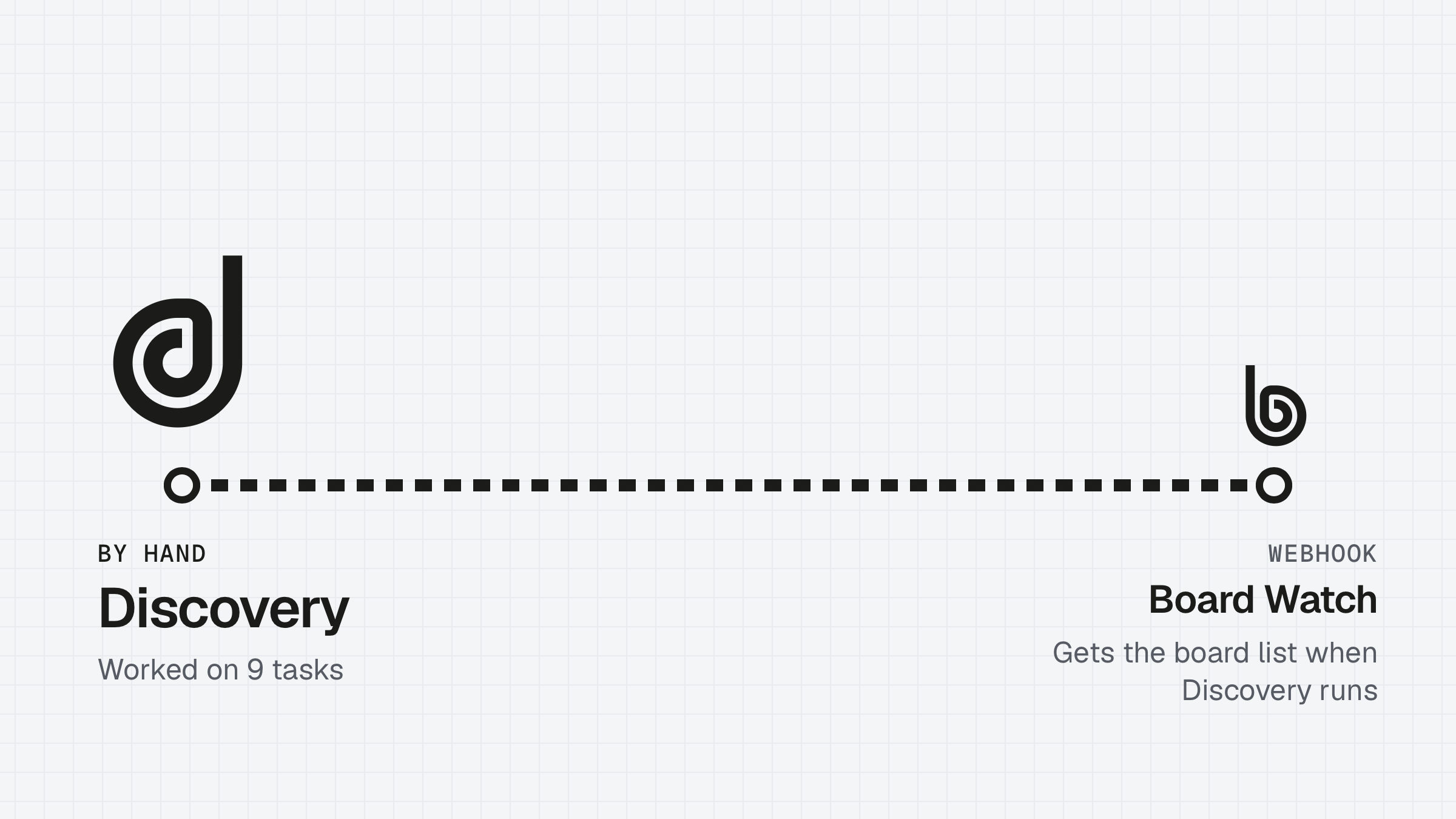
Discovery runs by hand and hands its board list to Board Watch.
The outcome
Nothing sits open for days now.
The morning run starts before I wake up and takes about ten minutes.1 By the time I'm up, the list is there. In under two weeks it brought in 494 new roles, and my pipeline turned the best of them into tailored CVs and cover letters.3


A role that opened at 8:11, and the CV my pipeline tailored for it.
The cover letter it wrote for the same role.
My take
A small pipeline, shaped well, goes a long way.
I've made agents before; this was a UX exploration. The time went into crafting the pipeline, and that's what turned an overwhelming amount of input into something I can handle every day. A quick project that set up something powerful.
Questions? Answers.
-
What did you own?
All of it. I designed and built the four agents, the chain that runs them each morning, and the scripts that bring each day's roles into my own assessment pipeline.
-
Who else worked on it?
No one. It's my own product.
-
How big did it get?
It checks 342 company job boards every morning, about 10k postings on seven hiring systems.4

LP covers.