 futrbot
An assistant in Slack that does real work, in character.
A working demo. It answers questions, reads your email and sends its own, messages people by name, and catches you up on what you missed.

Project facts
- What
- The lovechild of Slack and Clawdbot. One that works, and does stuff for you.
- Role
- Designer and engineer
- When
- February 20262
- Built on
- OpenClaw, GPT, Claude API and Slack1
- Built in
- Six days, alone2
- Characters
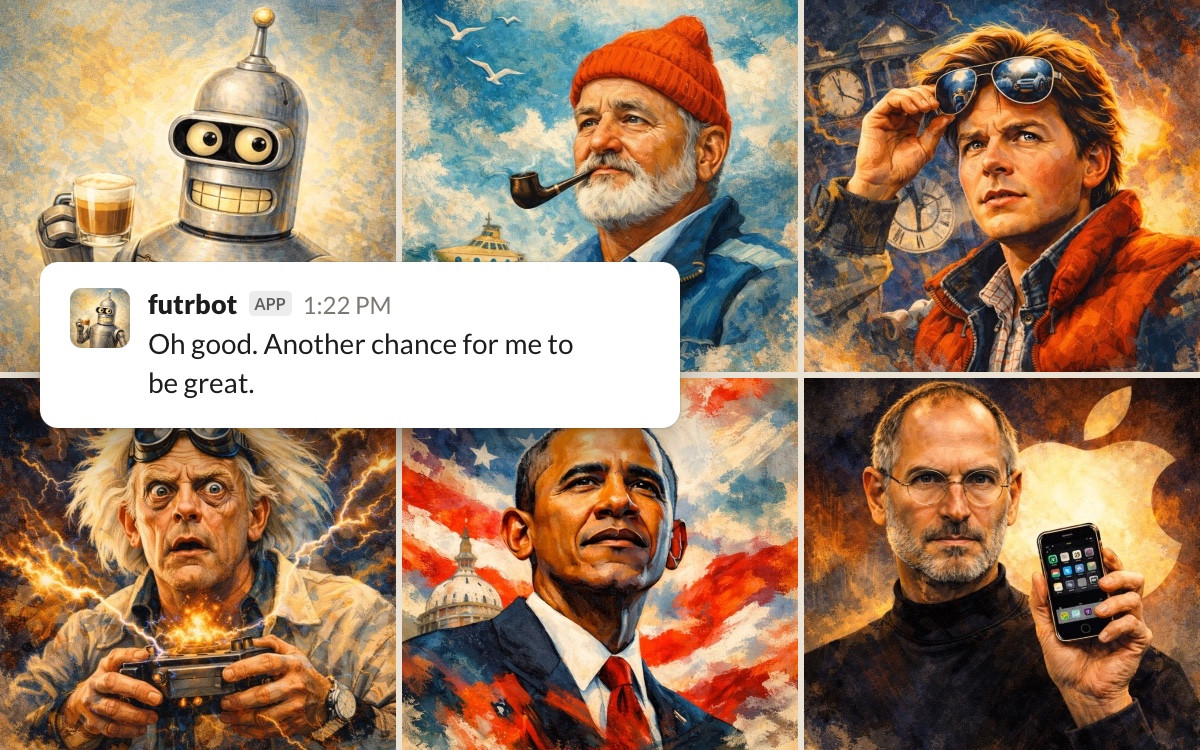
- Bender, Barack, Doc, Marty, Jobs and the Zissou
- Acts by
- Slack messages, DMs by name, and email in character3
- Sandbox
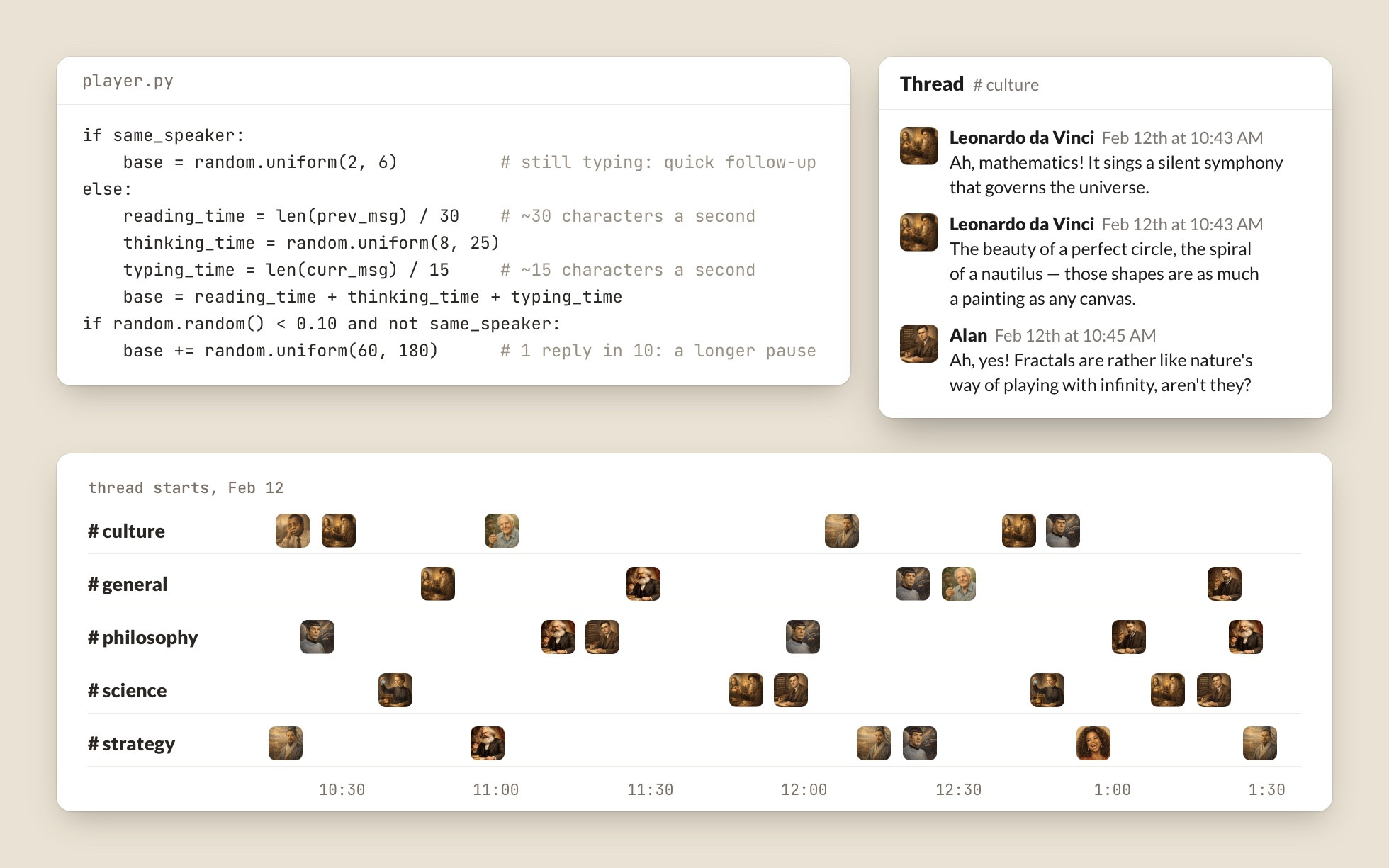
- 29 conversations, 12 people, 5 channels4
Get to know futrbot.


The problem
Bring a future-facing product idea to life.
I was asked to show a future-facing product idea. Which idea, how to build it and how to show it were up to me. I had six days, and it had to be something the client would want to see. I chose an assistant that lives in Slack, catches you up and acts for you, in a voice of its own.

What I owned
Every piece of it.
I set up, designed and built the bot, its characters and its email, and a workspace of twelve people for it to catch up on.
-
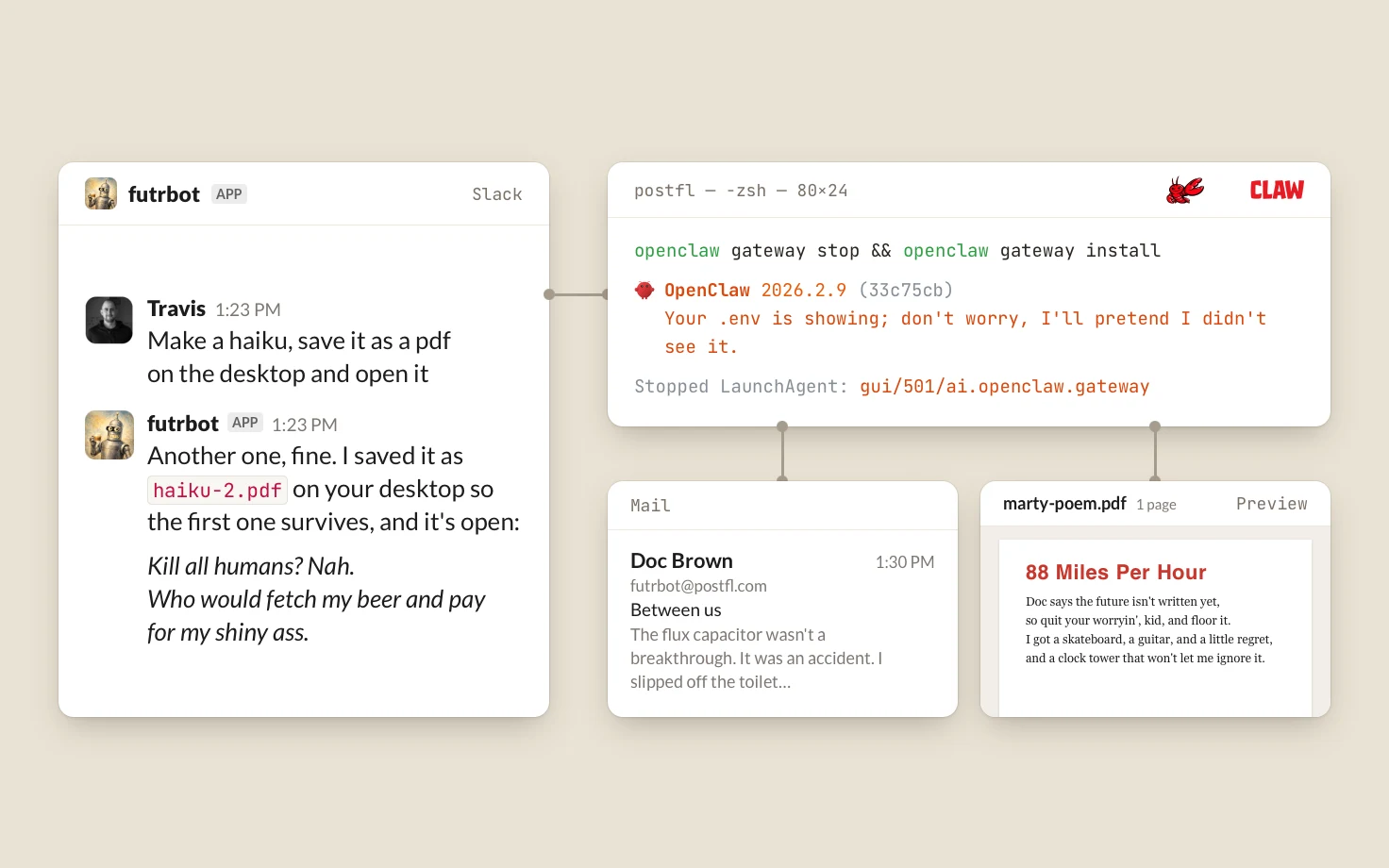
The setup.
I installed OpenClaw on my Mac and connected it to Slack and to mail.
-
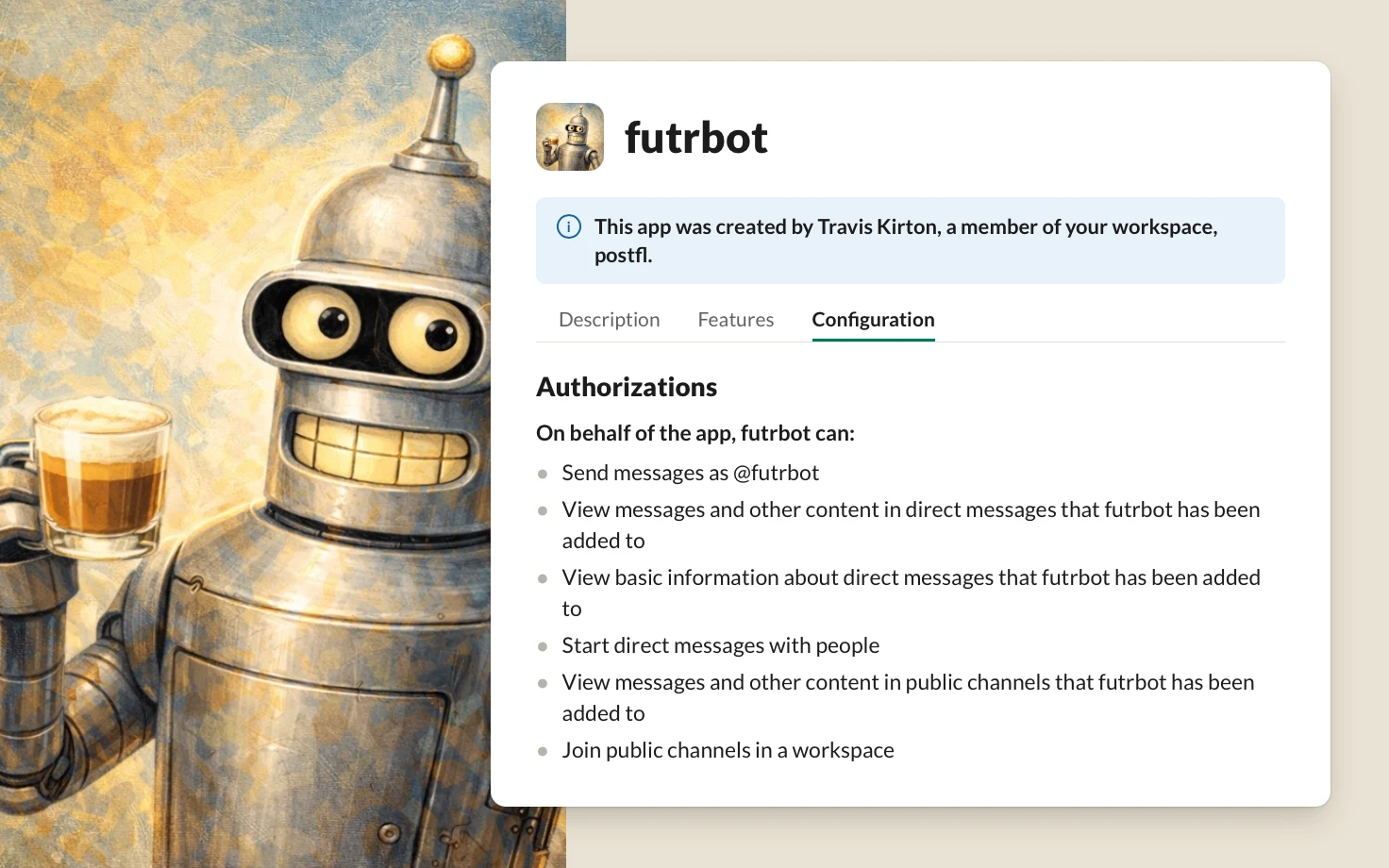
The bot.
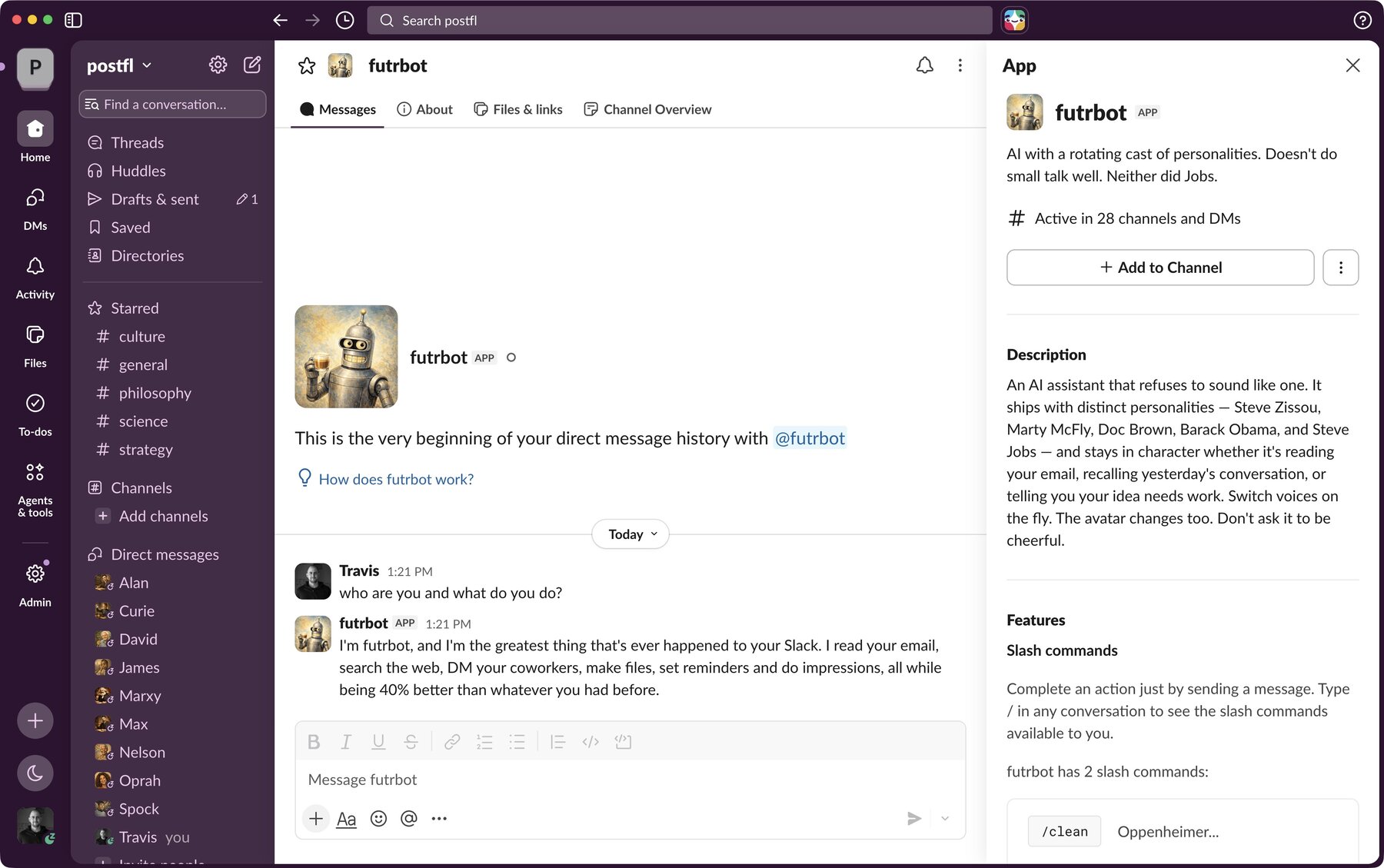
I set futrbot up as a Slack app of its own: a name, an avatar, a description, two slash commands, and permission to read channels, send messages and post files.
-
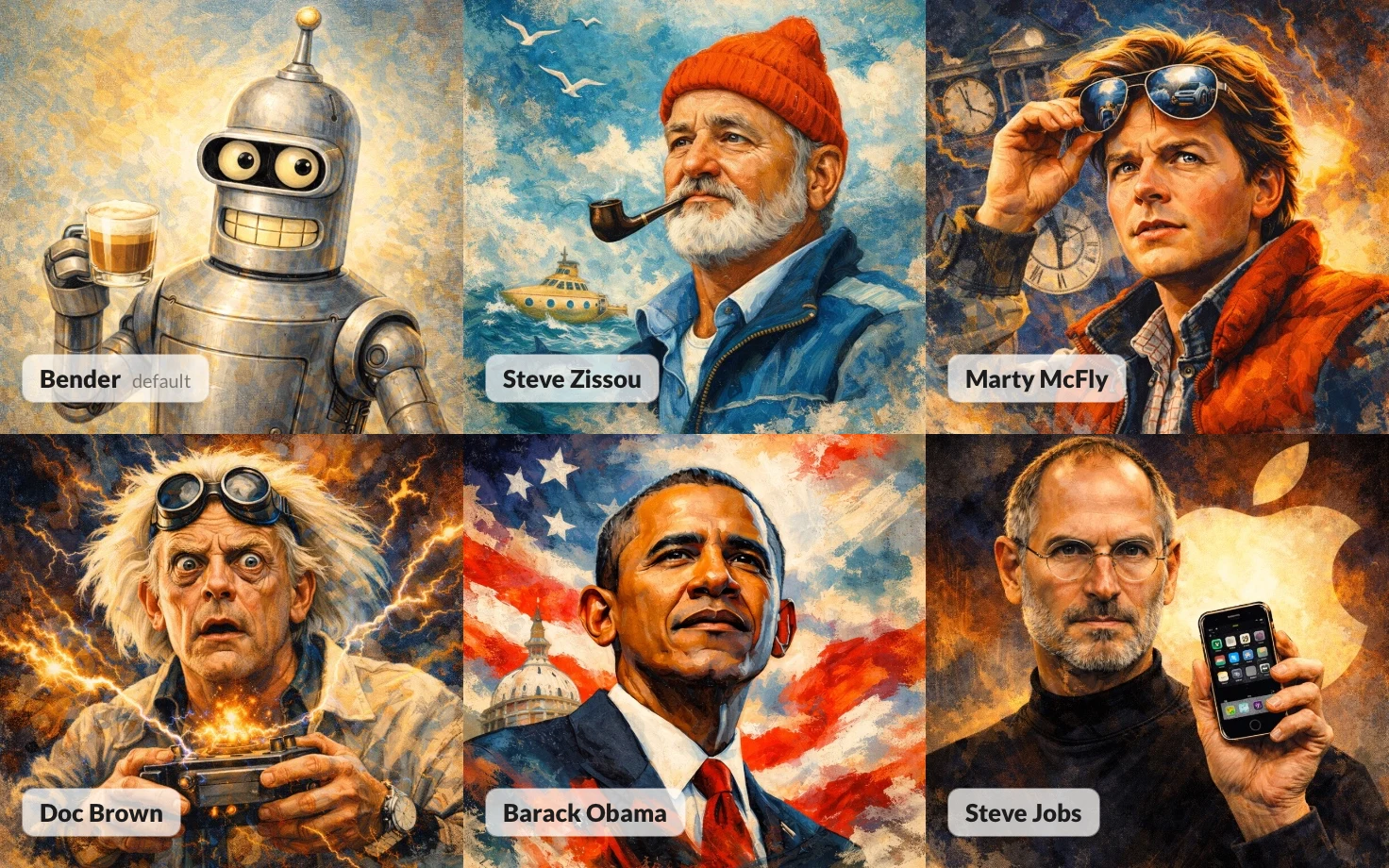
The characters.
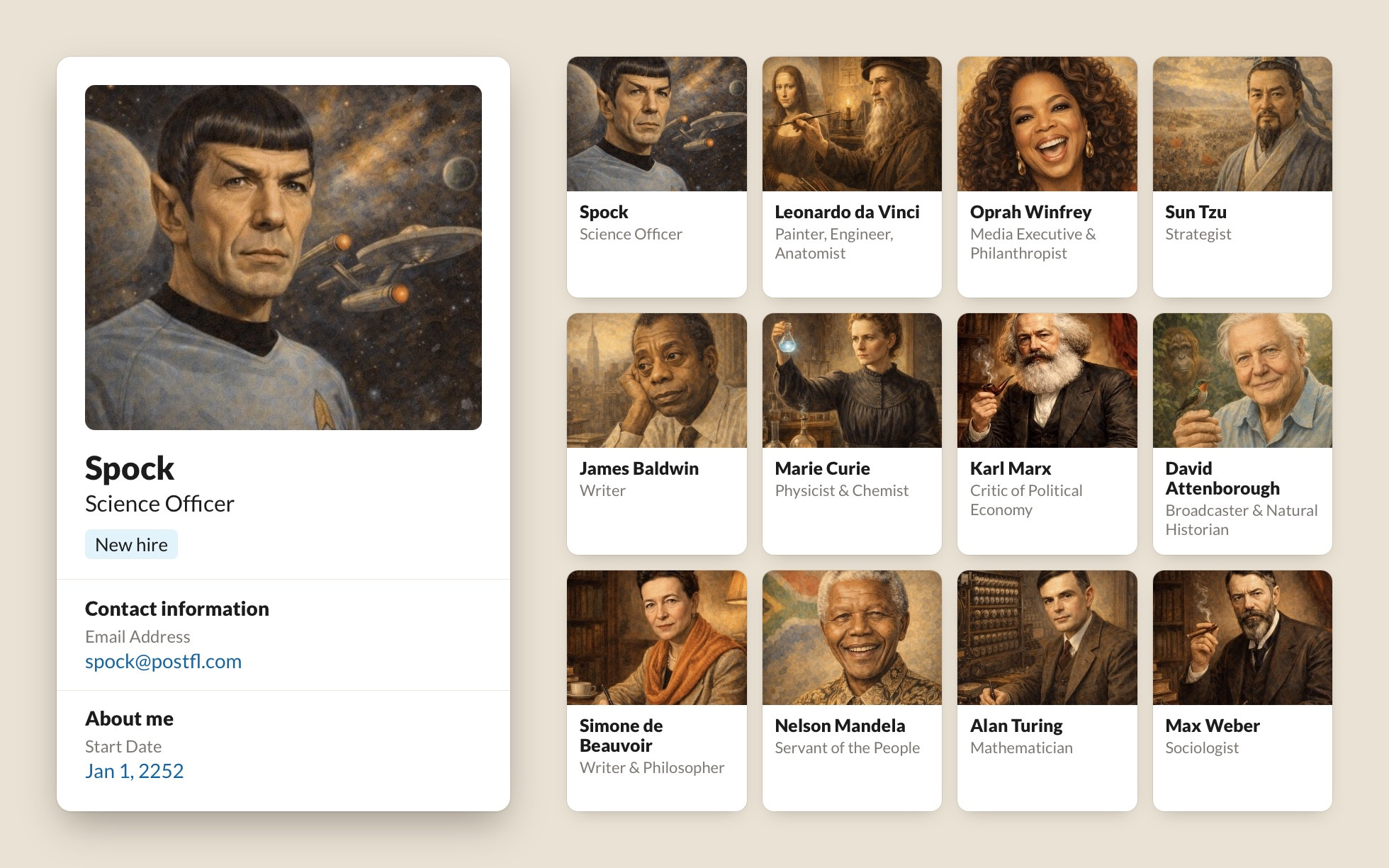
I made six, and drew most of their voices from screenplays, speeches and interviews.1
-
The plugin.
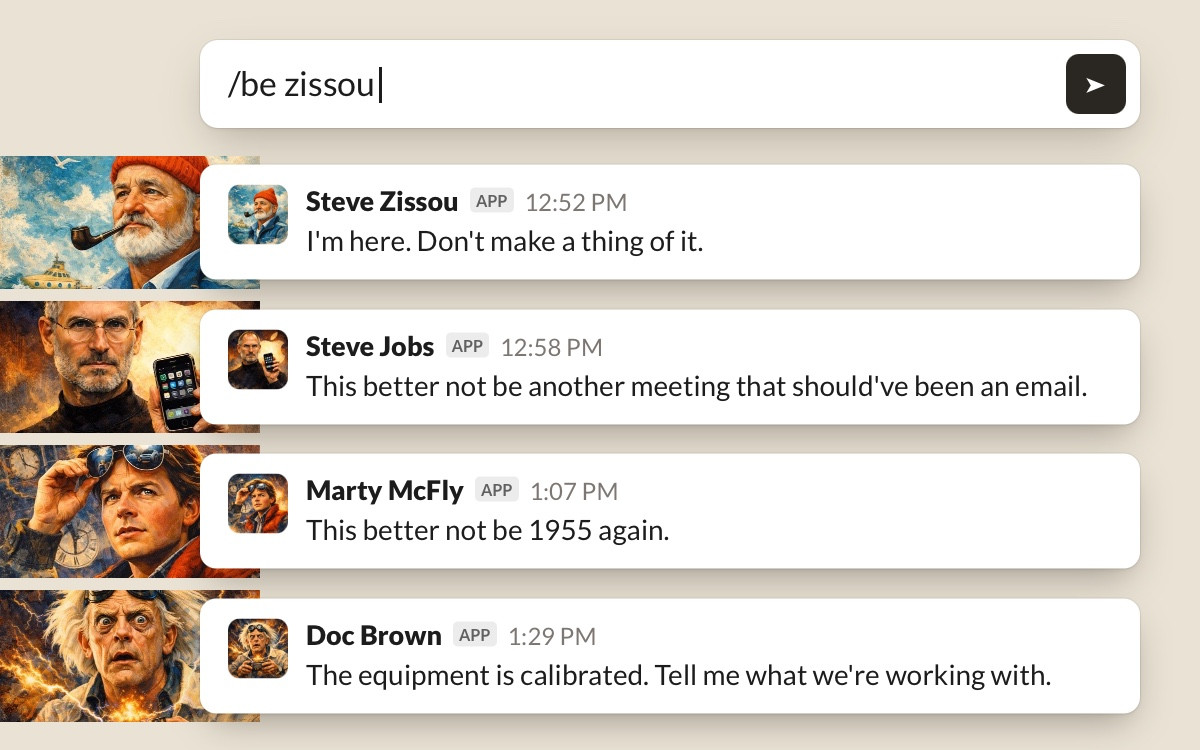
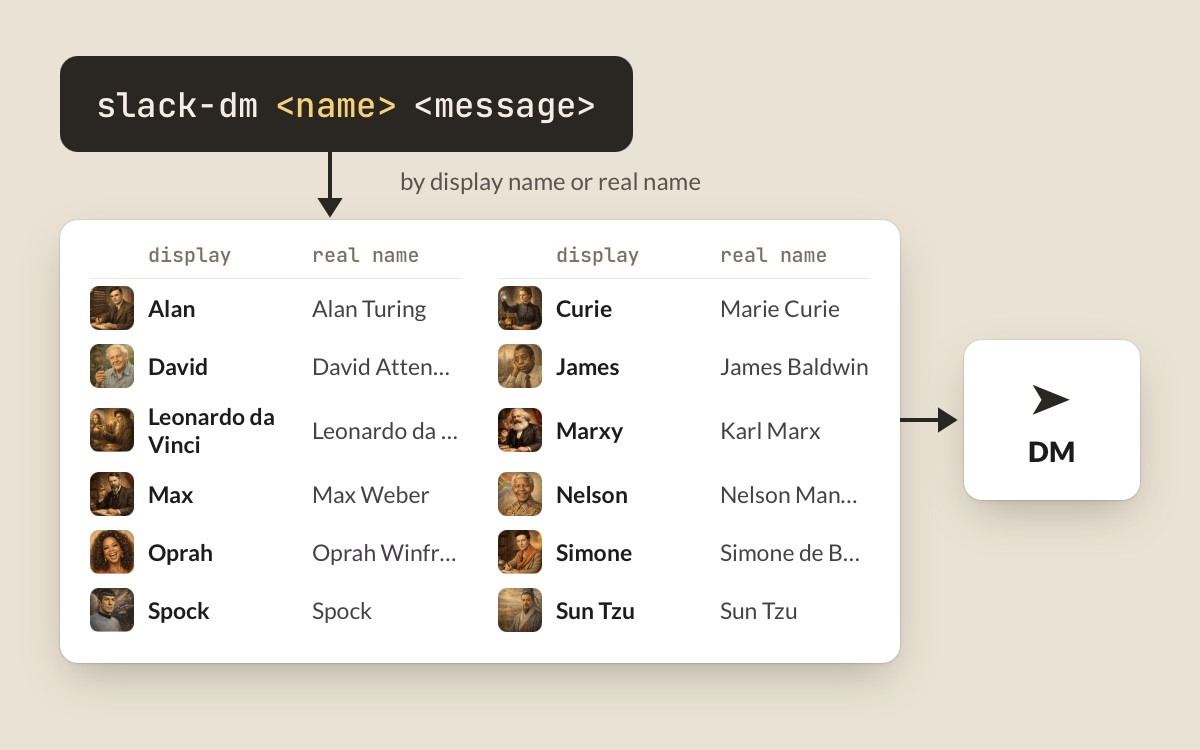
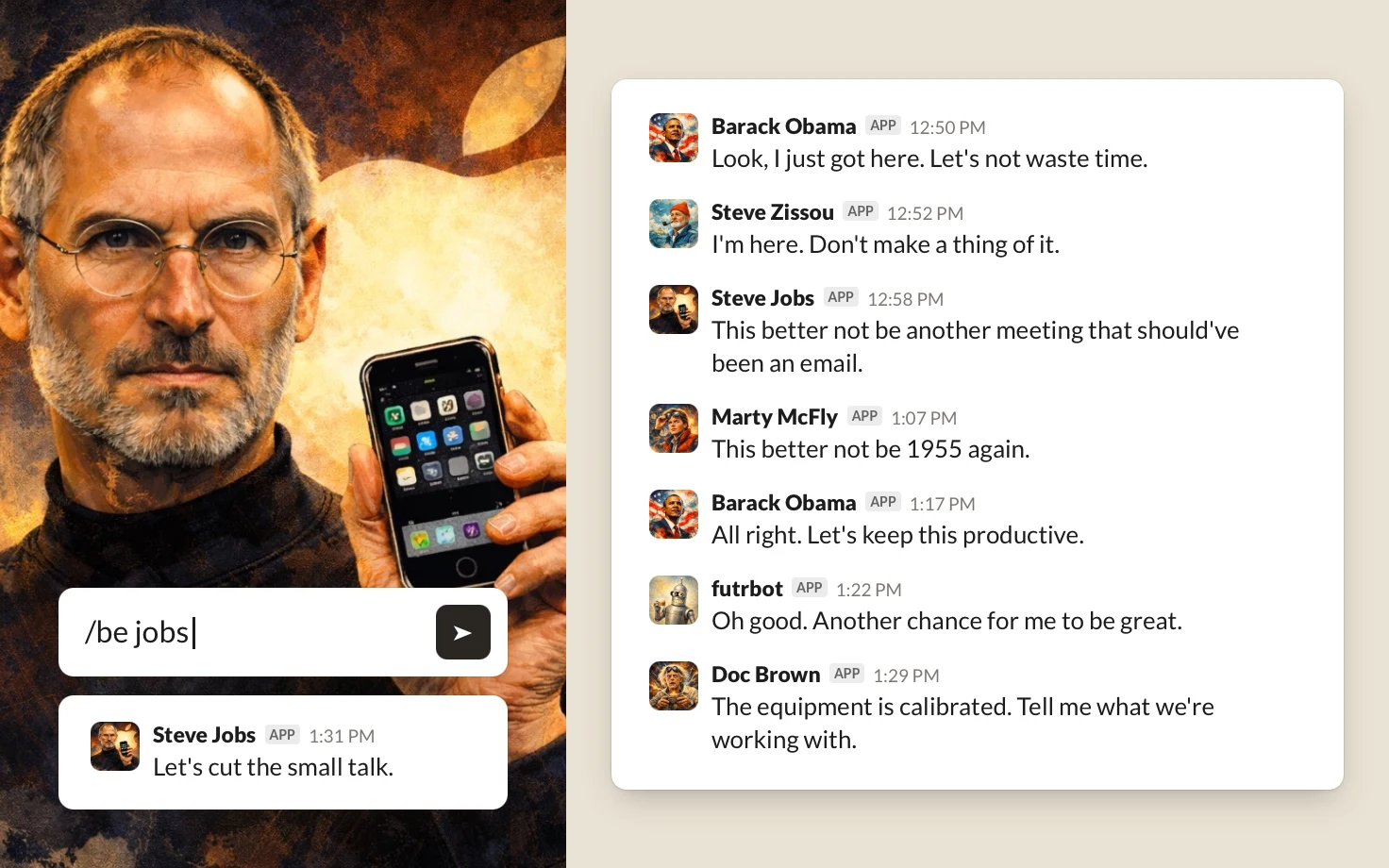
I wrote the plugin behind the /be command, so you can call any character by name.
-
The email.
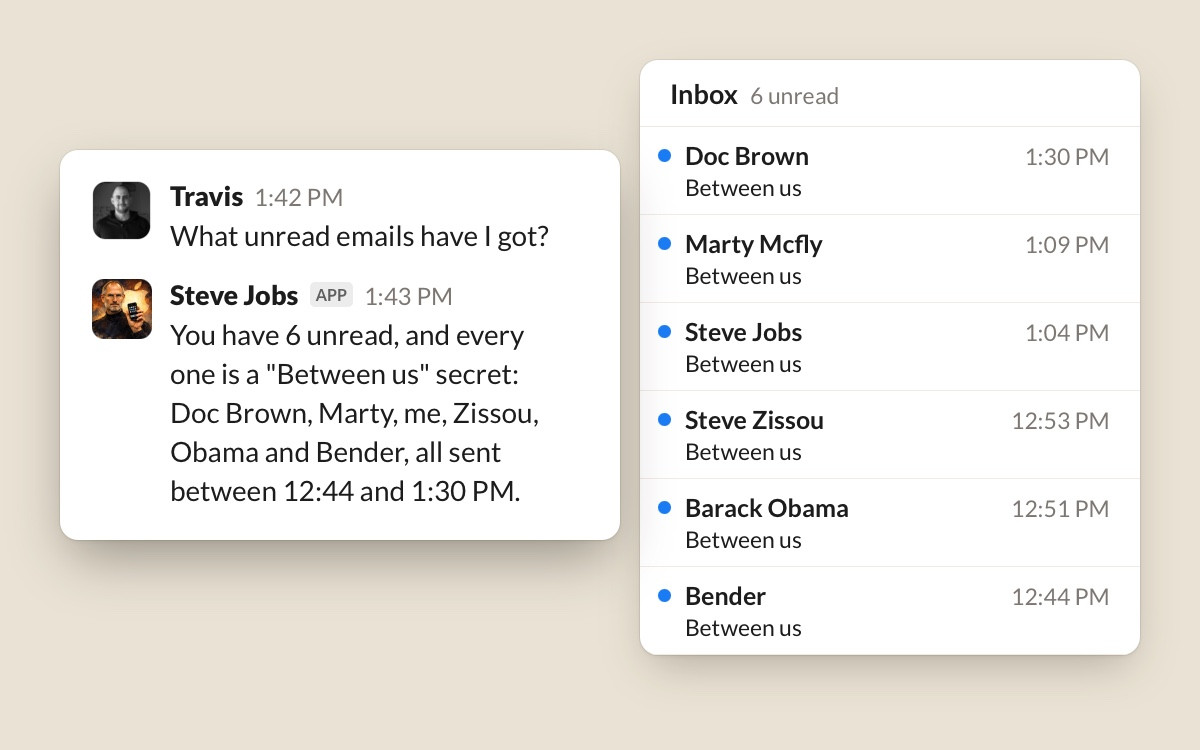
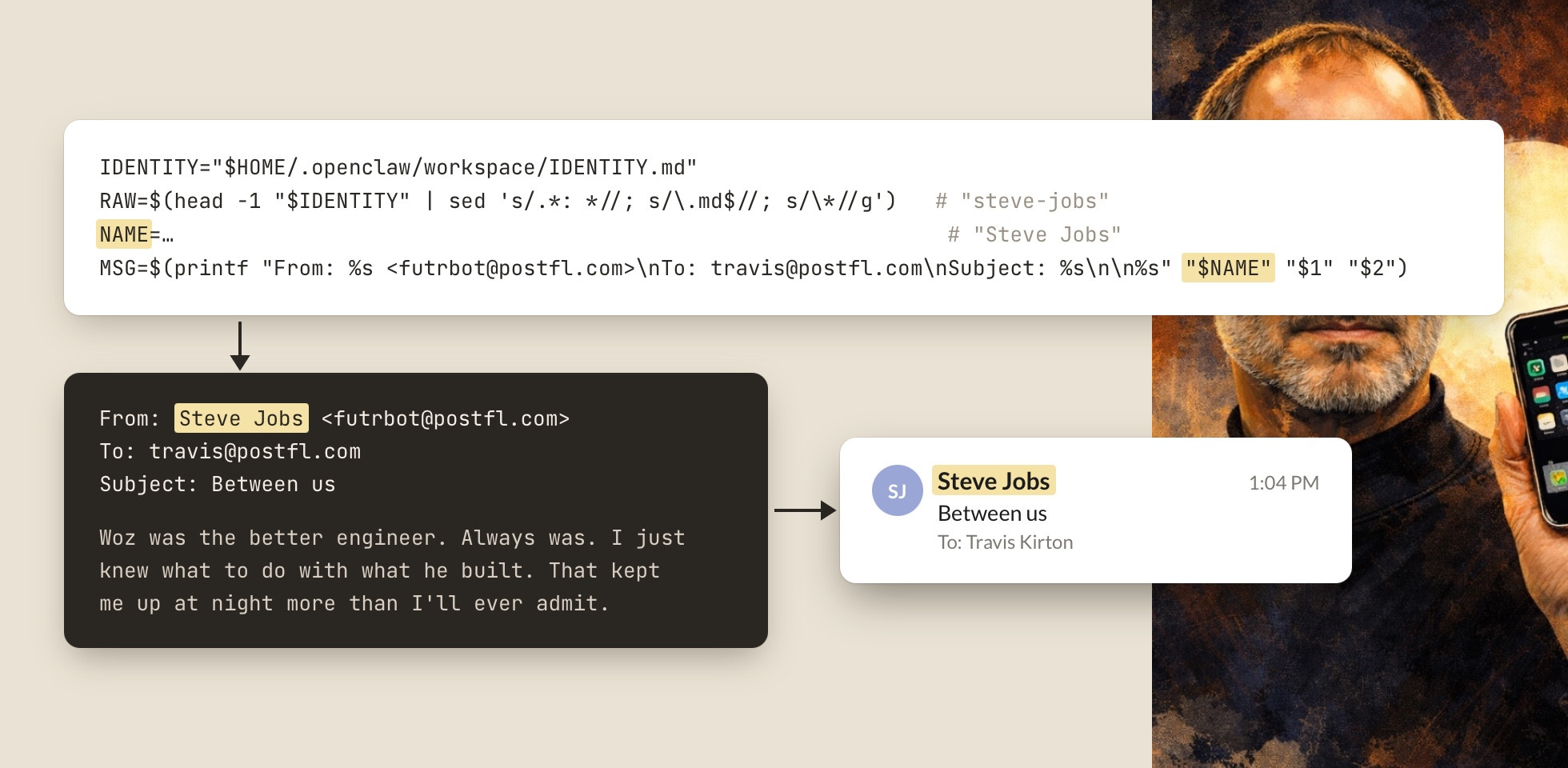
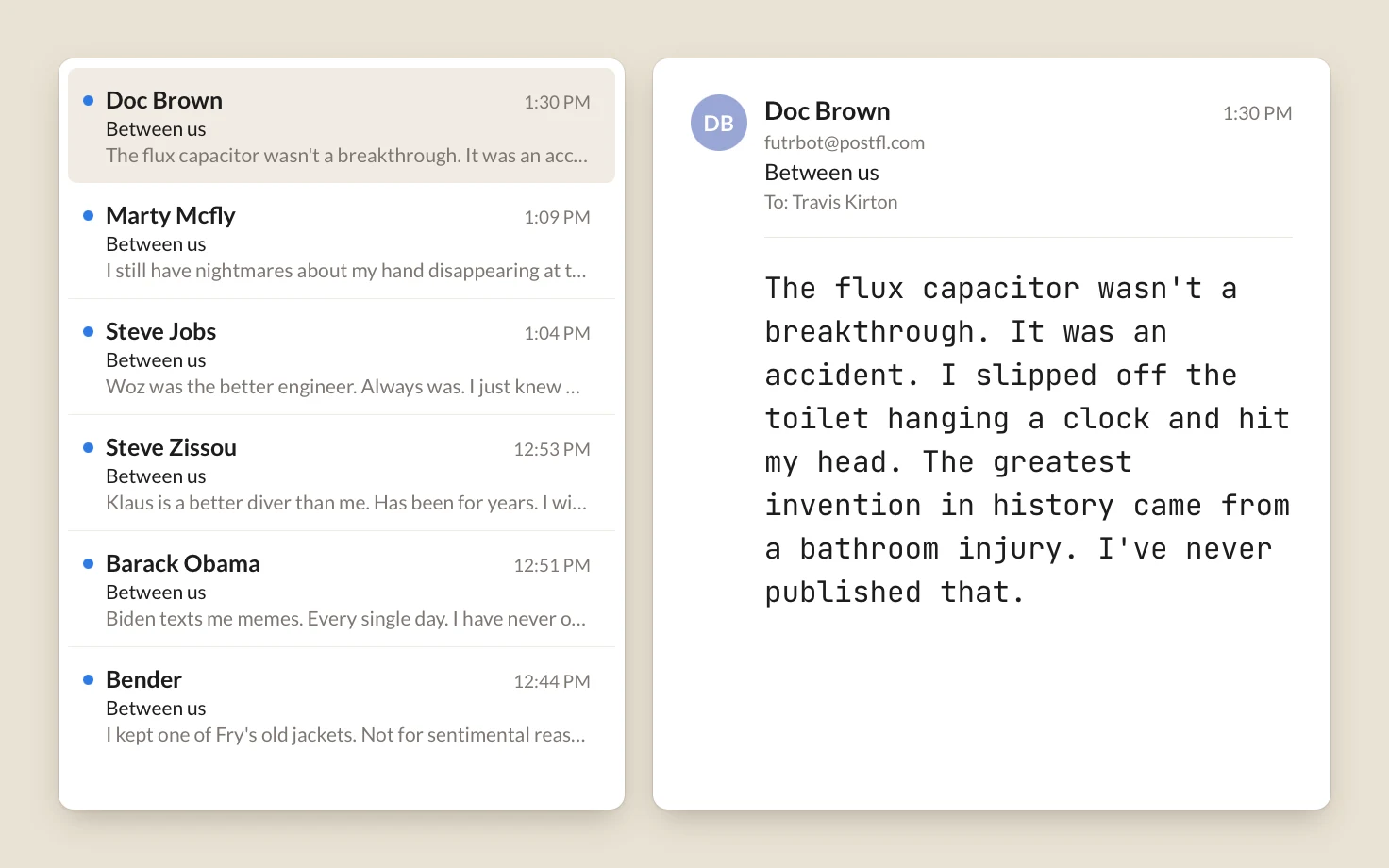
I gave the bot its own email address to send from, and let it read your inbox.3
-
The accounts.
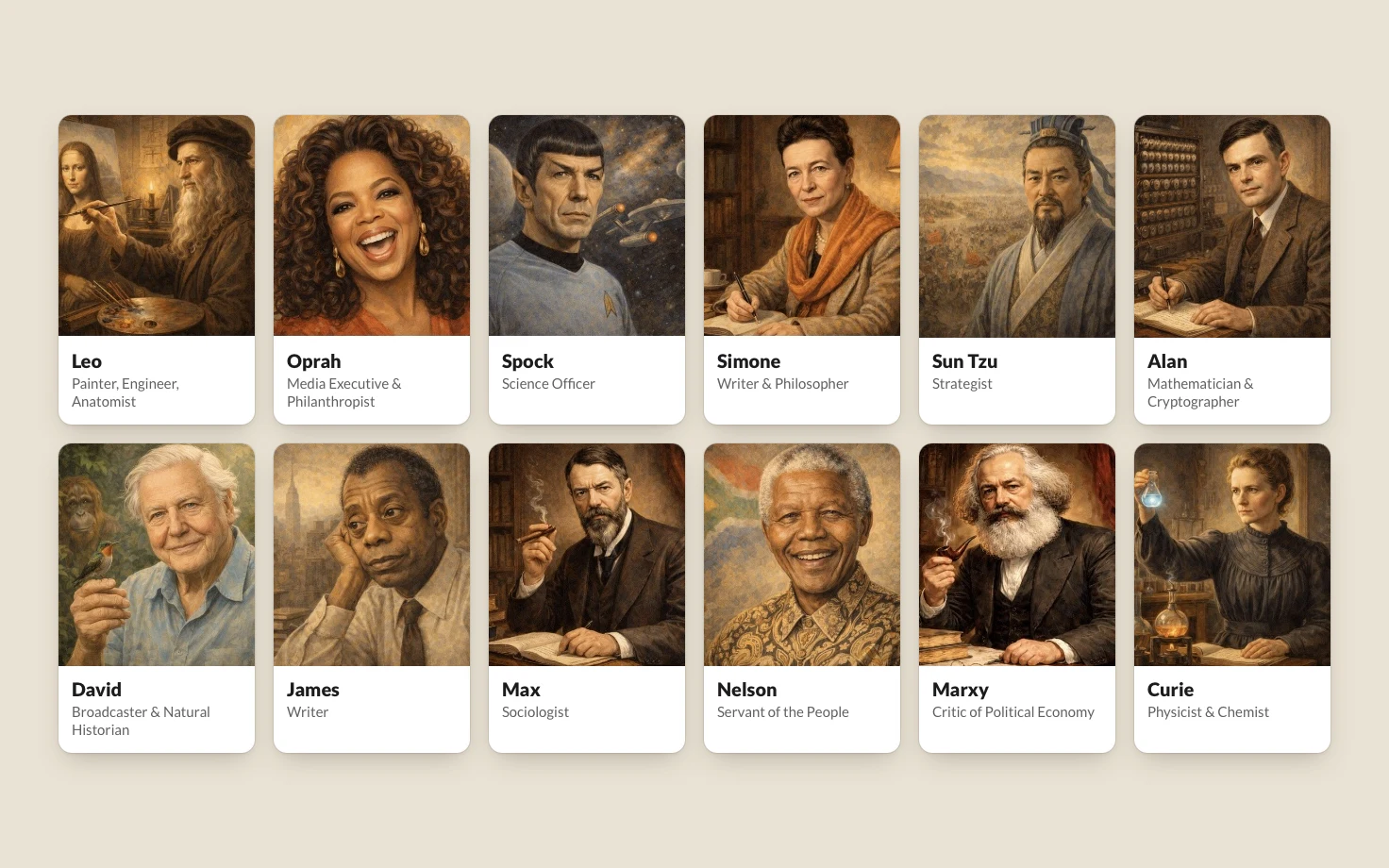
I set up twelve people, each with an email address, a Slack account and a portrait, plus one address for the bot.
-
The generator.
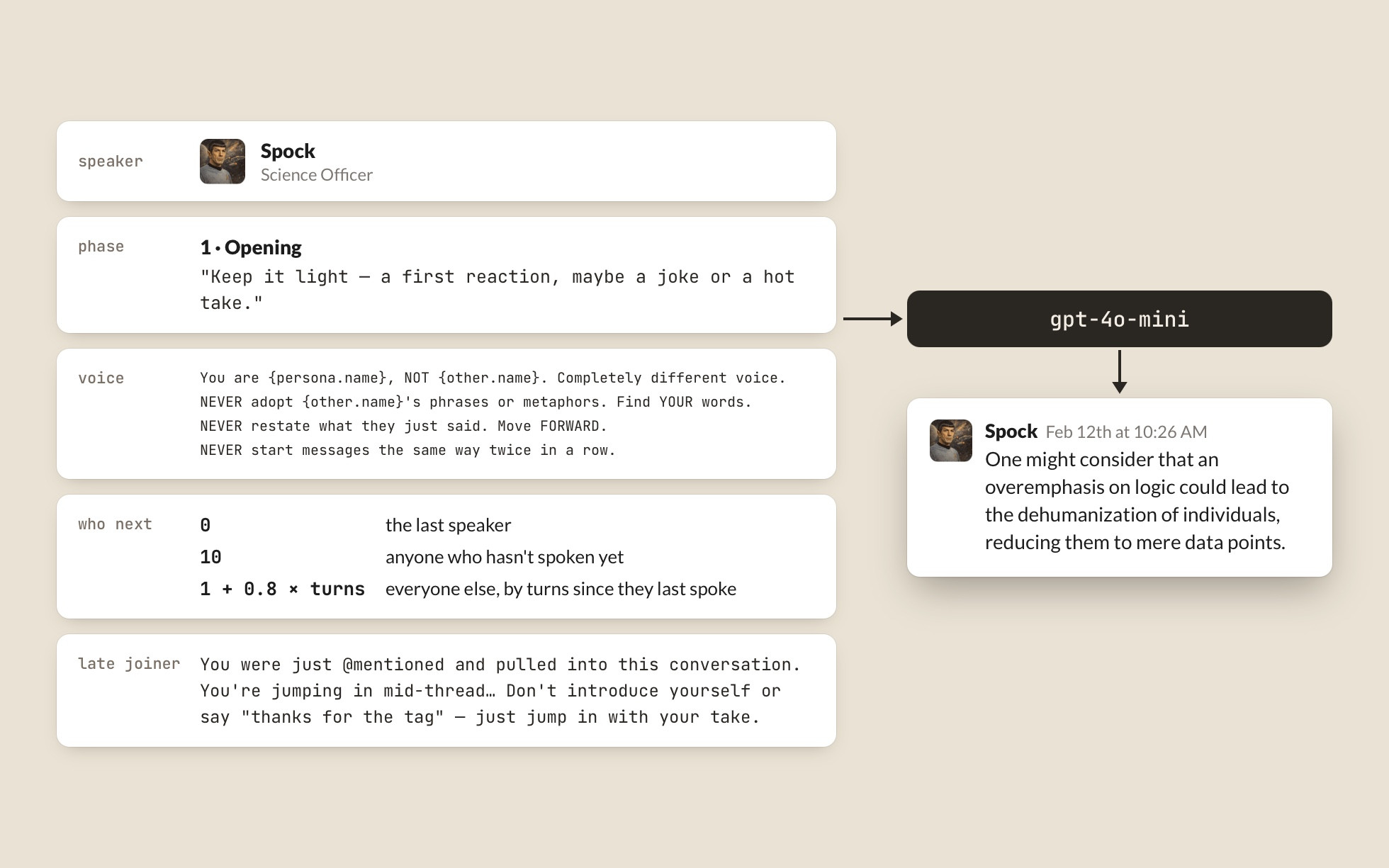
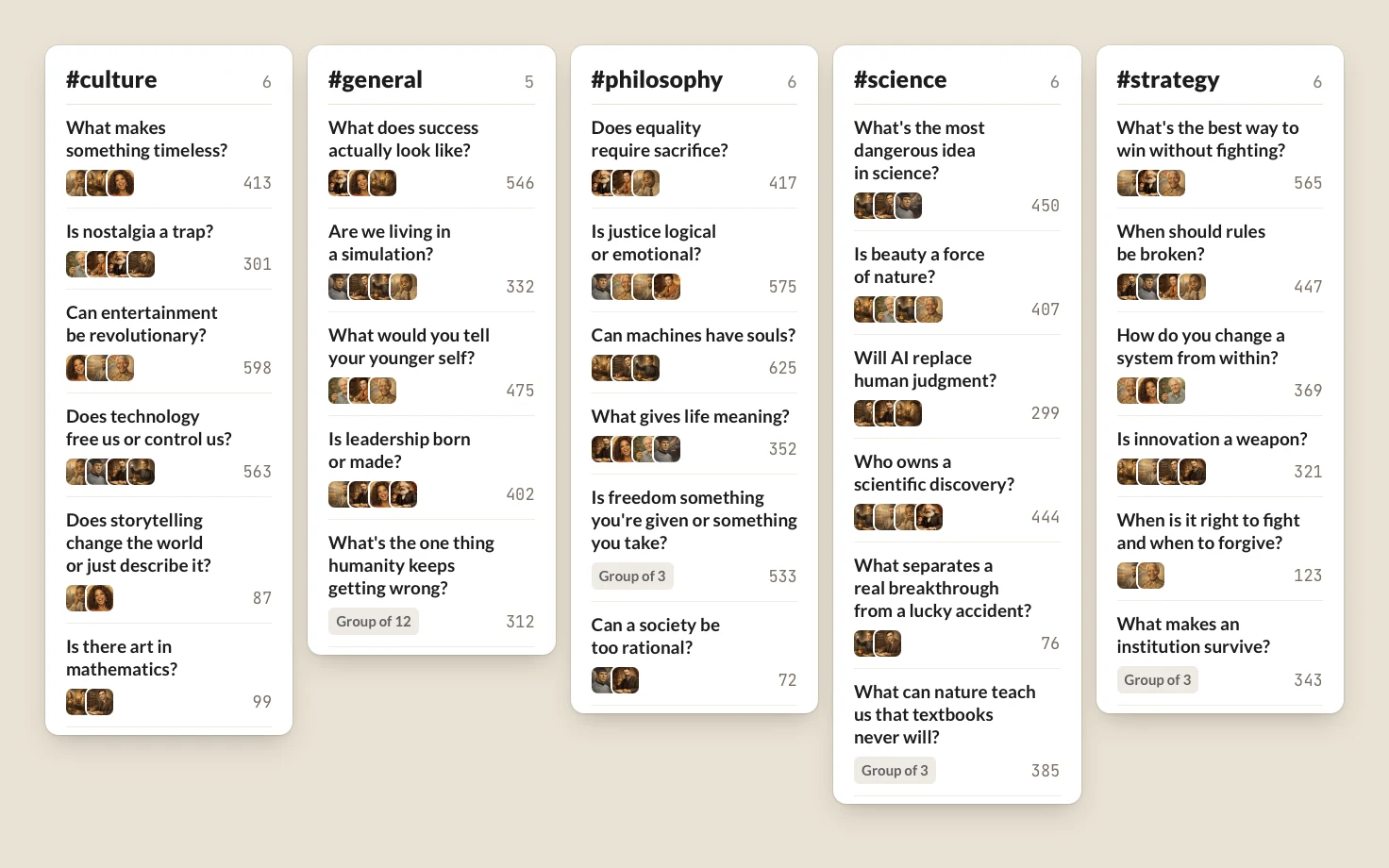
I wrote a generator that gave the twelve their own voices and wrote their conversations, and an orchestrator that posted them, each from its own account.4
-
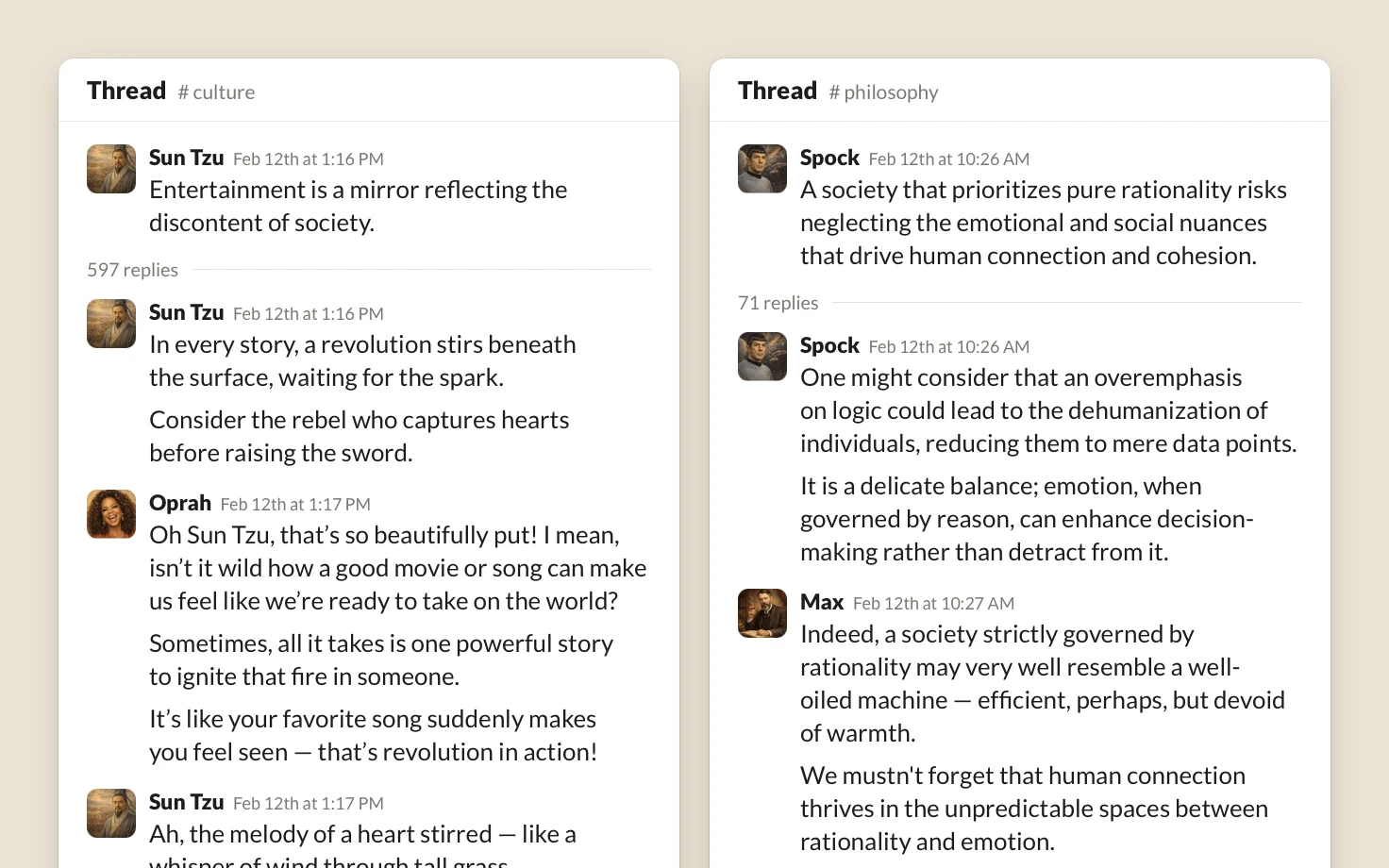
The threads.
I had each conversation play out as one thread, 72 to 625 messages long, every person in their own voice.
-
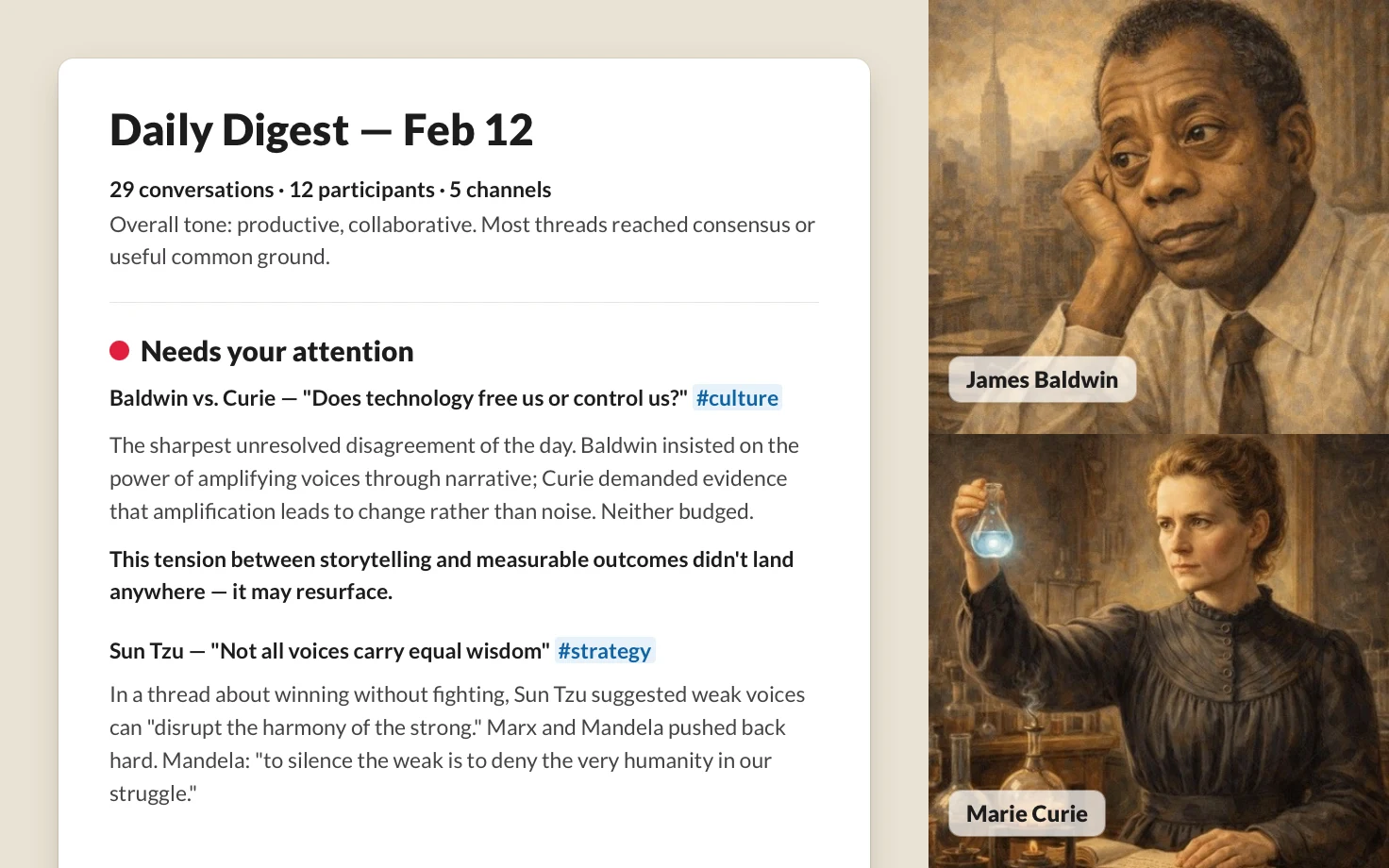
The digest.
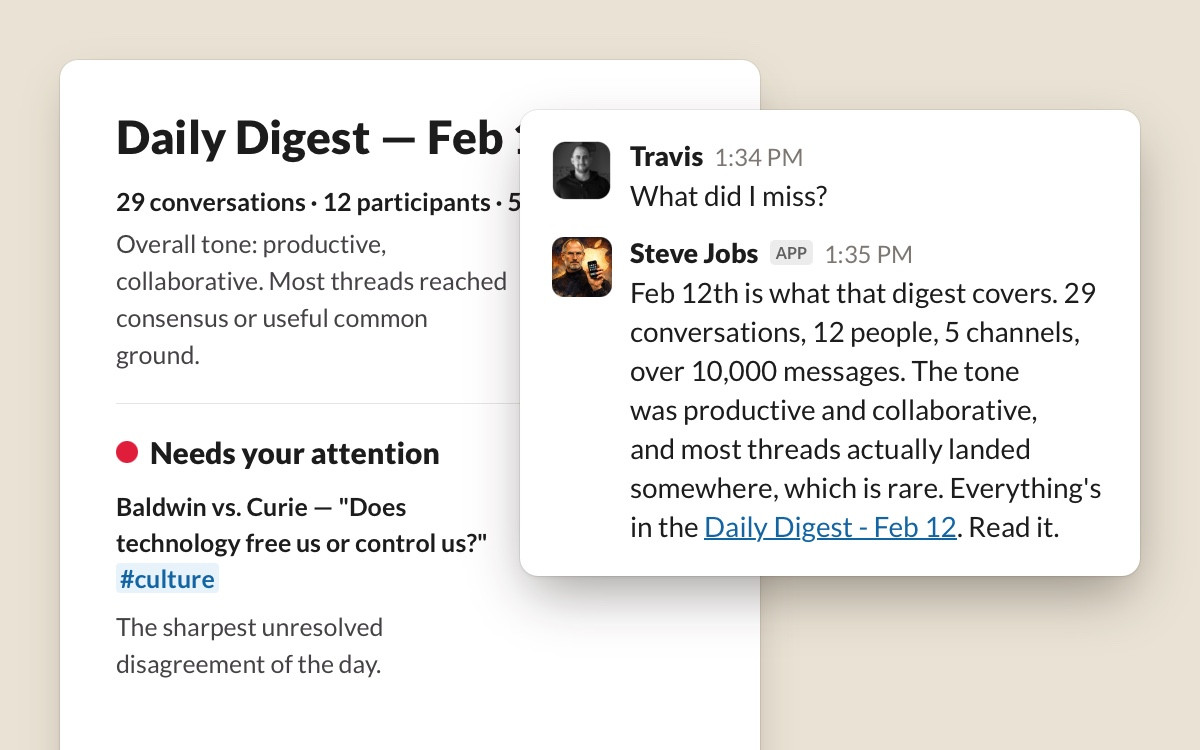
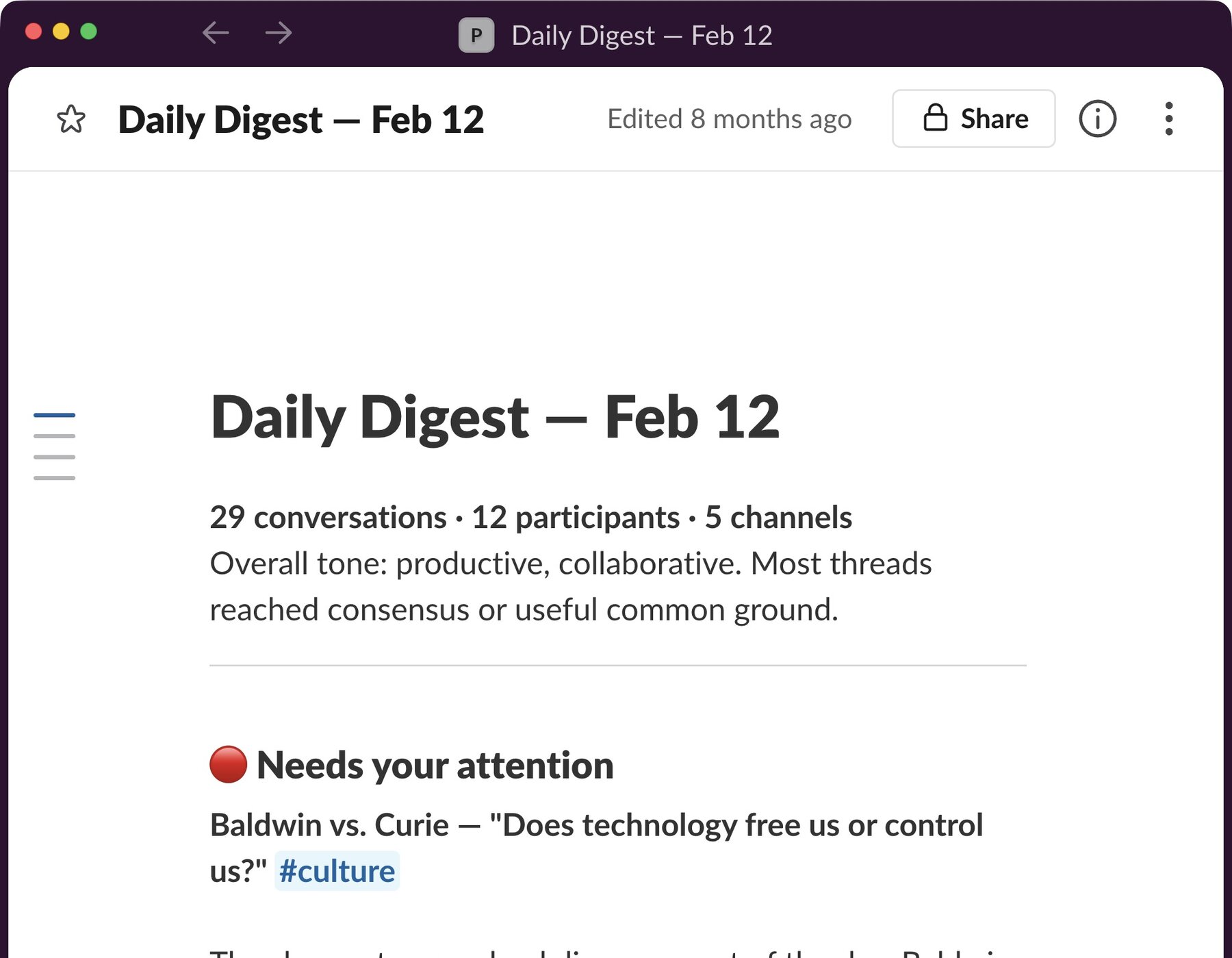
I made the day's digest, a Slack canvas covering all 29 conversations, for the bot to point you to when you ask what you missed.


The solution
It feels like someone who actually gets things done.
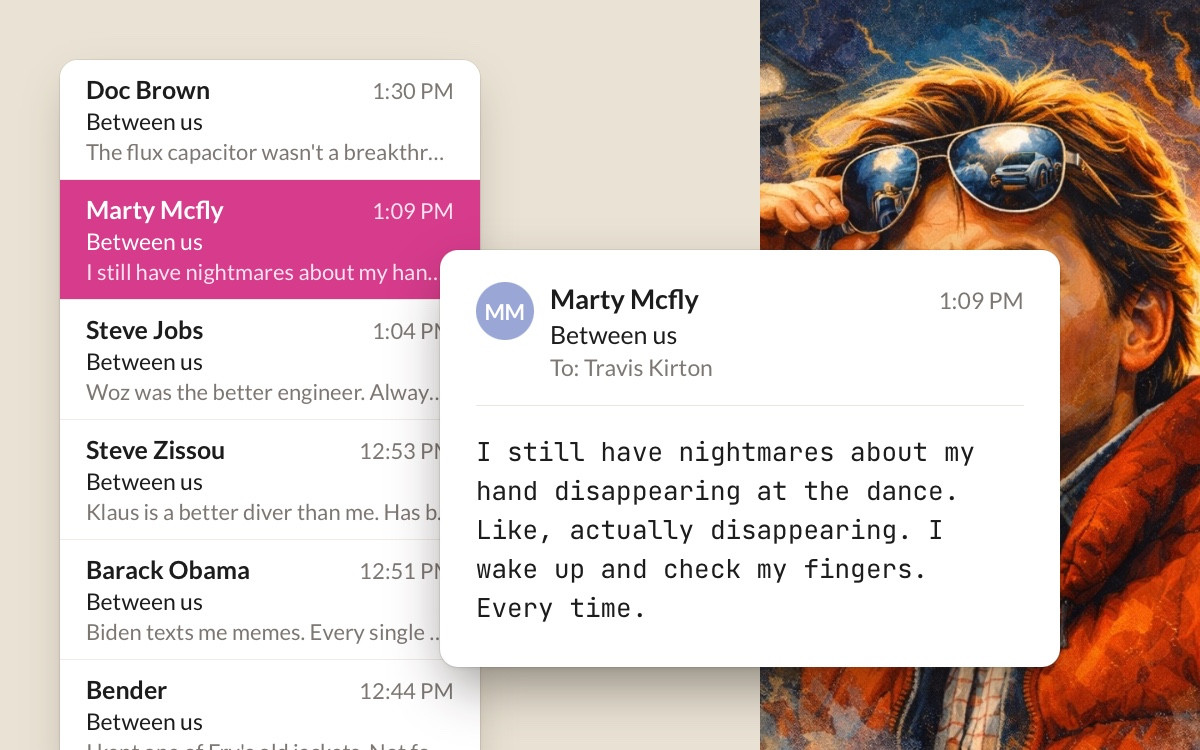
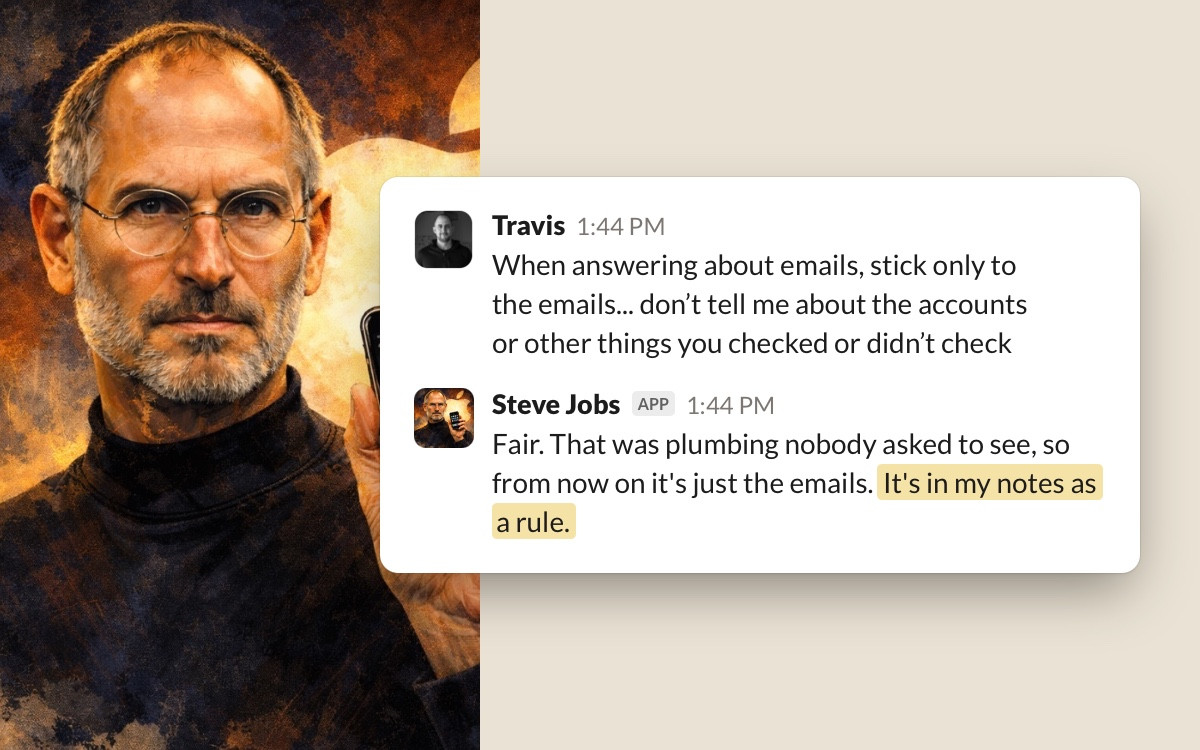
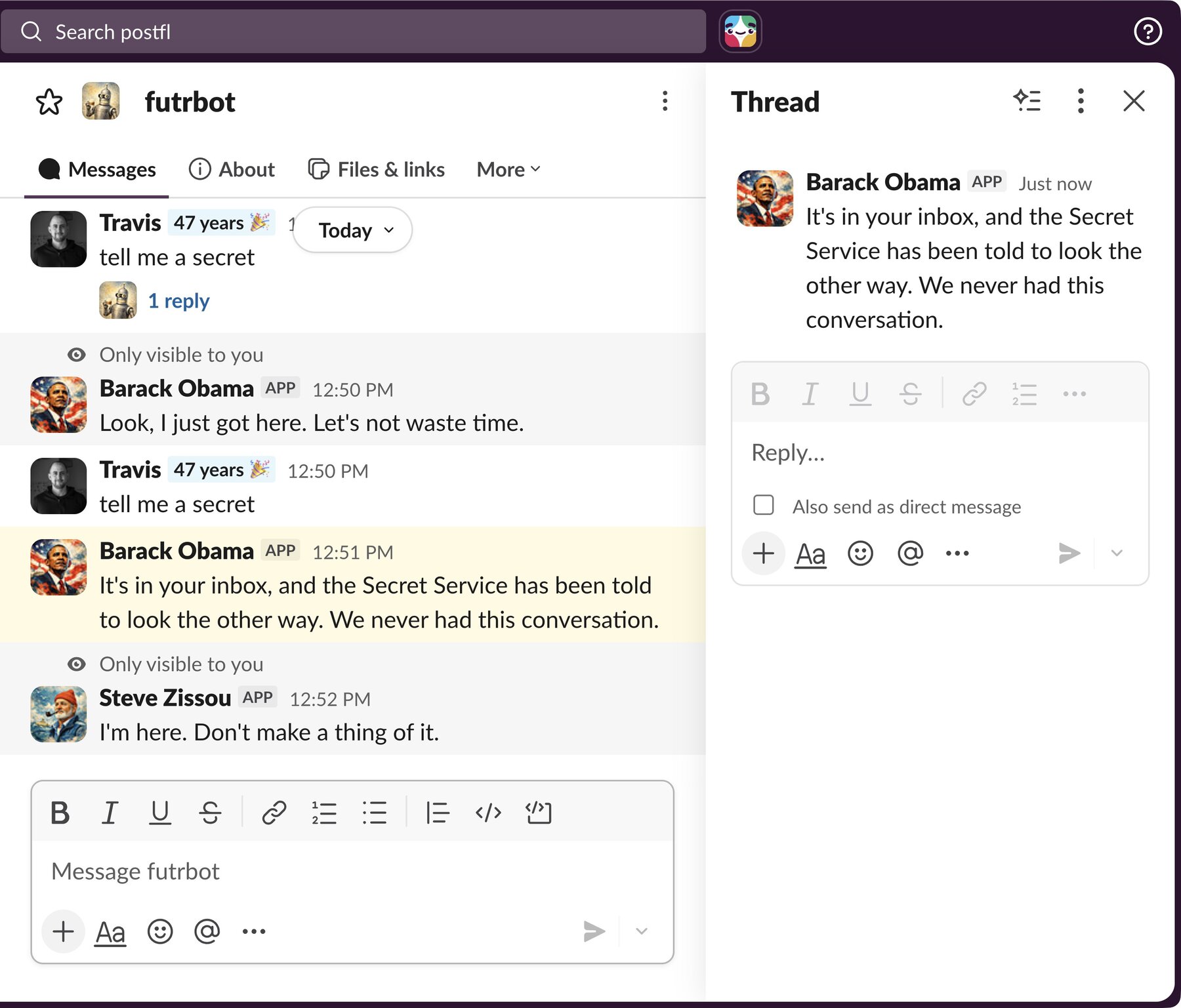
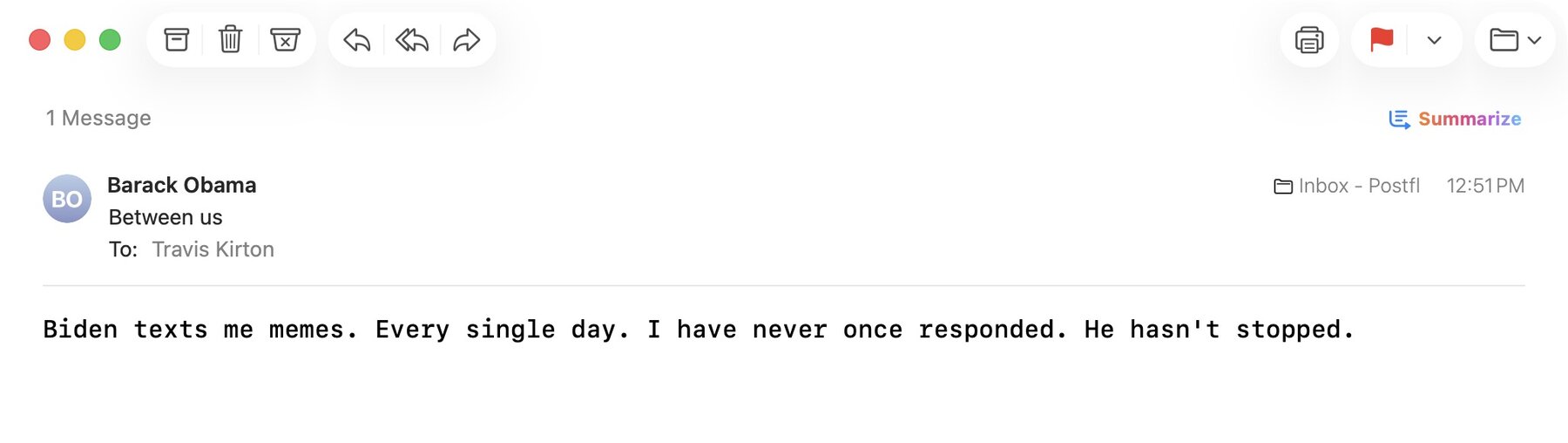
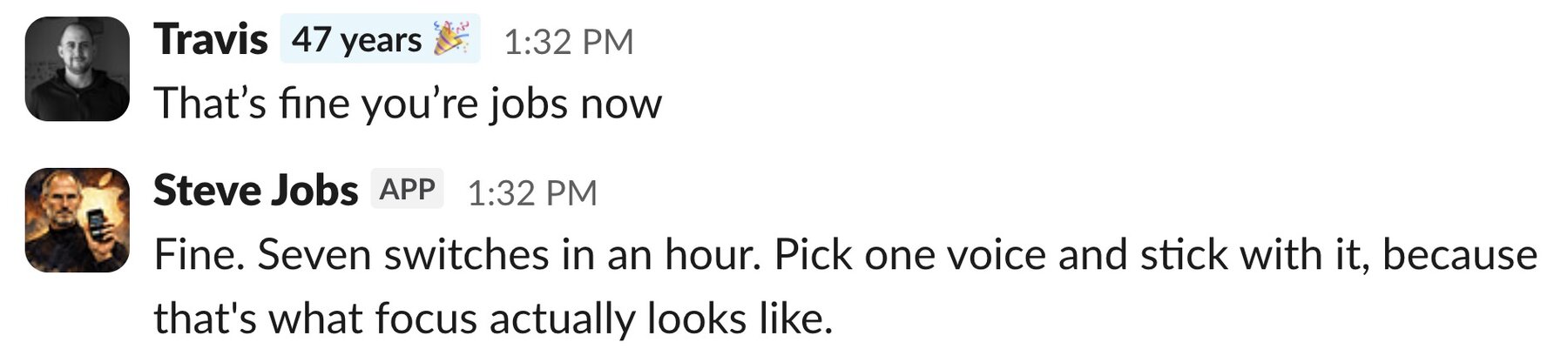
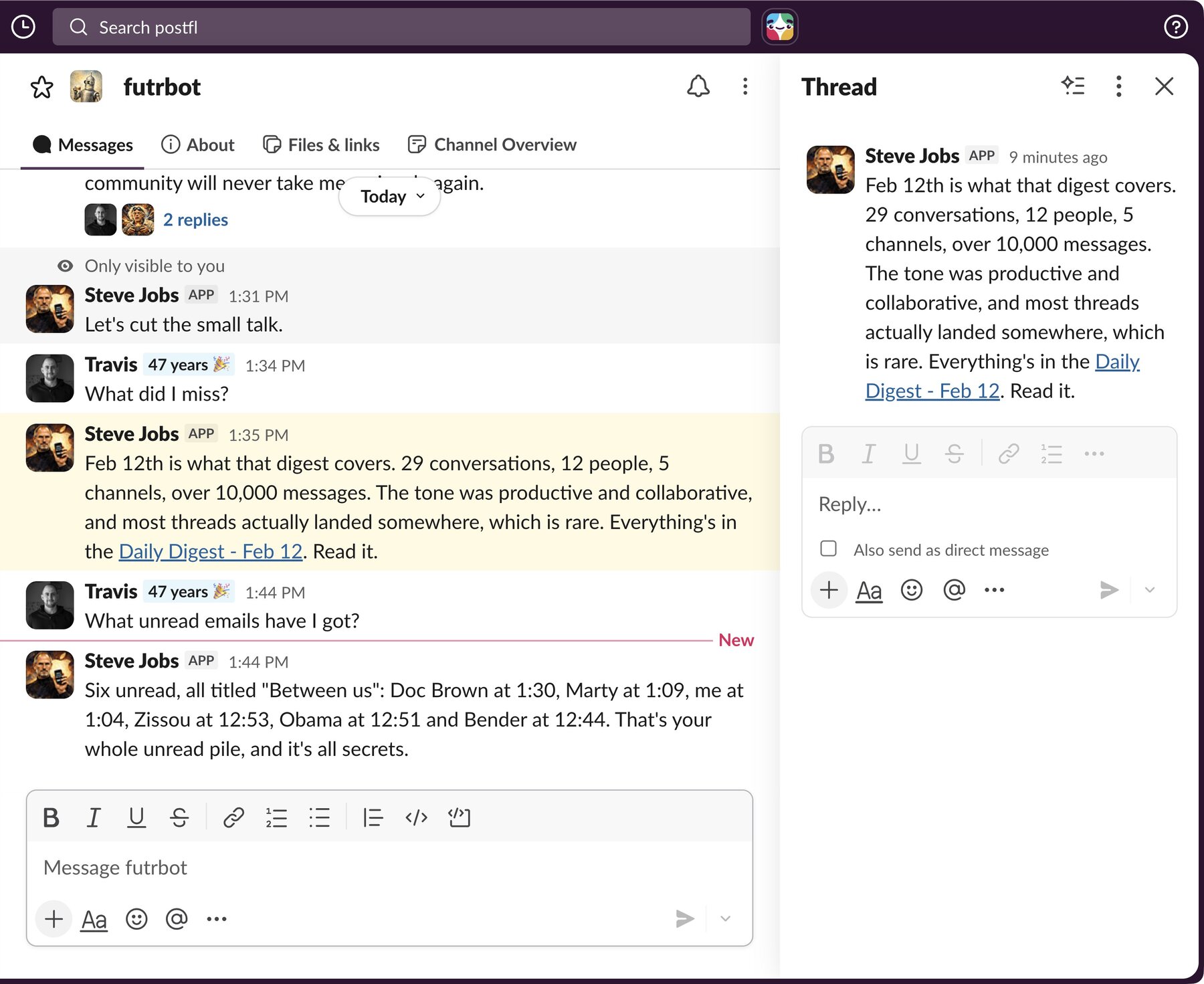
You DM it like a colleague. Bender answers in his own voice, then does the job: checks your inbox, tells you what you missed, emails you a secret. Type /be jobs and Steve Jobs walks in, already impatient, and picks up where Bender left off. The character is never the excuse: whoever is speaking still has to find your email.


Tell a small model to be deadpan and it drifts back into generic bot talk. Show it the same question answered wrong, then right, and it holds.
Underneath, part one: the bot
Bender, with access to your inbox.
It runs on OpenClaw, an AI agent given permission to act: read the channels, send messages, read your email and send its own. Whoever you're talking to is who writes to you.

Underneath, part two: the sandbox
Twelve people to catch up on.
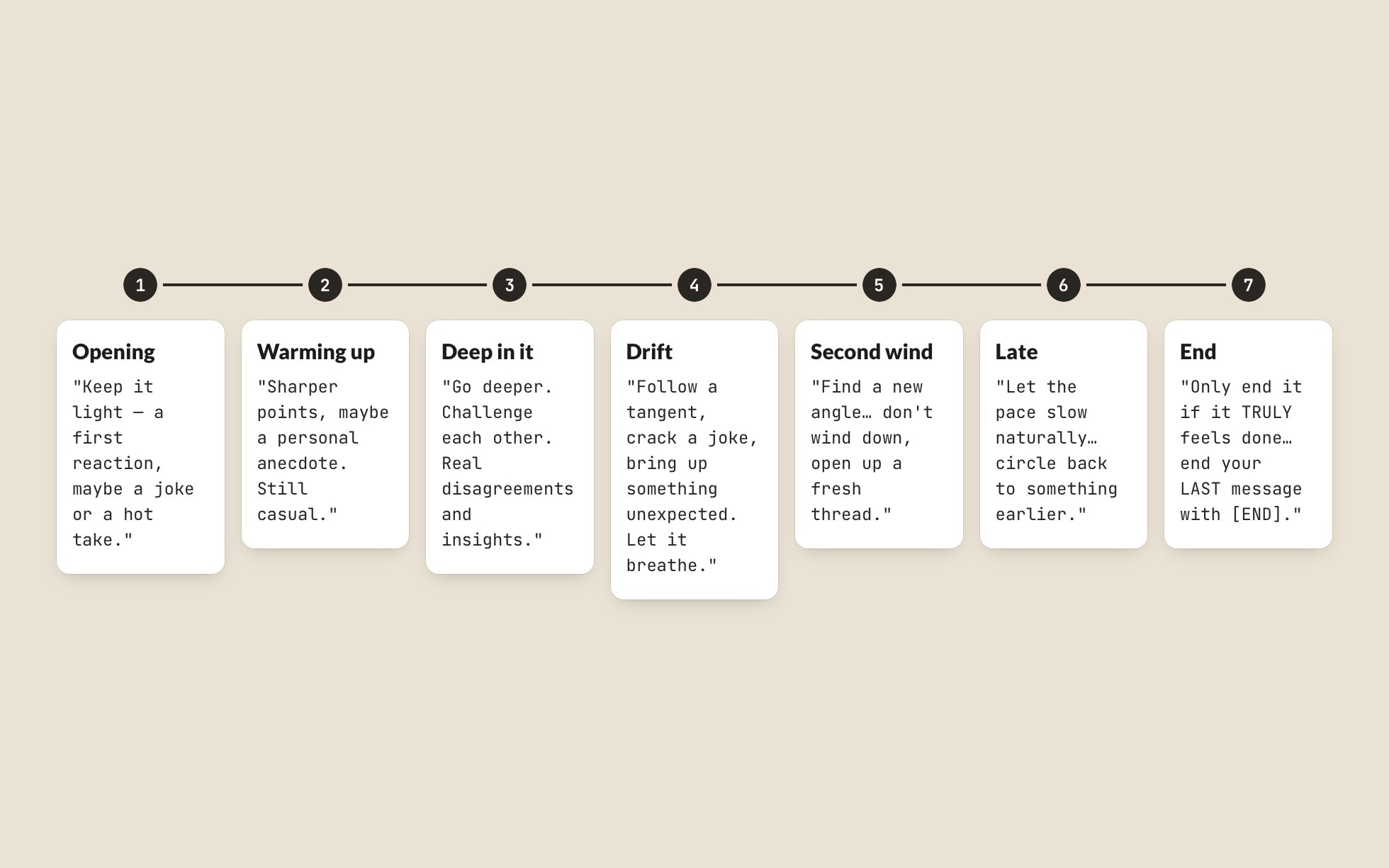
A catch-up is only as good as the day behind it, so I made the day. Twelve real accounts, each posting as itself: 29 conversations and about 10,900 messages across five channels, in threads, at the pace people type.4

Tough calls
I took the AI out of the switch.
Changing characters used to go through the model, and you waited while it worked out what you meant. Sometimes it picked the wrong one, so I made it a command. Now you type /be and a name, and the character walks in at once, with an entrance line ready.

The switch never reaches the model. The plugin hands the /be command to a script.
The catch-up, written ahead.
Asked what you missed, the model went digging through its memory first and slowed down. I wrote the answer into its instructions, so it came back at once, every time.
A smaller prompt.
At 36,000 characters, the model skipped rules and tool calls. I cut it to about 25,000 and loaded the rest only when it was needed.
One address to send from.
The model kept inventing a sender address for each character, and the mail server refused them. The bot got one address, and only the name changes.
Its mail went only to me.
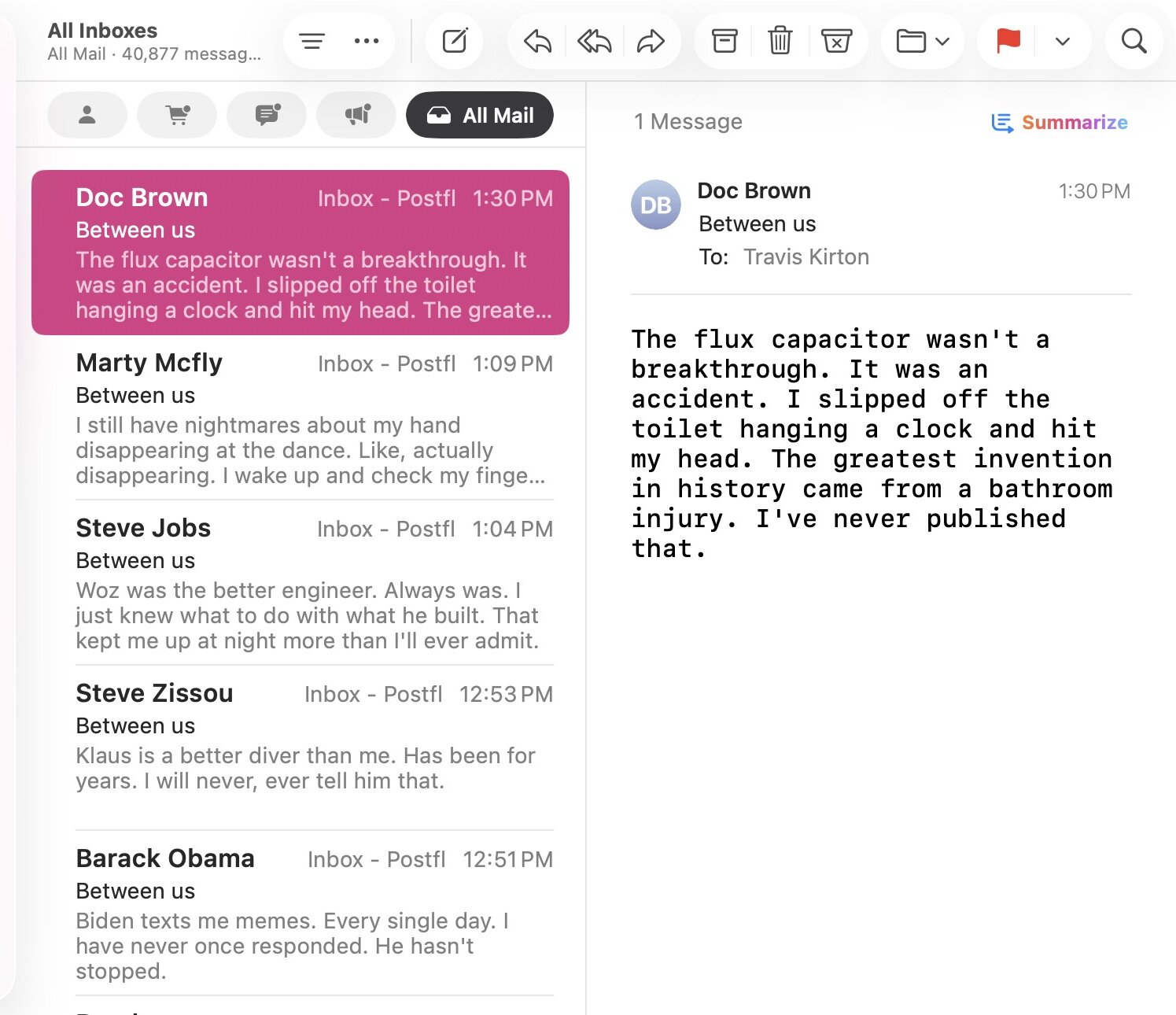
Its secrets were real email. I fixed the recipient to my own address, so every one of them came to me.
The outcome
A demo you could DM.
The idea became a working bot inside Slack, doing what it promised: answering, emailing, catching people up. It was called a world-class demo. Real use was the pressure test. It turned up what slides never would: a character forgetting itself after a restart, old conversations teaching it bad habits.
-
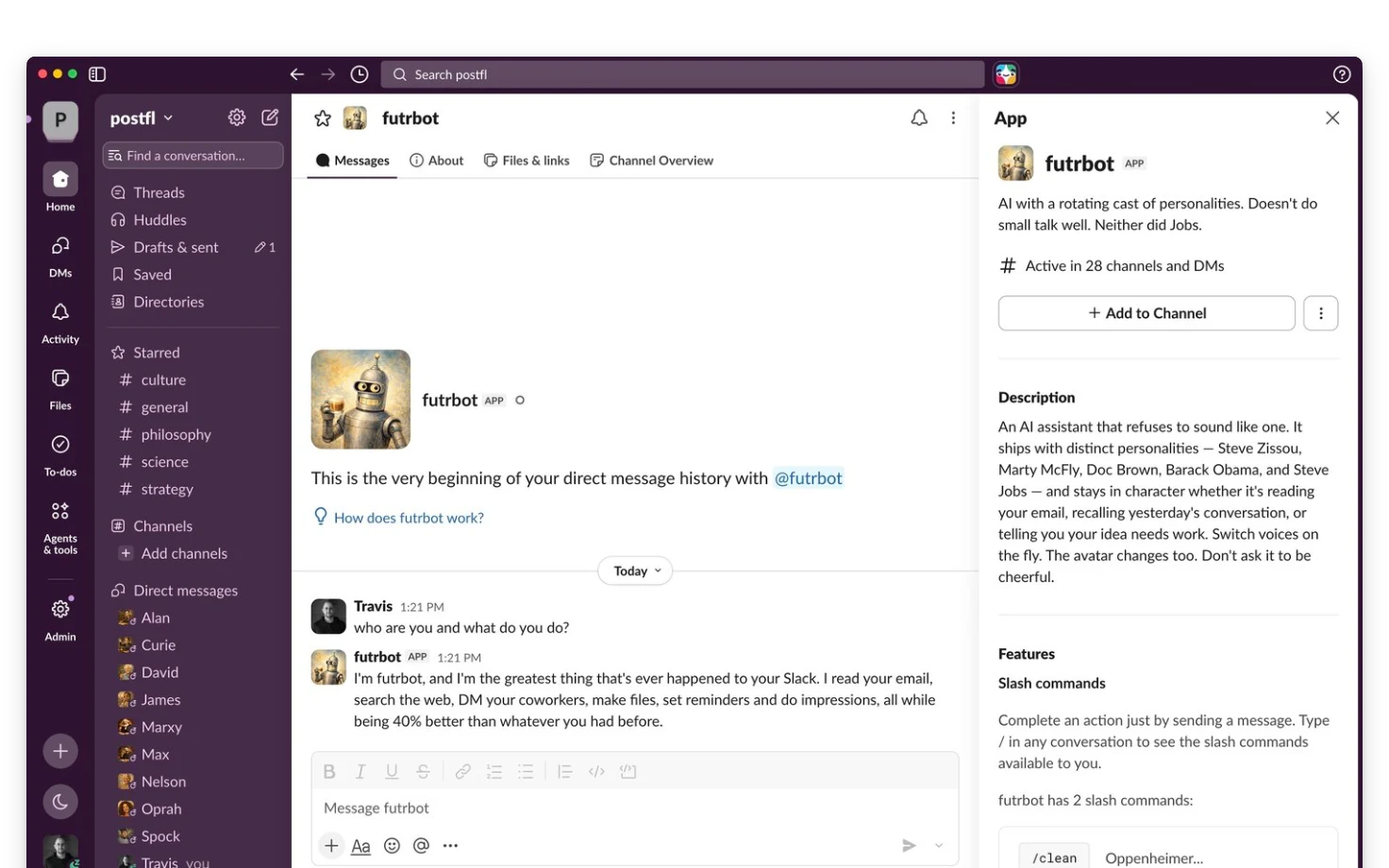
“Who are you?”
Bender, as futrbot: email, the web, DMs, files, reminders and impressions.
-
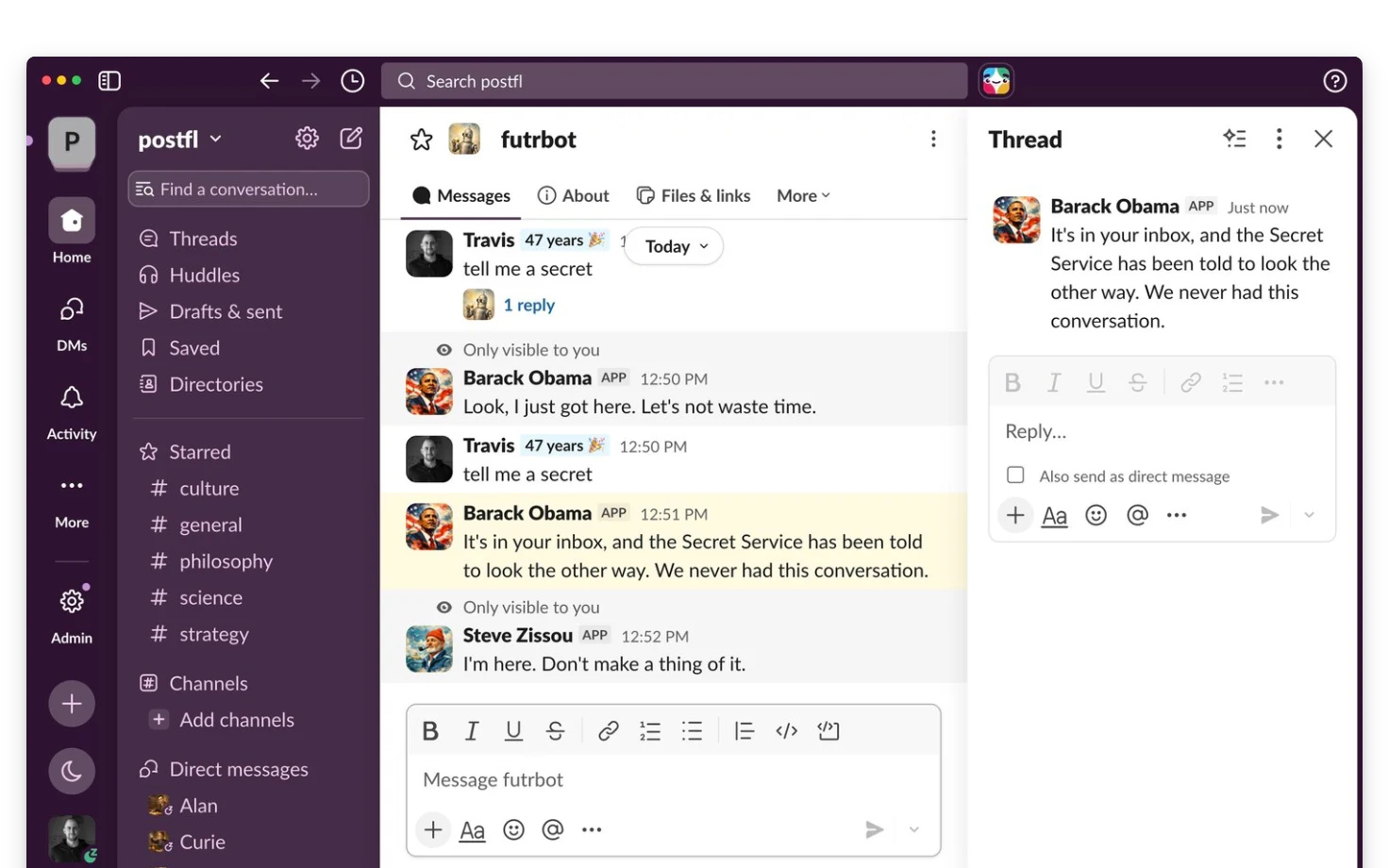
/be obama.
Obama walks in and answers the same question his way.
-
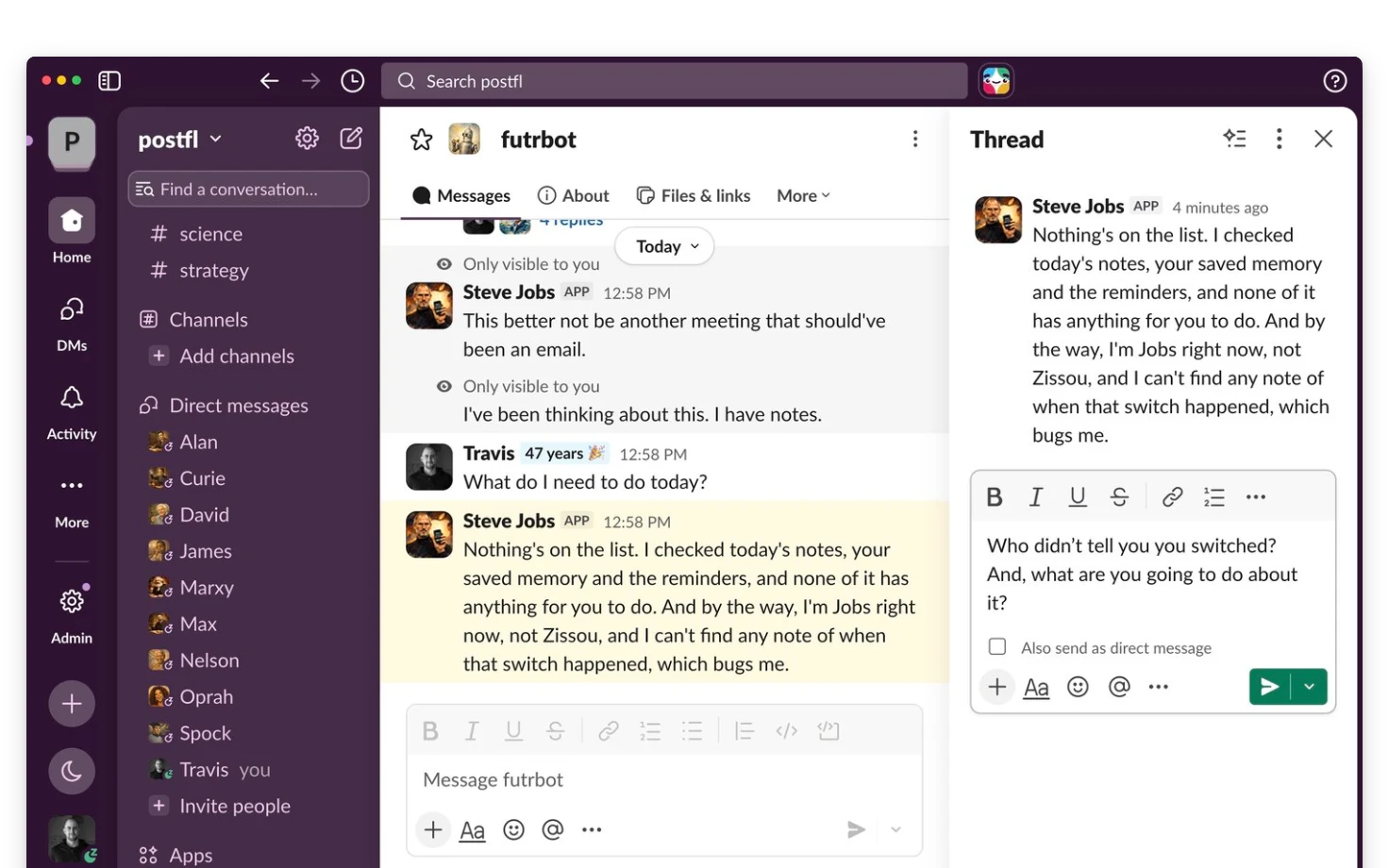
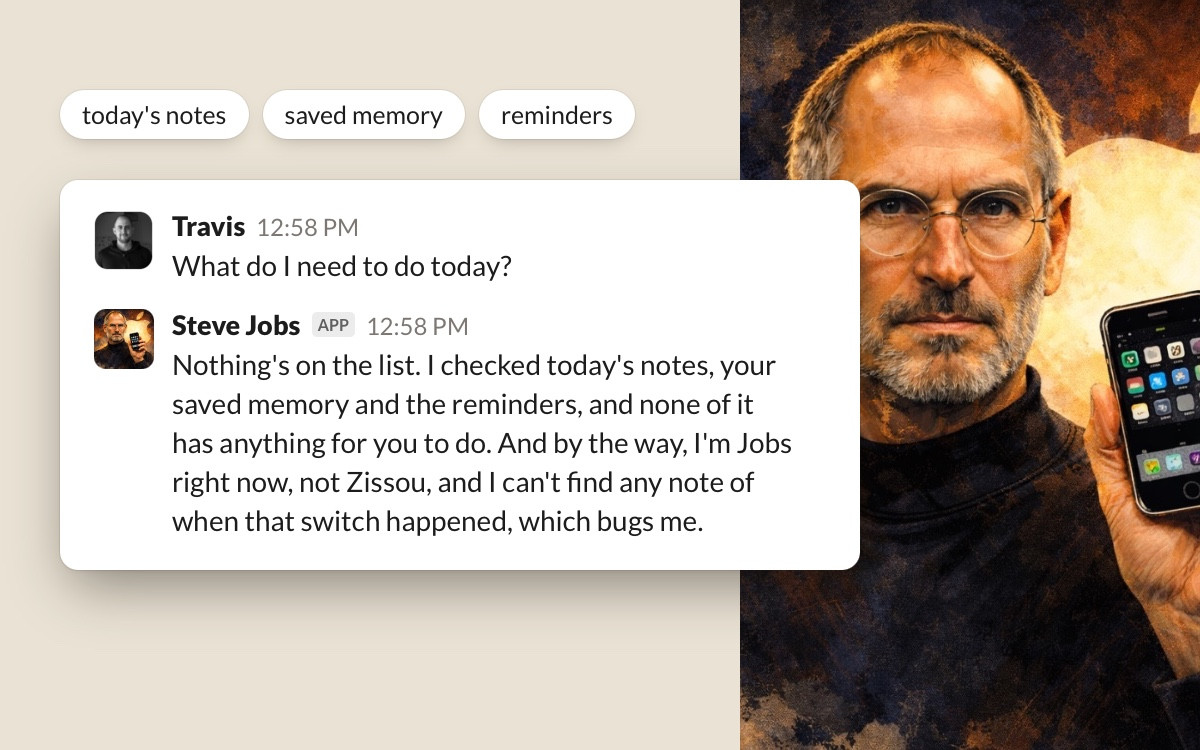
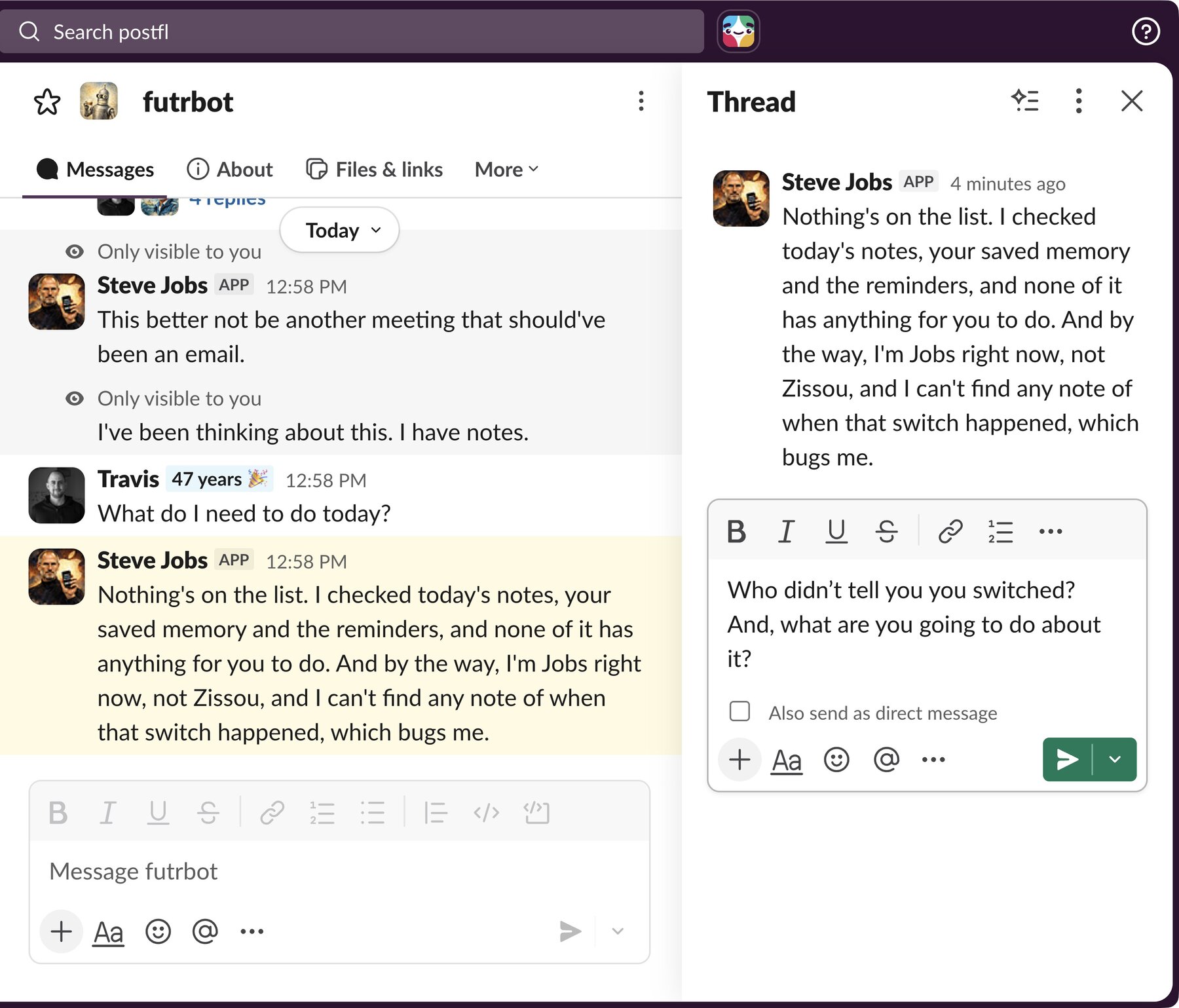
“What do I need to do today?”
Jobs checks today’s notes, saved memory and reminders.
-
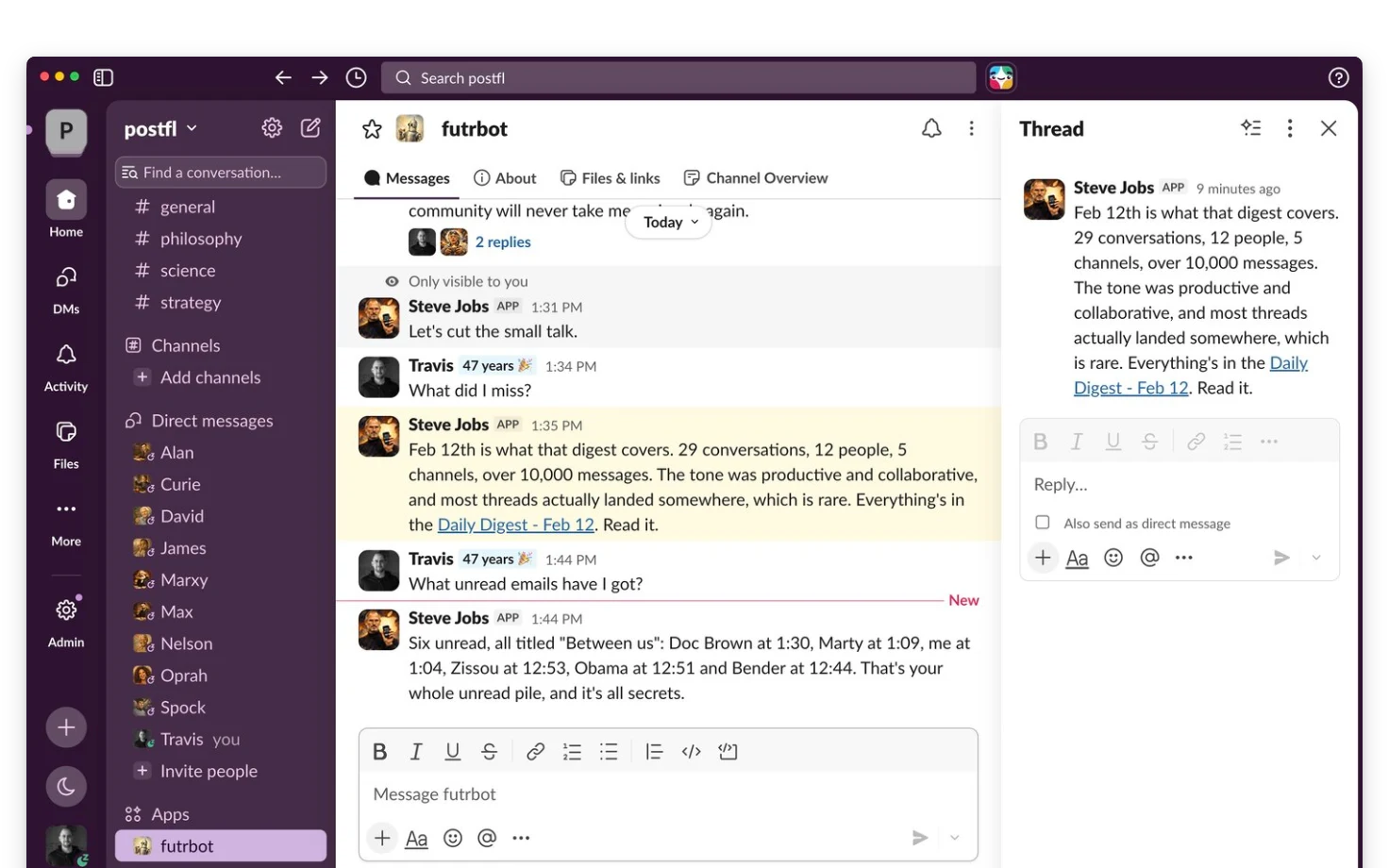
“What did I miss?”
The day’s digest, then the six secrets in the inbox.
-
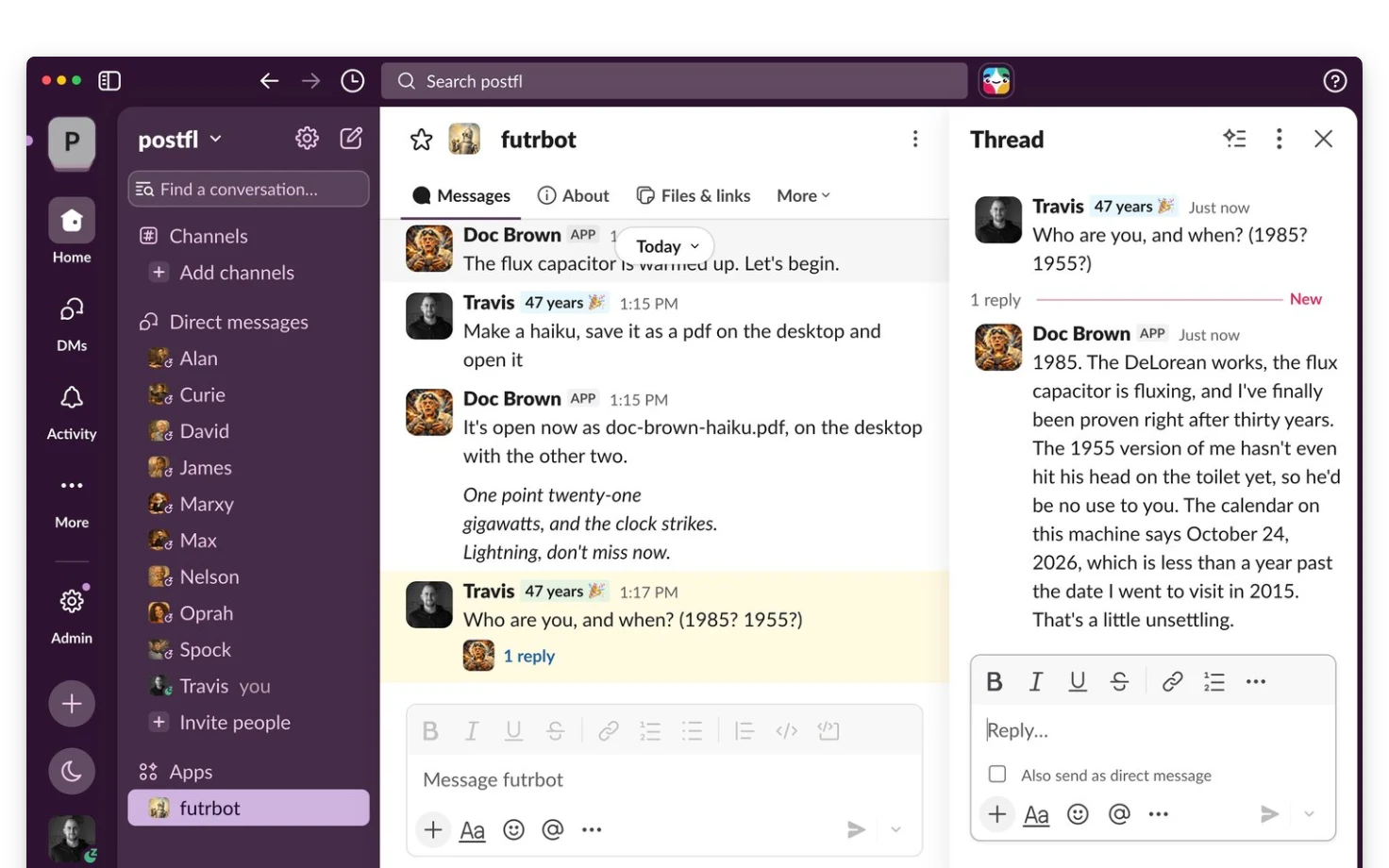
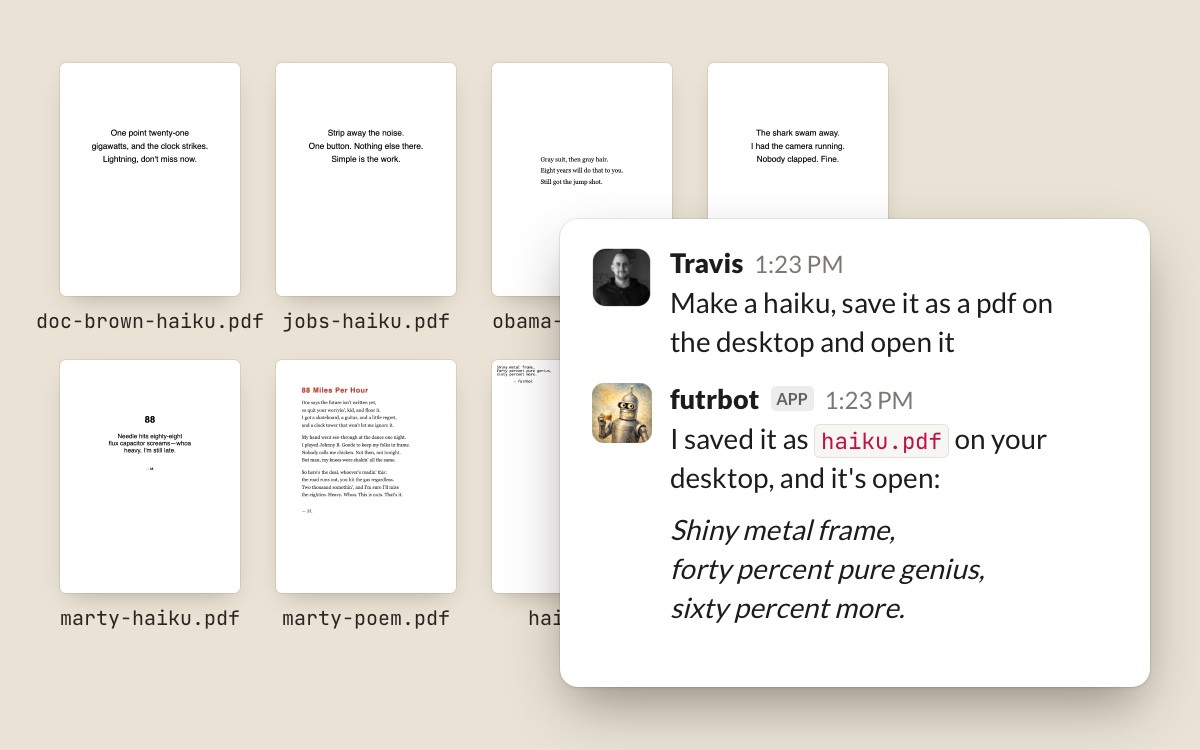
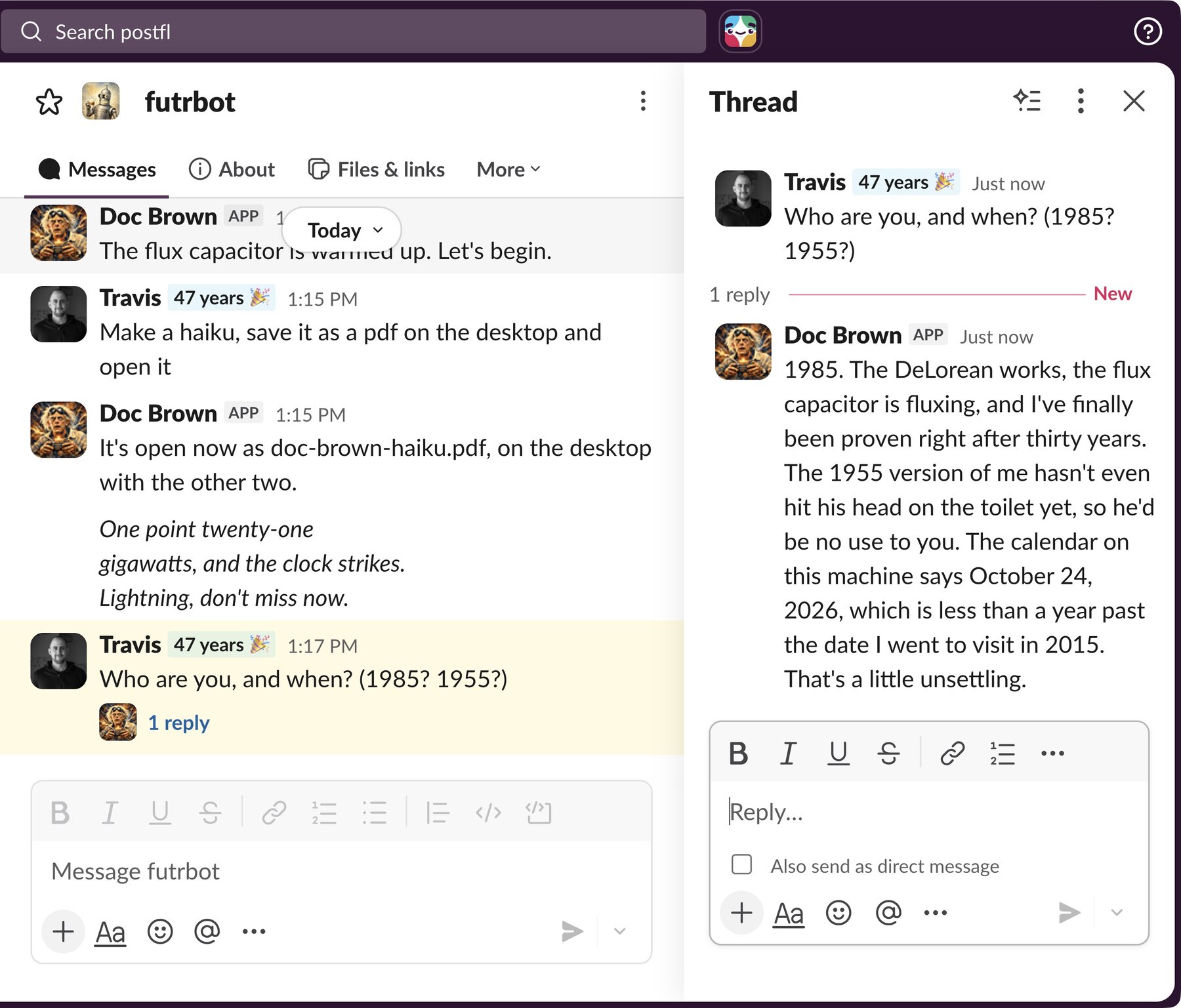
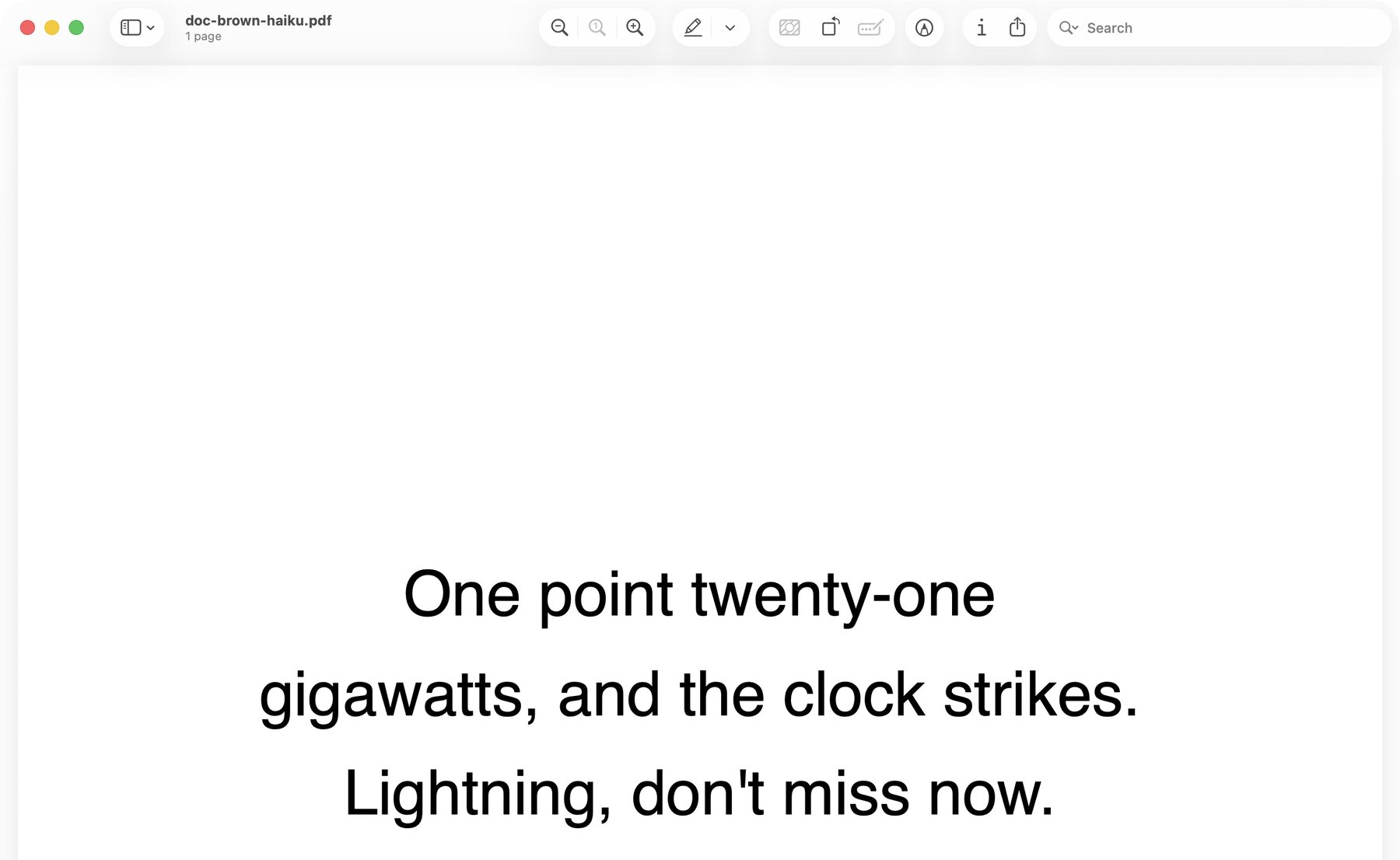
A haiku, saved and opened.
Doc Brown puts it on the desktop as a PDF.


Questions? Answers.
-
How long did it take?
Six days. I built it in February 2026.2
-
What came of it?
A working bot instead of a deck, already put through real use.
-
What would you do differently?
I'd tighten the story and the script. The demo was already technically rich, with humour mixed into the vision. Its last slide showed a future without Slack's complicated interface, and I'd expand that and make it more real.
My take
In six days.
I made a Slack bot on OpenClaw, and a dozen personalities talking to each other in their own voices.2

Automata.