IInsightsIn progress
Intel a seller can act on in a deal.
Deal Tips at Klue, a competitive-intelligence platform. While a deal is open, sellers get AI-written tips on the competitor they're up against, and what to do about it. I extended the AI pipeline behind them, then redesigned the screens on top.

Project facts
- Role
- Design, research, prompts and the prototype
- When
- 20251
- Where
- Klue, a competitive-intelligence platform
- Team
- A product manager, engineers and me2
- Built with
- Python, OpenAI's APIs and Cursor; Figma for the screens
- Shipped
- The format and the steps, into production
- Format
- Four parts: Statement, Intel, Action, Resources
- Tested
- Demoed to sellers and Klue experts, then with clients
0
Stat to come.
0
Stat to come.
0
Stat to come.
Get to know Insights.
-
WantedThe old deal tip beside the redesigned insight. From the live page (9GECYDKwFEeU3PudMntI0SpcY.png, 3840x2160); a Klue screen, to clear first.
-
WantedThe insight as a page in Klue, with the nav and the assistant. From the live page (2Yh2LbZzCr760NTFIxNmmZckzQY.png, 3840x2160); a Klue screen, to clear first.
-
WantedThe insight over a sales-call page, with the assistant's list of actions. From the live page (aI3JycjUmP09GVqSkhcKIaO3Q.png, 3840x2160); a Klue screen, to clear first.
-
WantedThe insight as an email. From the live page (vGTRv6vpJtQjUZJxIrTJ33WwtI.png, 3840x2160); a Klue screen, to clear first.
The problem
Liked, but not used.
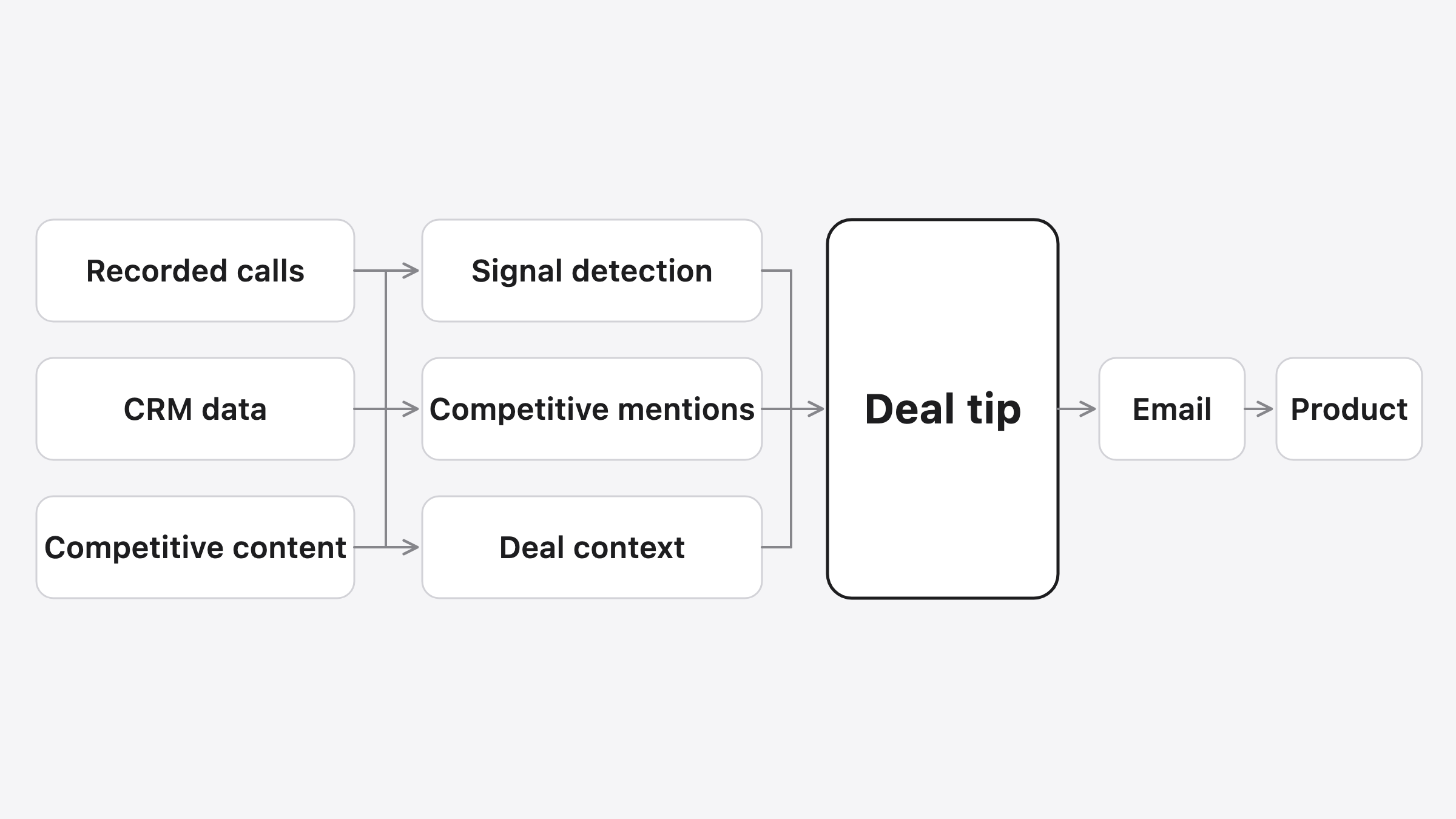
Klue's AI pipeline gathered intel on competitors and turned it into tips for sellers. It was a big part of what Klue sells. Sellers said good things about the tips. Few of them used them. Klue wanted sellers opening the tips and coming into the product.

The original pipeline. The real value was buried in the platform, and the email was only for click-throughs.
What I owned
The diagnosis, the steps, the format and the screens.
-
The diagnosis.
I traced the problem past the screens to what the pipeline handed sellers.
-
The steps.
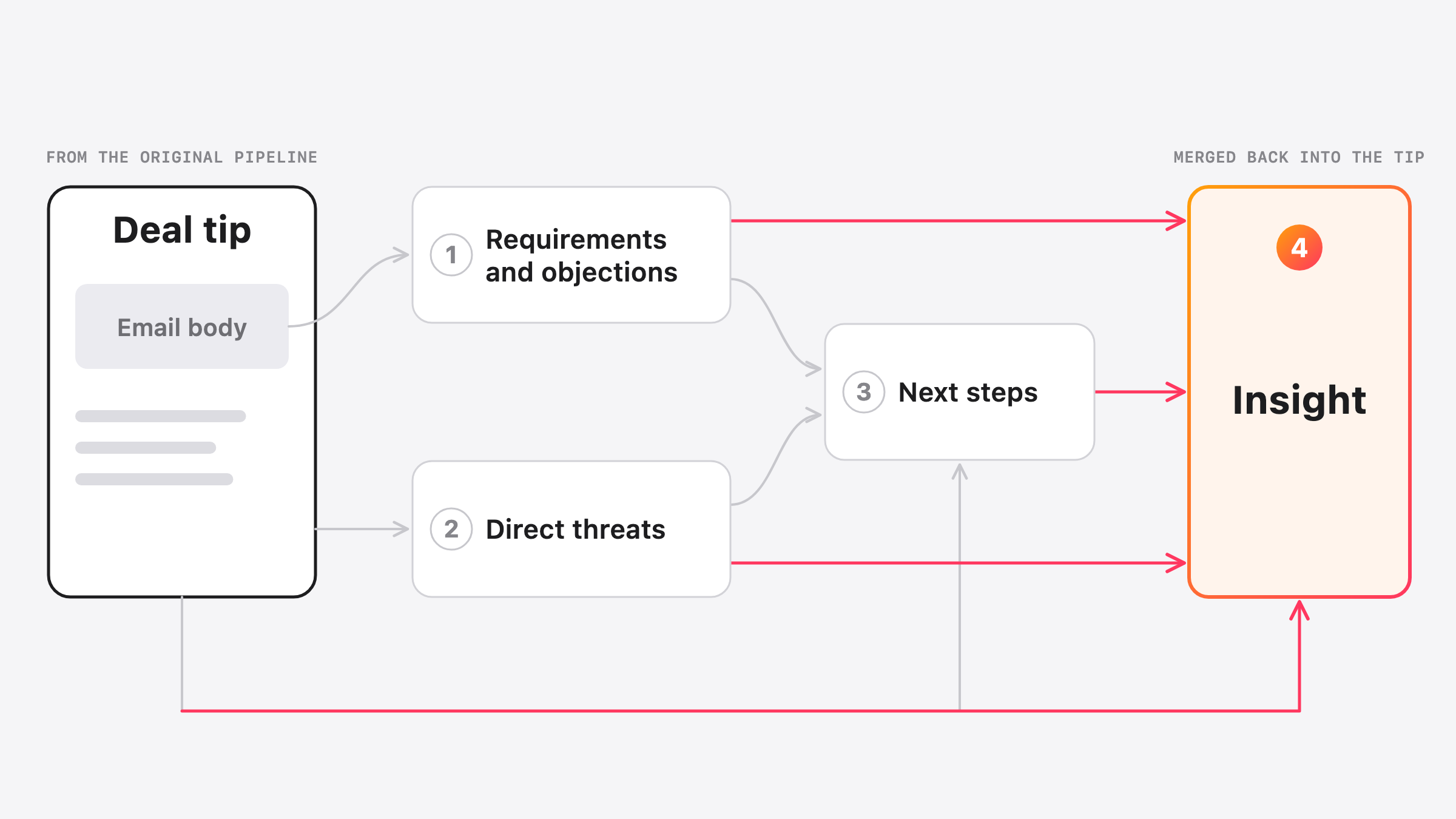
I added four steps to the pipeline and wrote the prompts behind them.
-
The format.
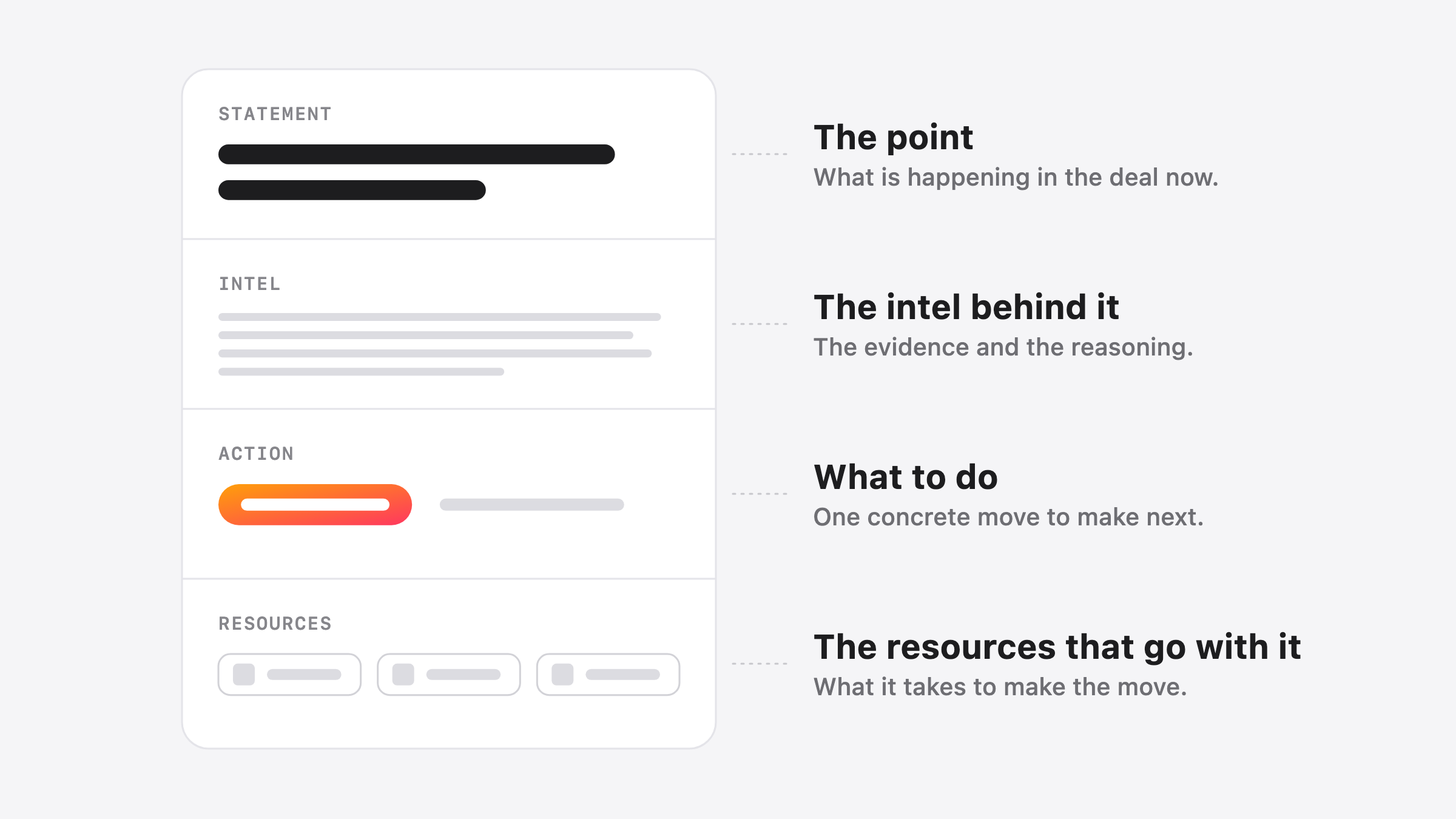
I introduced the four-part insight format and wrote how each part reads.
-
WantedThe prototype in Cursor: the project overview and an extraction script, the four prompt files in the tree. From the live page (31go4V2NjJ1s1FT6lCvirl2wcFA.jpg, 2032x1162); Klue code, to clear first.
The prototype.
I built it in Python on OpenAI's models, to drop into the existing pipeline, and demoed it to sellers.
-
The screens.
I designed them in Figma once every tip had its shape, and built the prototype the insights loaded into.
The solution
Know what to do next.
A seller in a deal shouldn't have to dig. One read should give them the point and the move to make. If they can't see why it's true, they won't act on it.

Why weren't sellers engaging? My notes on an old tip, redrawn without its data.
Underneath
Loads of information, no story.
I was asked to improve the UX. It wasn't a UX issue. The pipeline stopped at raw intel and left sellers to make sense of it.
So I extended the pipeline. New steps turn raw intel into an insight in four parts: the point, the intel behind it, what to do, and the resources that go with it. I wrote how each part reads, too.


Requirements and objections. The first step pulled them out of the tip's email body.
Direct threats. The second read the whole tip for the threats to the deal.
Next steps. The third wrote actions from the tip and the first two steps, each naming what it answered.
The insight. The last step wrote one insight from all of it, and merged it back into the tip.
Tough calls
The redesign waited.
A cleaner screen over the same raw intel would still have left sellers overwhelmed. So the screens came after every tip had its shape. Then the design opened up. Every tip held the same four parts, so I could try many ways of showing them.

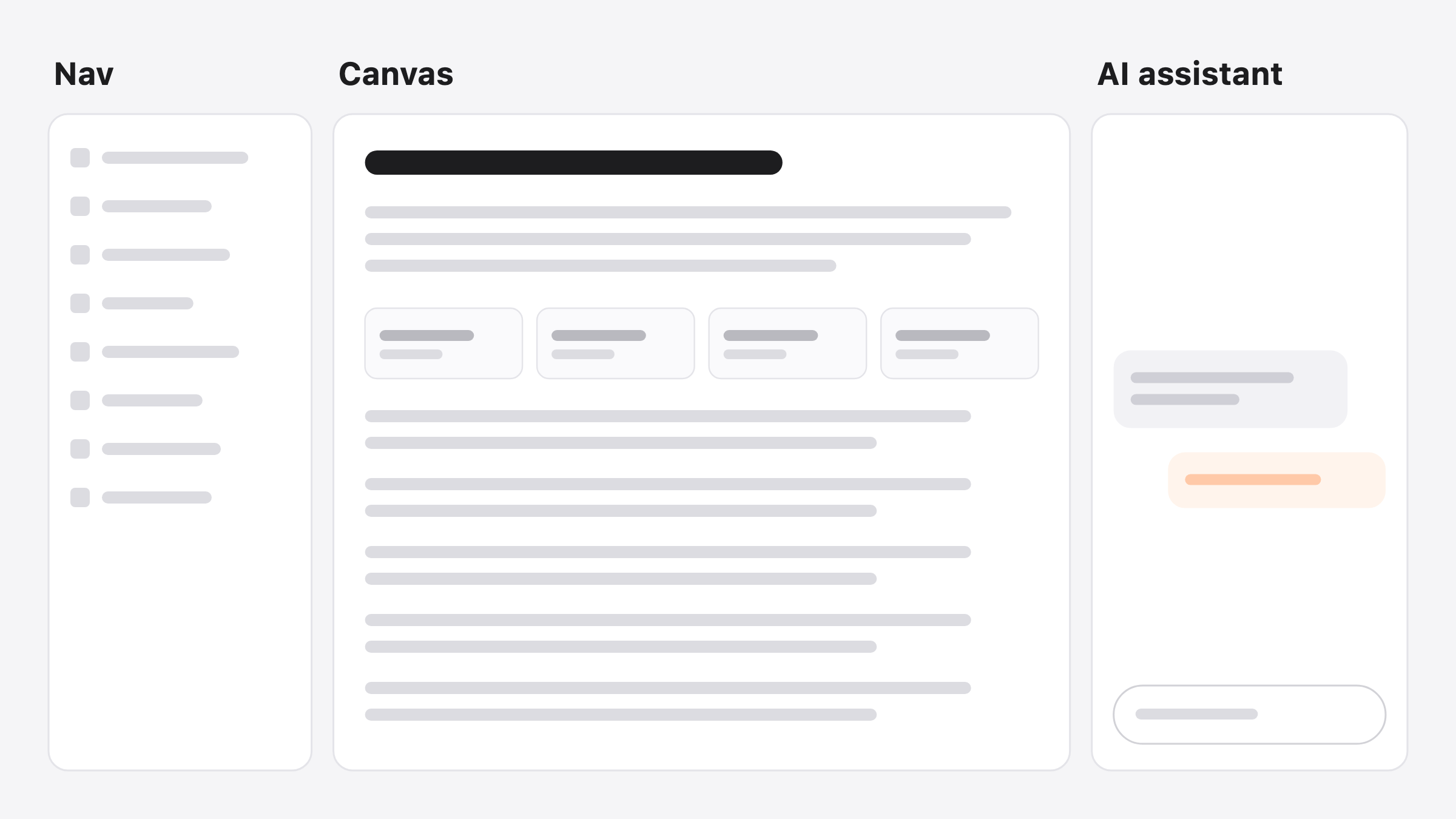
The layout the insights were designed into: navigation, a canvas, and an AI assistant.
The outcome
Sellers started asking questions.
Sellers went from ignoring the tips to questioning them, and acting on them. Engineering took the insight format, and the steps that write it, straight into production, where it became the foundation of Klue's competitive-intelligence pipeline.
0
Stat to come.
0
Stat to come.
0
Stat to come.
WantedA seller asking an insight a follow-up question, and the answer pointing back to its intel. Screen recording from the inbox-and-chat prototype, 16:9, 1920px wide.
A seller asking an insight why.
My take
What I built underneath went into production.
Asked to improve a screen, I redesigned the data behind it, then the screens on top of it.
Questions? Answers.
-
Was the idea of an insight yours?
No. Klue had defined an insight as a statement that combines intel and adds context to drive action. When I started, the pipeline only produced intel. I built the steps and the format that let it produce insights.
-
What data did it use?
Only what the pipeline already had: recorded calls, CRM data and competitive content. The new steps reshaped it and added nothing.
-
How was it tested?
I demoed the prototype to sellers and other experts inside Klue. We then tested it with clients.
-
How did it get into production?
The engineers used my prompts and steps. I spent a lot of time refining them so the engineers could see how to apply them.
-
What would you do differently?
Build in the measuring from the start: signals for how fresh and how certain each insight is, and a record of what sellers did with it.

Scout.